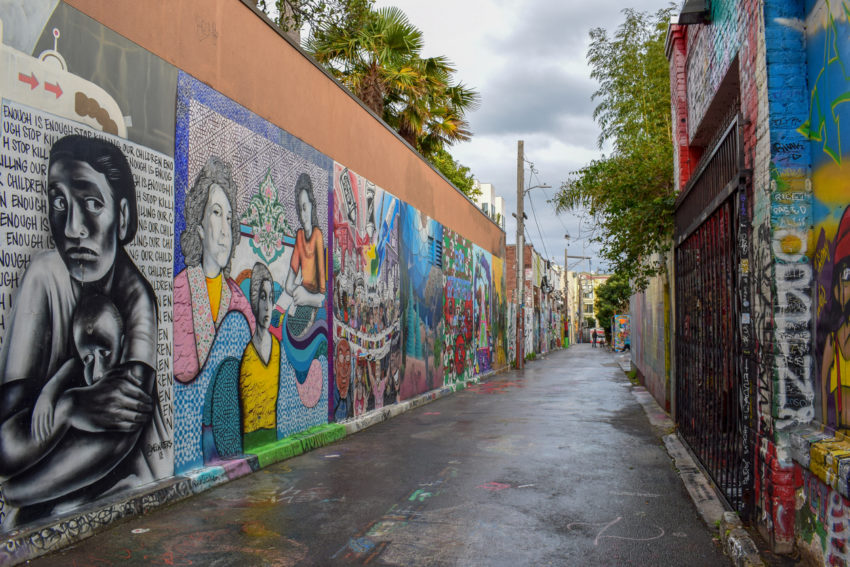
How can art help a community? Art and cultural practices can help boost social cohesion and overall community wellbeing, according to a new report, WE-Making: How Arts & Culture Unite People to Work Toward Community Well-Being, which explores this concept. “A cohesive culture for health equity is one where everyone works individually and as a group to ensure that each person has a fair, just opportunity for health and wealth, as well as equitable access to basic resources required for these goals according to a Salud America! research review. The WE-Making report was developed by the National Endowment for Arts and the Kresge Foundation, with support from the Robert Wood Johnson Foundation, Bush Foundation, and the John S. and James L. Knight Foundation.
The Report on Arts ...
By Maegan Molnar
Breast Cancer Survivor in San Antonio I was only 26 years old when I was diagnosed with stage 2 triple negative breast cancer. My world flipped upside down when I came across a lump during my very first breast exam just three weeks before my wedding. I had nine rounds of IV chemo before we realized it wasn’t working. I then had to stop treatment, have a lumpectomy, and then completely restart a different IV chemo regimen. I then had a double mastectomy with DIEP reconstruction followed up 9 rounds of an oral chemo therapy. To say I was exhausted when it was over would be a complete understatement. To say I was naive when I thought it was over would be completely accurate. This May will be 5 years since my diagnosis. I cannot imagine trying to add up the ...
Cultural competence is the ability to understand, appreciate, and interact with people from cultures or belief systems different from one's own. This is often lacking in health care. Latinos, for example, experience discrimination and implicit bias in the doctor’s office, and face a systemic lack access of social support. That's why we are excited to share new bilingual materials from various agencies the U.S. Department of Health and Humans Services (HHS) aiming to improve cultural competence and equitable access to care. "Providing culturally and linguistically appropriate services (CLAS) in health and healthcare is one way to improve the quality of services provided to all individuals, which will ultimately help reduce health disparities and achieve health equity," ...
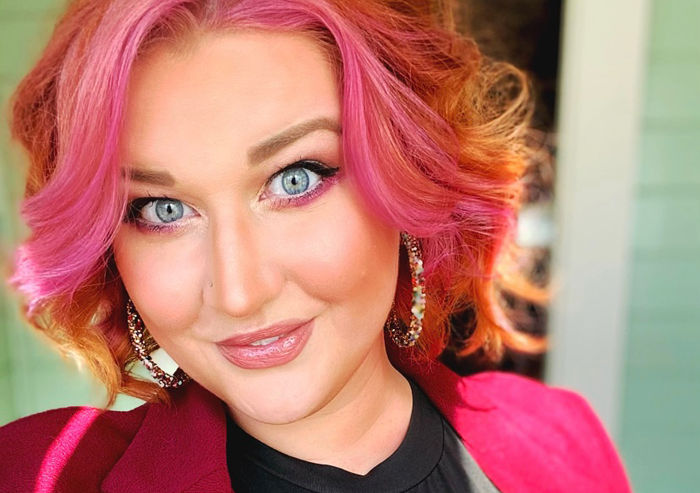
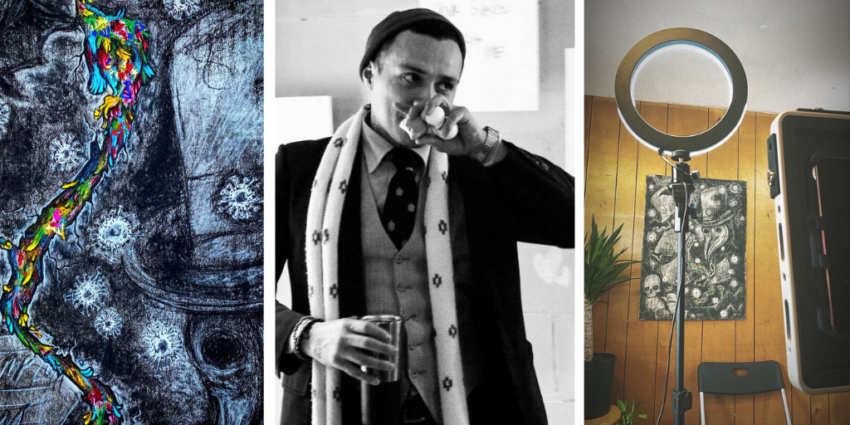
Art can convey a story or a message. So what if you could use art to spark a conversation about issues in your community? That’s the question that Bobby Marines asked himself when realizing he could use his talent to lead important conversations in the Latino community. To find the answer, Marines launched Voces y Visiones, a web series that features Marines’ art to lead a conversation about hot topic issues within the Latino community, with the help of the Southeast Minnesota Arts Council (SEMAC) and Alliance of Chicanos, Hispanics and Latin Americans (ACHLA). “The overall goal is to use arts as catalysts for social and community discourse,” Marines said.
From Eighth Grade Dropout to Successful Visual Artist
It took hitting rock bottom for Marines to find his ...
Do you know fewer than 5% of Latinos participate in federal clinical trials? There is a historical lack of targeted research about Latino health inequities and how to address them, and a lack of diversity in clinical trials. Researchers thus have less chance to develop new treatments for this population, which suffers a heavy burden of certain cancers, dementia, obesity, and mental health issues. That's why we're excited to use #SaludTues on April 6, 2021, to tweet about how to increase Latino participation in clinical trials to prevent health disparities, to mark National Minority Health Month in April. WHAT: Tweetchat: “Latino Participation Is Vital in Clinical Trials"
TIME/DATE: 1-2 p.m. ET (Noon-1 p.m. CT), Tuesday, April 6, 2021
WHERE: On Twitter with hashtag ...
Latino parents are hopeful that their children will have more opportunities to succeed in life than they did, but recognize that inequities may limit them, according to a new study by the Robert Wood Johnson Foundation (RWJF). To create the Raising the Next Generation study, RWJF, together with the research firm PerryUndem, interviewed over 2,000 parents and caregivers (400 of which were Latino) on their perceptions of inequity and discrimination in the U.S. They also asked about optimism about the future and challenges their children might experience. The survey revealed many interesting findings about how Latino parents perceive inequities and how income and immigration affect their perceptions.
Findings from the Raising the Next Generation Study
When it comes to future ...
Toxic stress is endangering the current and future health of our society. Amid the mental, physical, and economic toll of the COVID-19 pandemic, there is even greater need to prevent the risk factors for toxic stress, which are severe, intense, or prolonged stress, trauma, or adverse childhood experiences (ACEs) like physical, sexual, and emotional abuse. The new Roadmap for Resilience: The California Surgeon General’s Report on Adverse Childhood Experiences, Toxic Stress, and Health is the nation’s first guide to address toxic stress by cutting ACEs in half in a generation. We at Salud America! are exploring the roadmap in an 11-part series. This is the final post in the series, with five upstream ways you can take action to address toxic stress. “To enable ...
The COVID-19 pandemic isn’t the only catastrophe harming the health of Latinos and other communities of color. Natural disasters—such as the massive snowstorm that rocked the Texas’ energy grid in February 2021 or Hurricane Harvey that decimated South Texas in 2017—can have long-lasting impacts. These devastating weather events are directly linked to Climate Change, experts say. Many of the world’s most successful corporations are among the worst contributors to global warming. Worse, those corporations aren’t doing enough to help solve the issue, according to recent numbers from the international climate management group, whose report outlines the slow progress. “The Climate Action 100+ Net Zero Company Benchmark shows there is an urgent need for greater ...
California is leading the nation in addressing toxic stress and adverse childhood experiences (ACEs), such as neglect, divorce and exposure to violence, which can harm long-term health. Guided by evidence and a public health approach, California developed a series of legal and conceptual frameworks to support statewide screening for ACEs, coordinate within and outside state government, and assess best practices in trauma-informed care across the state. This progress ramped up when Gov. Gavin Newsom created the Office of the California Surgeon General in 2019 and appointed Dr. Nadine Burke Harris to the position. In December 2020, Burke Harris released her Roadmap for Resilience: The California Surgeon General’s Report on Adverse Childhood Experiences, Toxic Stress, and ...