by
by 
Share On Social!
Since their introduction in the early 1900s, vaccines have helped eradicate diseases.
For this reason, vaccines play a pivotal role in public health, especially for children, the elderly, and the immunocompromised.
However, with the invention of the internet and social media, incorrect information is quickly spread and disseminated, sowing seeds of mistrust in vaccine recommendations. This leads to questions over vaccine research, production, and administration.
What’s more, the widespread misinformation about vaccines has caused outbreaks of previously eradicated diseases such as measles, making vaccine uncertainty a serious threat to public health.
In fact, in a recent survey conducted by KFF in collaboration with the Washington Post, 1 in 6 US parents have admitted to either skipping or delaying a vaccine for their child.
Let’s go over the results of the survey and find out ways to build trust in vaccines.
Survey Results on Vaccine Trust
The KFF/Washington Post survey analyzed interviews from over 2,700 parents, including more than 1,000 parents who have children younger than age 6 with conflicting feelings about vaccines post COVID-19.
The survey aims to share parents’ thoughts and feelings about childhood vaccines and their choices when it comes to vaccinating.
In the survey, 35% of parents believe that vaccines don’t go through enough safety testing to be recommended for children, while 26% say that the Centers for Disease Control and Prevention (CDC) recommend too many vaccines for children.
When considering age, younger parents (under age 35) are more likely than older parents (50 and older) to say vaccines don’t go through enough testing (35% vs. 26%) and that there are too many recommended vaccines (29% vs. 23%).
Parents Responses to Older, Newer Vaccines
As far as long-standing childhood vaccines, such as measles, mumps, and rubella (MMR) and polio, are concerned, parents held that these vaccines were important for children at 90% and 88%, respectively, according to the KFF/Washington Post survey.
What’s more, parents believed they were safe for children to receive at 84% for MMR vaccines and 85% for polio vaccines.
Not only do they support these types of vaccines, but about 8 in 10 parents support state laws requiring these types of vaccines to attend public schools with a few exceptions at 81%.
About 8% of parents said they requested vaccine exemptions to bypass requirements for their child to attend school and daycare.
However, more selective vaccines such as the COVID-19 and flu vaccines proved to be divided on vaccine confidence.
Only 65% have confidence in the flu vaccine, while 43% have confidence in the COVID-19 vaccination for their children.
Delaying Vaccination for Children
The KFF/Washington Post survey also uncovered that younger parents are more likely to skip or delay a childhood vaccine (19%) than parents older than 50 (12%).
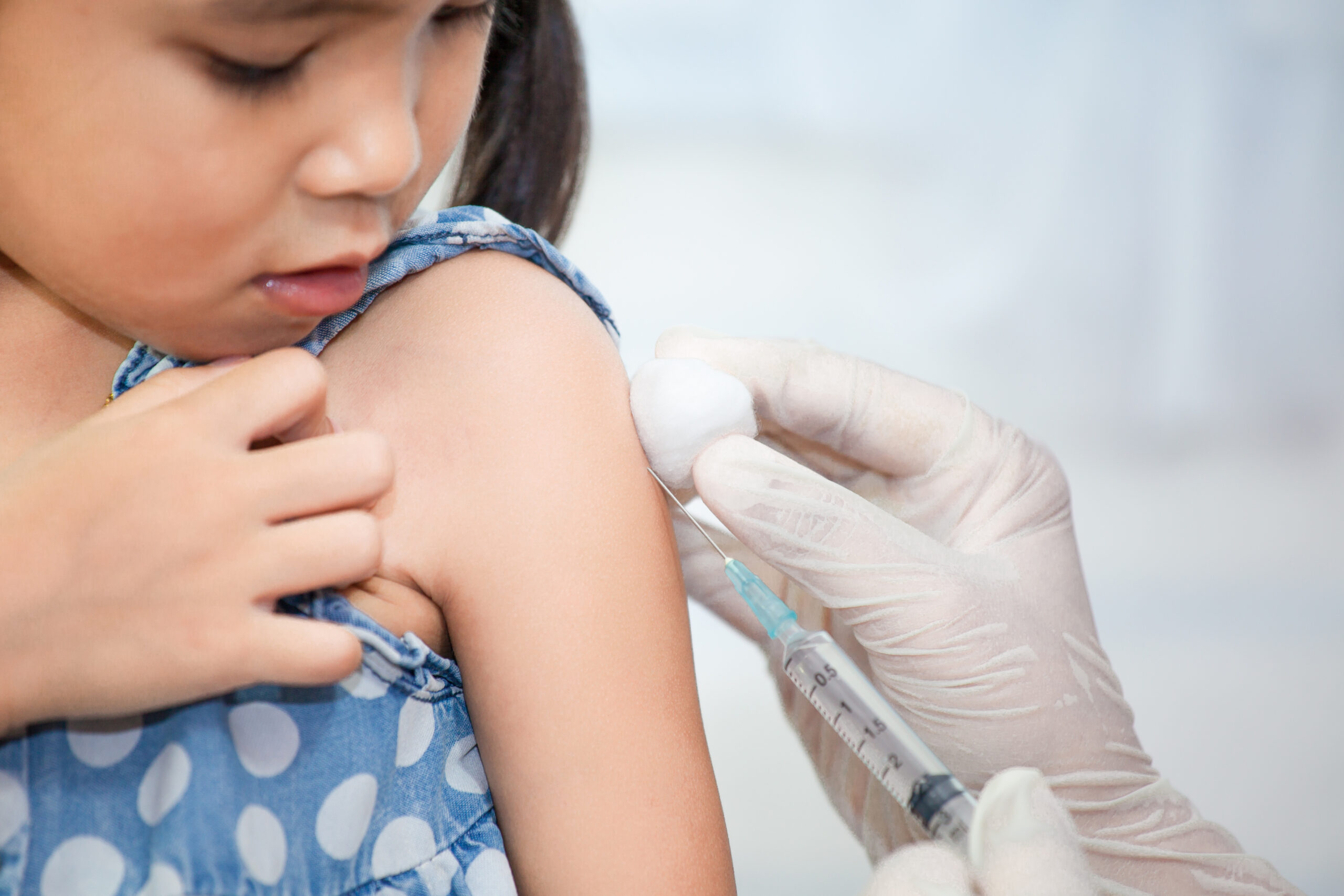
One of the biggest reasons for skipping or delaying vaccines is concerns over side effects (67%) and safety (53%).
Another primary reason for skipping or delaying vaccines was parents not wanting their children to get multiple shots (42%) and wanting to keep their children healthy in ways other than vaccines (34%).
Furthermore, 10% of parents said their children were afraid of needles and 9% say their doctor didn’t recommend vaccines.
Other reasons for skipping or delaying vaccines include health-related conditions and access to health care. Another reason for skipping vaccines is religion.
The most startling statistic from the survey was the near split views on pro-vaccine versus anti-vaccine.
According to the survey, 48% of parents consider themselves to be pro-vaccine while 45% identify themselves as being anti-vaccine.
Parents and Vaccine Mistrust
In addition to asking parents about vaccines, the KFF/Washington Post survey’s findings dig into mistrust in vaccines as a potential culprit of vaccine uncertainty.
A lot of mistrust of vaccinations stems from incorrect information or falsehoods over vaccines like the inaccurate claim that vaccines are linked to autism, according to the Children’s Hospital of Philadelphia’s Vaccine Education Center and several other sources cited in the survey.
In fact, 9% of parents surveyed believe that MMR vaccines cause autism. In the same vein, 8% hold that the measles vaccine causes measles and 6% believe that the use of vitamin A can treat measles despite the lack of scientific evidence to support that claim.
When it comes to parents of autistic children, 16% believe that autism is linked to vaccines, compared to those without autistic children (9%).
According to the survey, 13% of parents believe that chronic diseases are on the rise because of the number of vaccines children get.
When considering all the false claims, between four in 10 to half of respondents say the claims are false, according to the survey.
Emerging Vaccines
The KFF/Washington Post survey comes during a time when the health agencies run by the federal government, such as the CDC and Department of Health and Human Services (HHS), are questioning the validity of the childhood vaccine schedule and raising concerns over vaccine safety and effectiveness.
In fact, the responses were released in the wake of a CDC decision to potentially delay the hepatitis B vaccine for newborns.
When administered, the vaccine can prevent an infection that can lead to liver disease, cancer, and death.
The hepatitis B vaccine is responsible for preventing the development of hepatitis B infection in over 500,000 children along with averting 90,000 deaths in the US, according to the CDC.
As of 2022, those numbers are on the decline with only half of all newborns receiving the first dose of vaccine at birth.
Ultimately, the CDC decided to set aside the vote for now.
In another move by the federal government, several agencies have collectively taken steps to limit access to the COVID-19 vaccine, effectively putting many at risk for COVID-19 complications, hospitalization, and death.
When asked about their confidence in federal health agencies, 1 in 6 parents say they have a lot of confidence in government agencies, while 29% said they had little confidence and 22% said no confidence at all.
Importance of Vaccines
Vaccines work to protect you and others around you from diseases that have potentially deadly consequences while others work to mitigate adverse health effects from viruses, including hospitalization, according to the HHS.
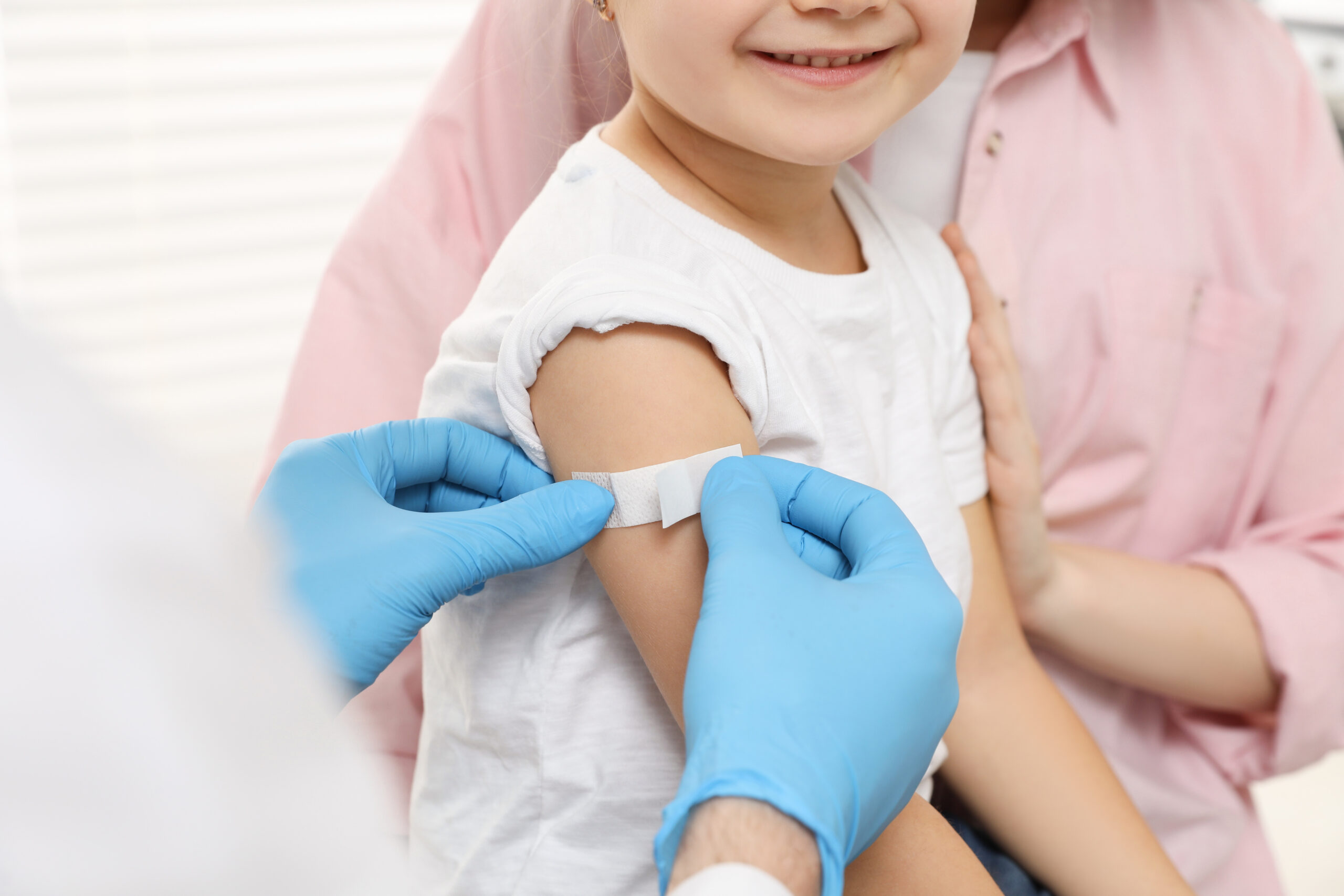
Vaccines have been an integral part of American health for decades.
Since 1974, vaccines have spared the lives of 154 million people from all over the world, according to the World Health Organization (WHO).
94 million of these lives were saved due to the measles vaccine.
Vaccines work by introducing a weakened virus into the body to jump start the immune response, according to the HHS.
When it comes to the measles vaccine, it requires 95% or greater of individuals to be vaccinated with at least two doses of the vaccine to protect communities, according to WHO.
However, globally, only 83% of the population has the first does of the vaccine and only 74% have both doses.
This is what contributes to outbreaks, especially in areas with lower vaccination rates.
And the measles vaccine isn’t the only vaccine that works better when more people are vaccinated to the fullest extent.
Combating Incorrect Information about Vaccines
One of the ways we can get more people vaccinated is by stopping the spread of incorrect information.
There are several individuals doing just that.
To combat vaccine uncertainty, Salud America! is telling the stories of people who overcame incorrect information about vaccines.
Like Rosa Herrera, who was fearful after reading false information about the COVID-19 vaccine. However, she changed her mind after a bit of research and now she’s been granted more freedom to spend time with family.
Or Jesus Larralde, who was nervous about the COVID-19 vaccine’s possible side effects. Despite his fears, Jesus got the vaccine after his wife and others he knew got the vaccine.
“We need to learn, and we need to understand that we need to stop spreading this thing around. Because if we don’t take our shots, that’s not going to happen,” Larralde said.
There are also organizations dedicated to combating incorrect information about vaccines and giving individuals the tools they need to get vaccinated and stay vaccinated!
One such organization is CVEEP.
CVEEP is looking to raise awareness about vaccines by providing vaccine education and resources.
For vaccine resources, to see the latest vaccine recommendations, or to make a plan to get vaccinated visit CVEEP.
Improve the Health of Your Community
Do you know where your community stands on important health issues such as vaccinations?
Find out by downloading a Salud America! Health Report Card for your town!
Enter your county name and get auto-generated local data with interactive maps and comparative gauges on several health indicators. This can help you visualize and explore local issues in education, housing, transportation, food, health, and more.
See how your county stacks up compared to the rest of your state and nation.
Then email the Report Card to local leaders to raise awareness, include the data in a presentation or grant proposal, or share it on social media to drive healthy change in your community!
Explore More:
VaccinesBy The Numbers
1
out of 10
Pedestrians survive when hit by a car at 40 MPH