by
by 
Share On Social!
1 in 5 people will get skin cancer in their lifetime.
That makes it critical to know what might increase your risk for skin cancer, especially Latinos who work in construction, farming, and other outdoor jobs.
May is Skin Cancer and Melanoma Awareness, so let’s explore skin cancer risk.
Skin Cancer Risk Factors
Some physical characteristics can increase your risk for skin cancer, according to the CDC.
Skin cancer can be more prevalent in people with lighter skin, eye, and hair colors.
DNA can also play significant factor.
If your skin easily burns or reddens, has freckles, or moles, you may be at a higher risk for skin cancer.
Those with a history of sunburns or tanning, have a family or personal history of skin cancer, or are of an older age may also be at risk for skin cancer.
Regardless of these physical characteristics, anyone can get skin cancer, especially if they are consistently exposed to ultraviolet (UV) rays.
Calculate Your Risk for Skin Cancer
The National Cancer Institute (NCI) has an online tool to calculate your risk for skin cancer.
Using the interactive tool, individuals can put in their demographics (i.e., eye color) and UV-related habits (i.e., how many sunburns you’ve had over the last few years) and the tool calculates your risk for developing skin cancer within the next five years.
However, this tool does not calculate risk for melanoma or factor your family history of melanoma. It also shouldn’t be used as a diagnosis.
The calculator is a starting point in evaluating your risk so that you can talk to your health provider about preventative steps or get a specialist referral.
calculate your skin cancer risk!
Examine Your Moles
Abnormal moles, especially ones that change their appearance over time, can be a sign of skin cancer.
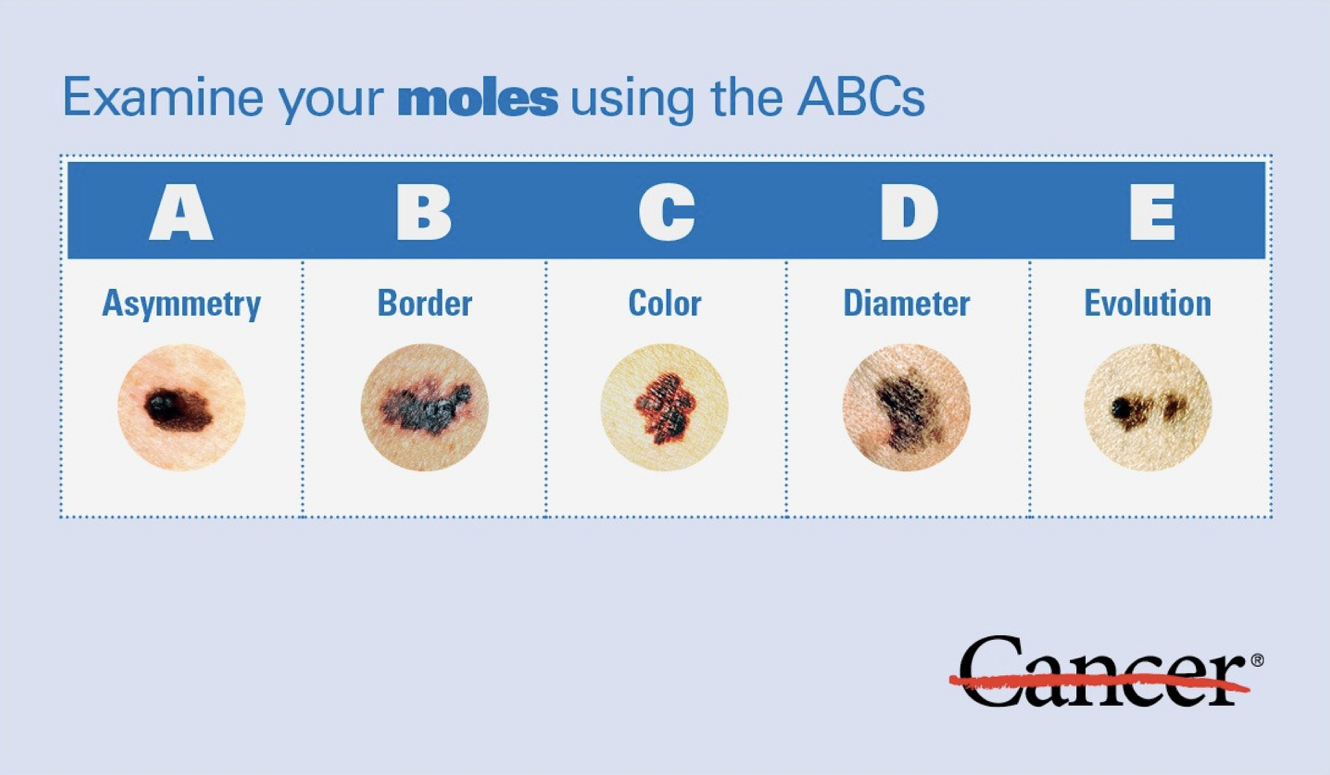
That’s why it’s important to examine them often for noticeable change.
But what do you look for?
The American Academy of Dermatology Association has a simple answer and it’s as easy as reciting your ABC’s.
A is for asymmetry, B is for border, C is for color, D is for diameter, E is for Evolving.
This is how you can examine yourself for skin cancer.
After you’ve examined yourself, you can use the Skin Cancer Body Mole Map to track the changes, so you can give your provider the full report.
GET the skin cancer body mole map!
Tanning Beds or Sunlamps
Tanning beds, booths, sunbeds, and sunlamps all utilize UV rays to help change the appearance of the skin.
However, too much exposure over time can cause cancer and certain eye conditions like cataracts and cancers of the eye, according to the CDC.
While tan skin may represent beauty to many, it’s not an indication of good health.
Instead of tanning, you can use self-tanners that stain the top of the skin rather than embedding deeper into the skin’s layers.
While self-tanners are generally safe for skin use, they do come with their own risks and should be used with caution.
Skin Cancer Appearance
Skin cancer looks different for everyone, but it’s important to understand and recognize the appearance of skin cancer so that you can get checked.
Getting checked leads to early diagnosis and an early diagnosis of skin cancer means better health outcomes.
Cancer on the skin can appear in many different forms, including lumps, bumps, sports, sores, or abnormal marks so it’s important to know what to look for.
Be on the lookout for new, changing, or unusual spots on the skin, and pay attention to warning signs such as spots that bleed, itch, or change color and size, according to the UT MD Anderson Cancer Center.
It’s important to check the appearance of these areas to monitor any changes.
Unsure if the spot on your skin is skin cancer?
Check out the American Cancer Society’s Skin Cancer Image Gallery to get a better idea of what it may look like.
But the only way to give yourself piece of mind is to get checked by a dermatologist.
Diagnosing and Treating Skin Cancer
The first step in a skin cancer diagnosis is an evaluation by a dermatologist who can help you determine if additional testing is needed.
This testing might entail removing parts of the skin to test the cells for cancer, according to the Mayo Clinic.
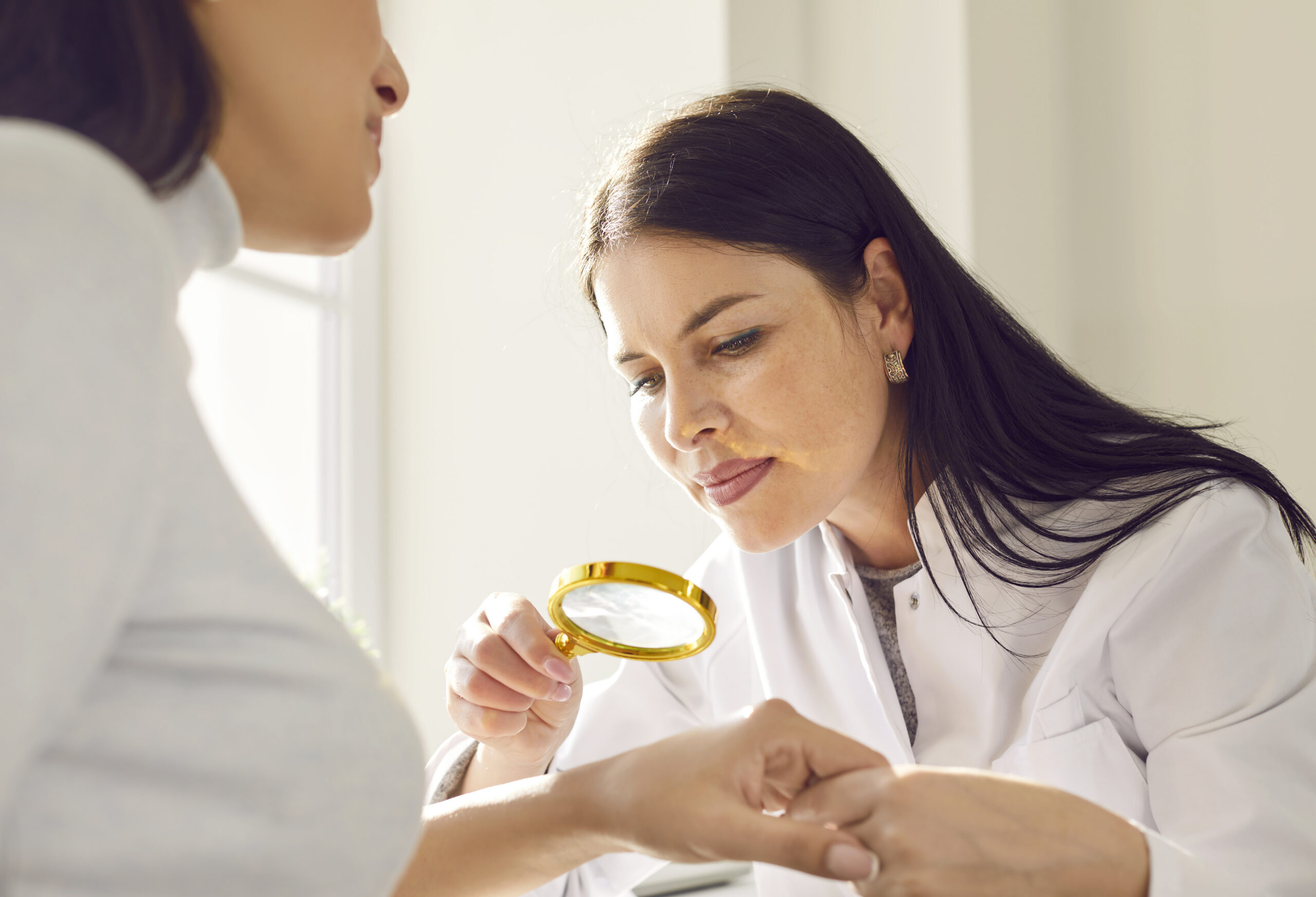
During this process, a biopsy is performed using a cutting tool and then sent to the lab for testing.
If it comes back positive, the provider may order another test to determine the stage and progression of the cancer as well as the type.
This can be done through imaging tests and a lymph node biopsy.
Like many cancers, the severity of the cancer can be grades from 0 to 4 ¾ 0 being the least severe and the 4 being the most.
Later stage diagnoses do increase risk for cancer death, which is why it’s important to get checked early.
Once diagnosed and the stage is established, your provider can determine the best course of treatment.
Treatment options include skin creams, removing the top of the skin cancer, photodynamic therapy, which uses light energy and medicine to kill the cancer cells, surgery, Mohs surgery, which is the process of removing the skin layer by layer, radiation, chemotherapy, and more, according to the Mayo Clinic.
Skin Cancer Prevention
The best way to lower your risk of skin cancer is to protect your skin from sun damage.
While UV rays can cause issues all year long, they can be particularly high in summer months.
That’s why it’s important to know the status of UV rays each day by checking out the UV Index for your area.
If the UV rays are at a 3 or higher, you should protect your skin from harmful exposure, according to the CDC.
Taking precautions such as staying in the shade, wearing clothing that covers your body, wearing a hat and sunglasses, and using the proper SPF sunscreen is crucial.
However, shade isn’t available in all situations, especially in certain industries like construction and farming, which employ many Latinos.
That’s why federal heat protections can aid the health and safety of outdoor workers.
Help Others Defeat Skin Cancer via Clinical Trials
There are always new types of therapies being developed to help treat cancer.
However, they have to go through a testing process to get approval and put on the market to the public.
These are known as clinical trials.
Clinical trials are studies with volunteers that enable advances that can slow, manage, and treat diseases such as skin cancer.
These new treatments can also help future generations of cancer patients and survivors.
However, when the pool of participants doesn’t reflect the entire population, these groups may miss out on the benefits that come from these studies.
The reality is that too few overlooked populations, such as Latinos, volunteer for clinical trials or research studies.
Visit our clinical trials page to find a clinical trial, read about hero volunteers, and more!
Those looking for opportunities based in San Antonio can search the Mays Cancer Center at UT Health San Antonio’s Find a Clinical Trial database to learn more about available clinical trials and eligibility requirements.
On a national level, visit clinicaltrials.gov to find a clinical trial near you.
LEARN MORE ABOUT CLINICAL TRIALS!
Explore More:
Latino CancerBy The Numbers
25
years
of life expectancy between some U.S. cities.