by
by 
Share On Social!
This past year saw significant strides in cancer prevention and care, resulting in better health outcomes for all populations.
However, gaps in access to care, including language hurdles, citizenship status challenges, and insurance affordability remain consistent among cancer outcomes for overlooked populations.
These persistent burdens continue to negatively impact Latino survivorship.
The state of non-medical drivers of health on cancer outcomes is examined in the yearly report from the American Association for Cancer Research (AACR).
Let’s dig into the 2026 progress report and look at the 9 key takeaways impacting Latinos.
1. Cervical Cancer Deaths Drop Amid Strides in Preventative Care
Recently, researchers have seen a dramatic drop in cervical cancer deaths worldwide.
A new study even found that in one country, cervical cancer deaths plummeted to zero for one age group.
This is largely due to the strides in preventative care such as routine screenings and the HPV vaccine.
These leaps in preventative care have slowly continued to close the gap in Latina cervical cancer deaths.
According to the AACR report, the difference between cervical cancer deaths in Latinas and white women narrowed by 60%.
In 2000, Latinas suffered a 70% higher mortality rate and now it’s dropped to 10%.
2. Latina Cervical Cancer Incidence Continues to Grow
While modern medical advancements have slowed cervical cancer deaths in Latinas, cases of cervical cancer in this population continue to rise.
The AACR report indicates that Latinas are diagnosed with cervical cancer 36% more than their white counterparts.
For every 100,000 Latinas, 10 are diagnosed with cervical cancer, compared to 7 cases for white women.
Much of this difference can be attributed to lack of preventative care stemming from limited access to HPV vaccinations, fewer screenings, delayed diagnoses due to affordability and insurance, and language hurdles.
The report suggests that more must be done to ensure that Latinas get the same access to preventative care.
3. Liver Cancer Dominates Latino Cancer Burden
Of all the types of cancer that impact Latinos, liver cancer incidence is at some of its highest in this group.

The AACR report shows that Latinos are nearly twice as likely to develop liver cancer, compared to their white counterparts.
There is also a difference within the group, with Latinas being 72% more likely and Latino men 51% more likely to develop liver or bile duct cancer.
The reason behind the difference has to do with modifiable risk factors.
Latinos have higher incidences of hepatitis B and C infections, higher rates of obesity and type 2 diabetes, and a disproportionate prevalence of fatty liver disease.
All of these factors, accompanied by limited access to fair and affordable health care, put Latinos in danger of this disease far more than any other group.
4. Stomach Cancer is Still Affecting Latinos at Higher Rates
Latinos have a higher burden of stomach cancer than some other groups, and are also dying from stomach cancer more due to delayed or late diagnoses.
Like liver cancer, Latinos are twice as likely to develop the disease than white individuals.
For every 100,000 Latinos, 9.8 are diagnosed with stomach cancer, compared with 4.8 of every 100,000 white individuals, according to the AACR report.
Report data shows that Latinos have a higher risk for stomach cancer because of risk factors such as poor diet and a higher prevalence of helicobacter pylori infection, which is the leading cause of gastric cancers.
5. Rises in Latino Gallbladder Cancer Incidence
While gallbladder continues to be one of the less pervasive cancers in the U.S., Latinos are more at risk and have higher rates of mortality.
Risk factors include gallstones, higher rates of obesity and metabolic disease, and chronic inflammation.
Because Latinos face inconsistencies in health care, the disease that often shows no symptoms before it’s too late is harder to treat and even harder to diagnosis, resulting in worse health outcomes for Latinos, according to the AACR report.
6. Lower Screening Rates Drive Cancer Inconsistencies
Routine cancer screenings are a mainstay of preventative care.
They catch cancer early when the disease is at its most treatable, and there’s a higher chance of survival.
However, not everyone has access to these screenings.
Lack of insurance, health care, and income keep Latinos from life-saving screenings.
The AACR report found that Latinos are less likely than white individuals to be up to date on colorectal screenings.
Non-medical drivers of health factors keep Latinos from receiving the preventative care they need.
7. Citizenship Status Delays Preventative Care
Another contributing factor to the inconsistencies in cancer outcomes for Latinos is issues with citizenship.
The rising fear of deportation has caused many to postpone or avoid care — even at the risk of death, according to the AACR report.
There are already barriers to preventative care; worries around citizenship only add another layer to keeping Latinos from screenings.
Not only are mounting immigration fears causing difficulties in cancer care, so are the recent cuts to Medicaid, which will see millions of Latinos stripped of their health insurance.
8. Persistent Language Differences Keep Latinos from Screenings
It’s hard to understand medical terminology, navigate the health care system, and stay up to date on vaccines, screenings, and checkups.
Imagine if those around you didn’t speak your language?
That’s the reality for many Latinos who are confronted with people in the health care system who don’t speak their language.
Having language-concordant care is vital for preventative care.
The AACR report found that Spanish-speaking Latinos were 53% more likely to be up to date on cervical cancer screenings when they had access to bilingual providers and health care institutions.
This can improve understanding of screening recommendations, increase screenings, and restore trust in the health care system.
9. Improving Access to Preventative Care Closes Gaps
To address the inconsistencies in cancer outcomes and improve access to care, the AACR report highlights a few key areas for improvement.
- Increase HPV vaccination coverage
- Expand access to cervical, colorectal, and other recommended cancer screenings
- Improve health insurance coverage and access to primary care
- Provide healthcare services that align with all languages and backgrounds
- Increase Latino clinical trial participation
- Strengthen community health outreach to restore trust in health care through the use of community health workers and patient navigators
Dr. Amelie G. Ramirez, leader of Salud America! and cancer health researcher at the Mays Cancer Center at UT Health San Antonio, has made it her life’s mission to close gaps and improve cancer outcomes for Latinos and all people.
She is working to raise awareness about the importance of clinical trials by using the Salud America! platform to highlight stories of individuals who have made the choice to volunteer for a clinical trial.
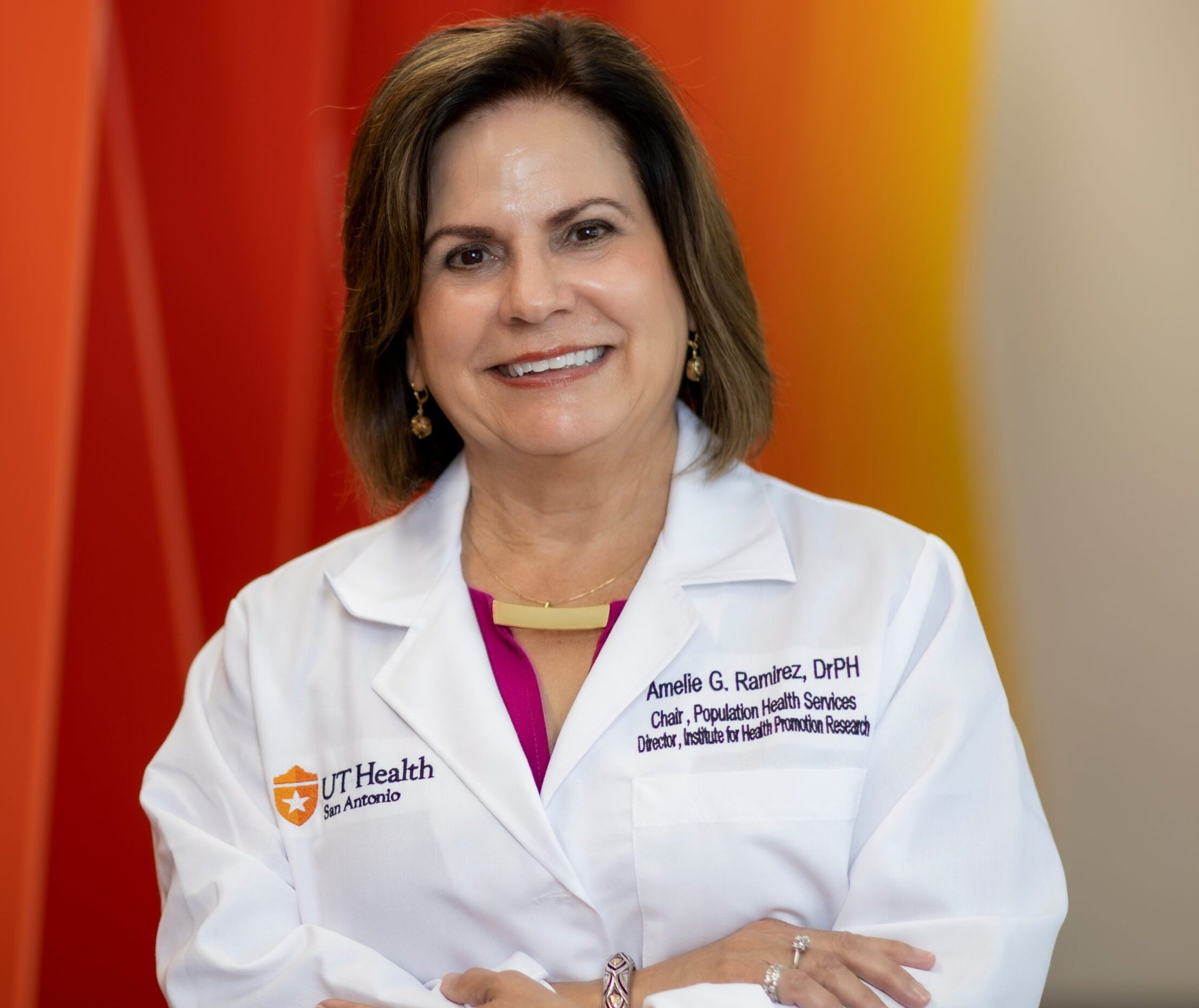
“Volunteers who participate in clinical trials have the potential to help themselves, and contribute to the development of new treatments for people in the future,” Ramirez said.
To address non-medical drivers of health issues, Ramirez is leading the Task Force: Latino Researchers Against Cancer.
The task force, comprised of specialists in oncology, public health, and behavioral sciences, spent a year meeting together to unpack the influences contributing to cancer, from genetics to societal practices.
“Findings highlight environmental hazards, genetic susceptibilities, stigmas, and linguistic barriers as significant drivers,” Ramirez said. “Additional issues, such as inadequate healthcare coverage, financial challenges, and lack of participation in clinical trials, further compound these issues.”
In South Texas, Ramirez is focused on addressing the lack of interventions and long-term support services for Latino cancer survivors with the Avanzando Caminos study and tackling one of the leading causes of cancer-related deaths with the Quitxt study — a text-based smoking cessation program.
Improve the Health of Your Community
Do you know what kind of health care inconsistencies are plaguing your community?
Find out by downloading a Salud America! Health Report Card for your town!
Enter your county name and get auto-generated local data with interactive maps and comparative gauges on several health indicators. This can help you visualize and explore local issues in education, housing, transportation, food, health, and more.
See how your county stacks up compared to the rest of your state and nation.
Then email the Report Card to local leaders to raise awareness, include the data in a presentation or grant proposal, or share it on social media to drive healthy changes in your community!
Explore More:
Latino CancerBy The Numbers
25
years
of life expectancy between some U.S. cities.