by
by 
Share On Social!
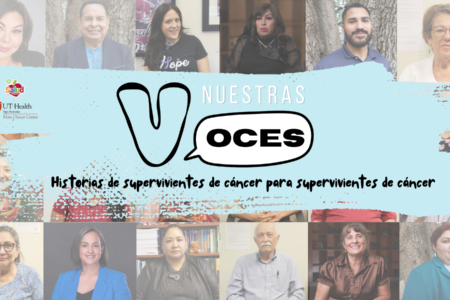
It’s National Cancer Survivor Month and we are honoring survivors in South Texas and beyond by reminding them that their journeys matter.
In fact, they can even help future cancer survivors.
That’s the hope of the Avanzando Caminos Hispanic/Latino Cancer Survivorship Cohort Study, which is based at UT Health San Antonio and the Sylvester Comprehensive Cancer Center based at the University of Miami.
This study gathers cancer survivors’ unique stories to explore the familial, behavioral, mental, biological, medical, and other impacts on life after cancer.
Let’s break down how each of these cancer types impacts the Hispanic/Latino population and how hearing from survivors helps make a difference for future generations of survivors.
Latina Breast Cancer
Breast cancer continues to be the most prevalent cancer types among Latina women.

The rate of breast cancer incidence in Latinas between 2017 and 2021 was 104.1 per 100,000 people, according to the American Cancer Society’s Cancer Facts & Figures 2024 report.
This is the lowest incidence of any background.
However, despite leaps in preventative care, Latina women face a higher risk of mortality because they tend to be diagnosed at a much later stage.
Latinas experience breast cancer death at a rate of 13.0 per 100,000 people, according to the report.
This is often due to non-medical drivers of health factors, such as lack of insurance or access to preventative care like mammograms.
A recent study found that only 65.3% to 71.5% of Latinas follow mammogram guidelines.
When a Latina breast cancer survivor shares her story as part of the Avanzando Caminos study, it could inspire other Latinas to get a mammogram or visit the doctor.
SHARE YOUR breast cancer story!
Latino Lung Cancer
Lung cancer rates are down significantly over the last few years, according to a 2025 report.
This can be attributed to anti-smoking laws that have rolled out in recent years such as raising the age to purchase tobacco products to 21, proposed rules to make products less addictive, and increased visibility of health warning labels.
However, Latinos, especially young Latinos, continue to be more susceptible to tobacco use, which is one of the leading causes of lung cancer.
Quitxt, created by Dr. Amelie G. Ramirez and Dr. Patricia Chalela at UT Health SanAntonio with the support of the Cancer Prevention and Research Institute of Texas, sends texts messages to help South Texas adults quit smoking cigarettes. To join Quitxt, text “iquit” or “lodejo” to 844-332-2058.
Latino lung cancer survivors can share their story with the Avanzando Caminos study to highlight the need for more folks to access smoking cessation services like Quitxt.
Latino Stomach Cancer
Stomach cancer impacts thousands of people, including many Latinos, every year.

Not only are people being diagnosed, but they also die at higher rates because stomach cancer is often diagnosed at a later state.
This is because stomach cancer symptoms mimic ordinary gastrointestinal issues and can often be misdiagnosed leading to a higher rate of mortality.
There is just not enough research being done to decrease the burden of stomach cancer.
That’s one of the reasons Avanzando Caminos study participant, Yolanda “Yoli” Barrera Day, decided to share her story with the study team.
“If we could cut down the time of this [cancer] treatment that we have to go through, then I wanted to be part of that,” she said of her reason for participating.
SHARE YOUR stomach cancer STORY!
Latino Cervical Cancer
Latinas are twice as likely to be diagnosed with cervical cancer than other women, according to the Centers for Disease Control and Prevention (CDC).
This is due to a lack of preventative care, such as receiving HPV vaccines, which can significantly reduce the risk of getting the virus that causes cervical cancer.
Learning more about the gaps in preventative care from Latina cervical cancer survivors through participation in the Avanzando Caminos study could help inform better interventions in for future survivors.
SHARE YOUR cervical cancer STORY!
Latino Kidney Cancer
Kidney cancer is among the most commonly diagnosed cancers in the US with an estimated 80,450 new cases in 2026, according to the National Cancer Institute (NIH).
It has a 79.2% survival rate and mostly impacts aging men.
Despite its low prevalence, incidence of kidney cancer tends to be higher in Latino men, impacting 25.6 to 23.6 out of 100,000, and in Latina women at 14.8 to 12.0, according to federal data.
To better understand the impact, more must be learned from the Latino men and women who have survived the disease.
“I said ‘yes.’ Maybe I could help … and just to let somebody know what I went through,” said a kidney cancer survivor enrolled in the Avanzando Caminos study.
SHARE YOUR kidney cancer story!
Latina Ovarian Cancer
The symptoms of ovarian cancer are often overlooked because they align with other ailments.
That’s why fewer women are properly diagnosed with the disease. By the time they are diagnosed, ovarian cancer has already reached an advanced stage when treatment is more grueling and expensive.
In fact, 75% of cases are diagnosed at an advanced stage, according to the American Cancer Society.
Across all stages, ovarian cancer has a 50% to 51% 5-year survival rate.
For Latinas, it’s 46% to 59%, according to the NIH.
Much more needs to be learned about the Latina ovarian cancer experience to understand why they are having worse health outcomes.
Sharing that experience with the Avanzando Caminos study team could help make a difference for future generations of survivors.
SHARE YOUR ovarian cancer STORY!
Latino Prostate Cancer
Prostate cancer continues to disproportionately impact Latino men, who are often diagnosed at more advanced stages of cancer.
There are multiple reasons for this, including delayed screenings.
Another driving factor is that too few Latino men are willing to break with background-based traditions and misconceptions to speak up about prostate cancer.
However, the men in the Avanzando Caminos study are trying to redefine the importance their experiences have on future cancer outcomes.
“It’s given me the opportunity to be able to help others to advance the research on cancer … especially for Latinos because, you know, we don’t talk about [cancer],” study participant Rick Alvarado said.
SHARE YOUR prostate cancer story!
Latino Colorectal Cancer
Colorectal cancer is now the top cancer-related killer for people younger than 50 in the US.
Once seen a disease of aging, the steadily increasing number of young colorectal cancer diagnoses has challenged the perception of what cancer is, its risk factors, and causes.
It’s impacting young Latinos at an alarming rate, but there is limited research as to why.
The lack of research on young Latinos and colorectal cancer leads to misdiagnosis, delayed treatment, and barriers to preventative care, which is still hard to access despite the recent leaps in testing advancement.
“I want to live in a world where my statistics matter,” colorectal cancer survivor and patient advocate Marielle Santos McLeod said.
SHARE YOUR colorectal cancer story!
Latino Liver Cancer
There are several risk factors and causes of liver cancer, including fatty liver disease, obesity, and diabetes.
Given the fact that Latinos are disproportionately impacted by these risk factors, Latinos have a higher chance of developing liver cancer than other populations.
Sharing your Latino liver cancer survivorship experience with the Avanzando Caminos study can help shape early interventions and expand survivorship for Latinos and all communities.
SHARE YOUR liver cancer story!
Latino Skin Cancer
Skin cancer is a common, but preventable, type of cancer.
But there are still many risks associated with skin cancer that makes even the most vigilant of people susceptible to skin cancer.
Many Latinos are impacted by skin cancer because they work outdoors.
Learning more about these conditions can help researchers, like the ones conducting the Avanzando Caminos study, understand the environmental factors that led to their diagnosis and treatment response.
Latino Thyroid Cancer
Thyroid cancer is the second– most commonly diagnosed cancer in Latina women, according to the NIH.
Many of these diagnoses are made before age 50.
Treatment for thyroid cancer depends on tumor size, lymph node involvement, and other factors.
Latinos face worse health outcomes due to the prevenance of these factors, according to AACR research.
There’s a lot to be learned from Latinas who have experienced this type of cancer, and sharing their experiences with the Avanzando Caminos study may hold the key to understanding why Latinas face a higher prevalence of the disease.
SHARE YOUR thyroid cancer story!
Latino Lymphoma
Lymphoma, a cancer that impacts immunity response, is on the rise in the Latino community.
Like many other cancers on this list, Latinos are more likely to be diagnosed at more advanced stages when treatments are harsher and more expensive and have a higher of mortality.
For that reason, it’s one of the newest cancer types added to the Avanzando Caminos study.
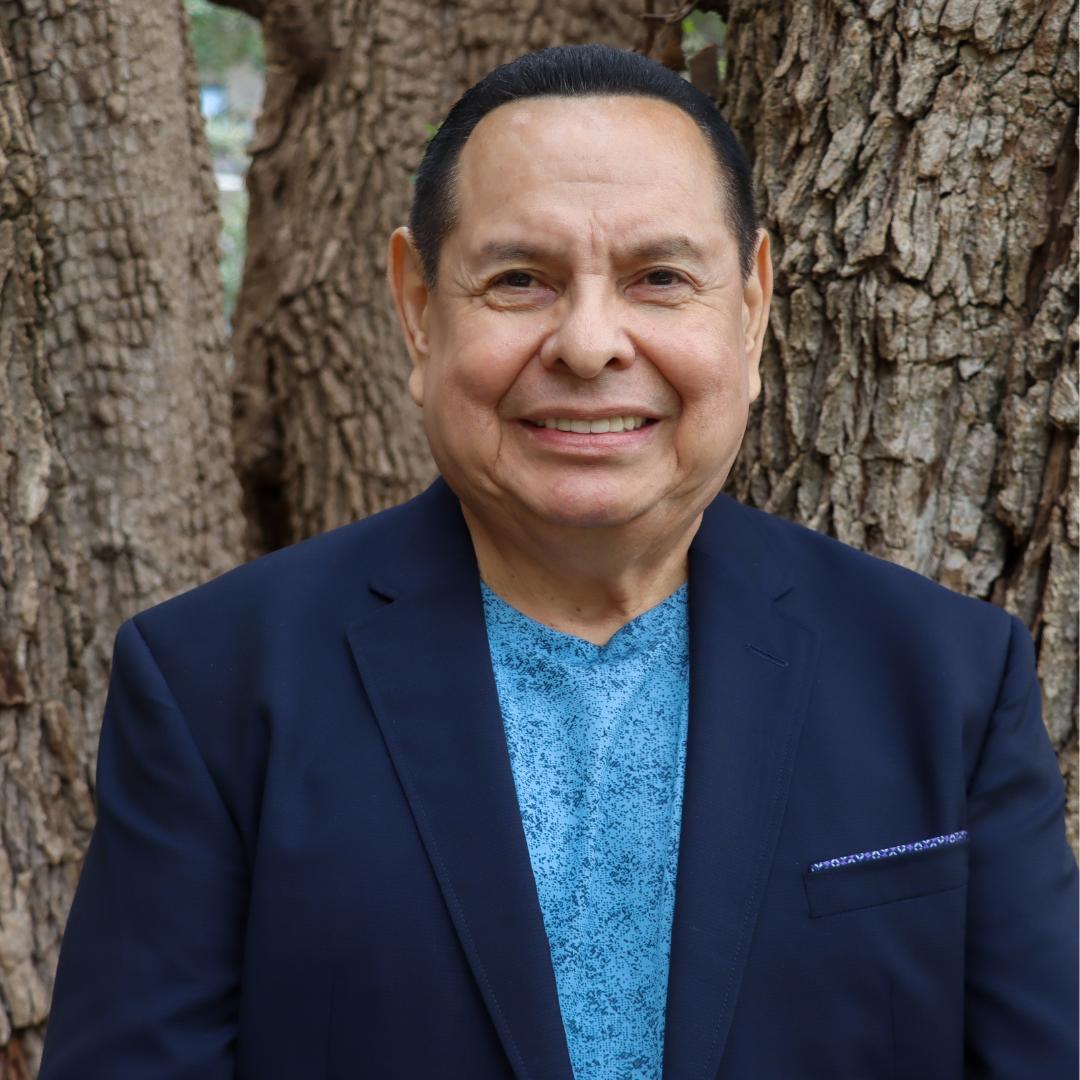
One of the study’s first Lymphoma enrollees was South Texas resident and patient leader, Arnoldo Rodriguez.
After surviving two separate cancer types, multiple times, Arnoldo felt he had an important message for his community.
“The clinical trial was my lifeline,” he told Salud America! “My experience has defined the way I move forward with supporting others and advocating for the best cancer care available.”
He’s also sharing his story with the Avanzando Caminos study team.
“[When] I was asked to be part of the study Avanzando Caminos I had no hesitation because we need all the data that we can gather to provide the best possible care and treatment for Latino patients.”
Latino Bladder Cancer
While bladder cancer has a significantly lower incidence in the US Latino population, there are much higher incidences of this cancer type in South Texas.
A recent study by the Mays Cancer Center at UT Health San Antonio shows that South Texas residents, including many Latinos, are suffering from bladder cancer at more aggressive and advanced stages.
The study also found that this type of cancer proved to be deadlier for women and Latinos, which make up a large portion of the South Texas population.
To study some of these inconsistencies in cancer outcomes, the Avanzando Caminos study added this cancer type to their growing list.
SHARE YOUR bladder cancer story!
Latino Endometrial Cancer
While endometrial cancer primarily impacts postmenopausal women, incidences of this cancer are on the rise in younger women.
Studies have shown that there is a sharp rise in uterine cancer in US Latina women, too.
This could be due to a few factors, such as the prominence of obesity and diabetes in this population.
However, there is still so much more the Avanzando Caminos study team is trying to learn about why rates have increased in this group, which continues to be left out of research and the benefits research brings.
SHARE YOUR endometrial cancer story!
Share Your Survivorship Story with Avanzando Caminos
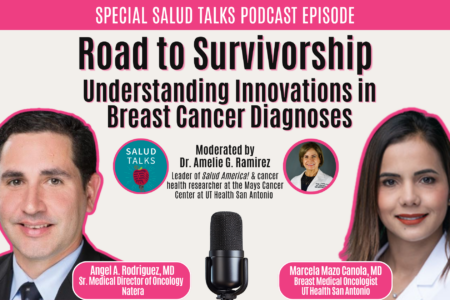
Under the leadership of Dr. Amelie Ramirez of UT Health San Antonio and Mays Cancer Center, and management of Dr. Derek Rodriguez, the study team is meeting with 1,500 participants in South Texas over the course of seven study visits spread out over five years in hopes that certain patterns may emerge.
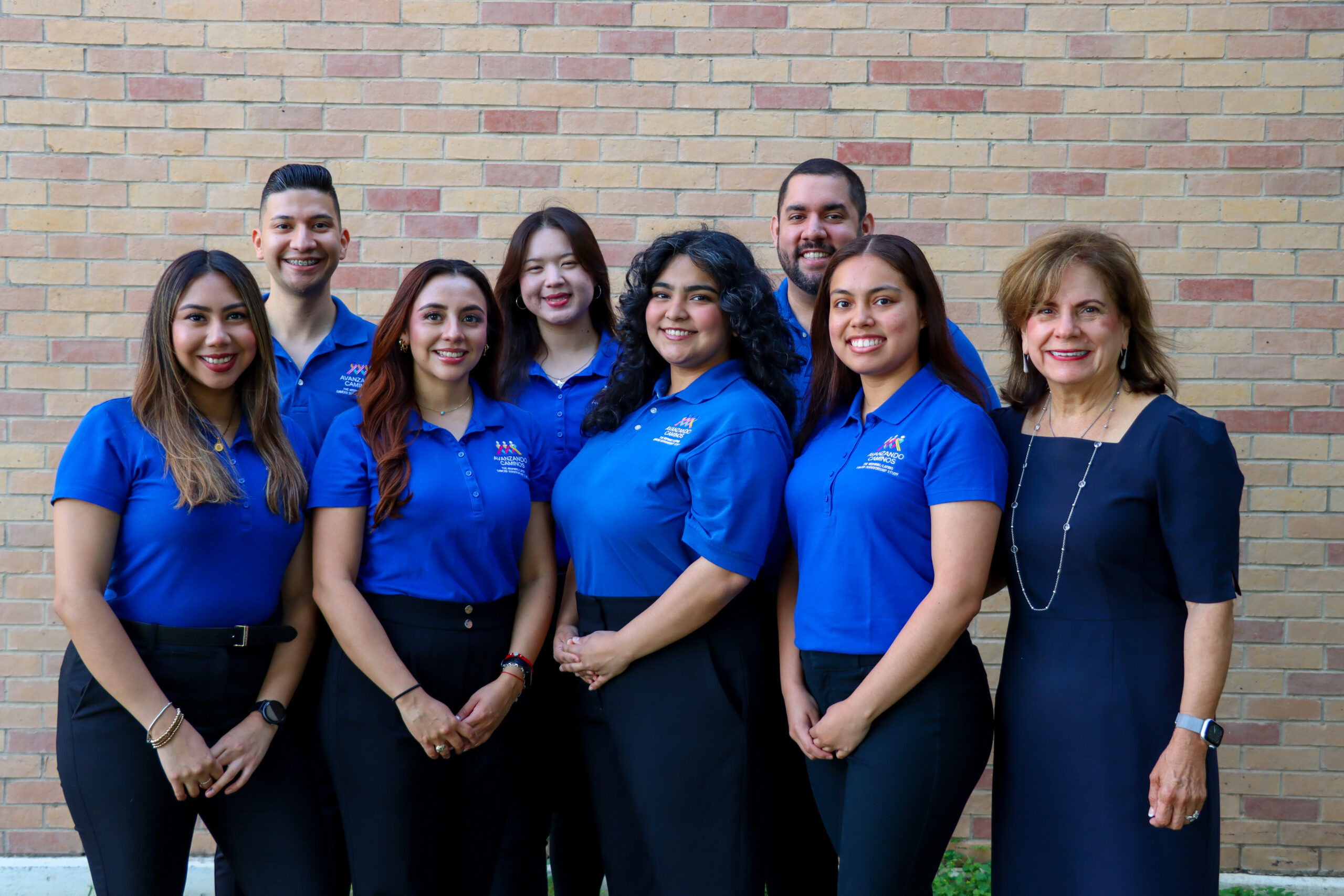
In researching these patterns, the study team hopes to address inconsistencies in cancer care related to the non-medical drivers of health and come up with interventions that ultimately go toward bettering the lives of future cancer survivors.
Through the study experience, Dr. Rodriguez hopes it gives cancer survivors an opportunity to process what they’ve been through.
“We want to be able to promote healing because for the first time in a long time, this may be someone’s first opportunity to give their cancer story,” Dr. Rodriguez told Salud America! “We want to be able to empower others to share their story as well. And we want to be able to better understand, detect, treat, and prevent cancer in the long run for other future survivors.”
Those eligible to participate in the study will have completed primary cancer treatment for prostate, colorectal, lung, stomach, liver, endometrial, breast, cervical, kidney, bladder, melanoma, ovarian, thyroid, and lymphoma cancers within the last 10 years.
To volunteer for Avanzando Caminos or ask questions, contact Dr. Ramirez’s team at the Institute for Health Promotion Research at UT Health San Antonio at 210-562-6514 or caminos@uthscsa.edu.
Alternatively, visit the Avanzando Caminos website in English or Spanish to fill out a quick eligibility survey and a member of the study team will be in touch!
SHARE YOUR STORY WITH AVANZANDO CAMINOS!
Explore More:
Latino CancerBy The Numbers
1
out of 10
Pedestrians survive when hit by a car at 40 MPH