by
by 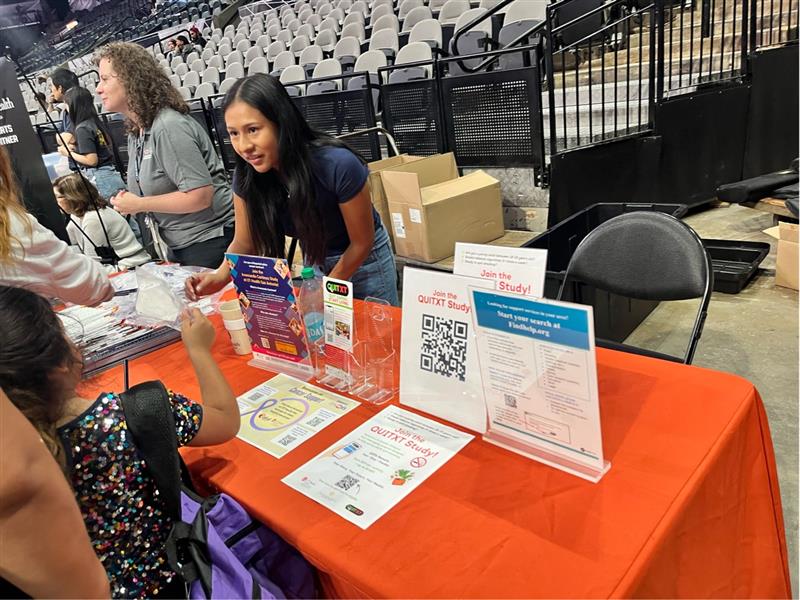
Share On Social!
Latinos and other overlooked populations have a high burden of cancer, fueled by struggles with non-medical drivers of health like transportation and insurance.
Researchers are studying these factors to improve cancer outcomes for these groups.
Yet too few Latinos and others are engaged in research.
For example, as of 2023, only 6% of FDA trials reflect the U.S. population.
To improve research participation and ensure innovations work for all populations, Genentech, a top pharmaceutical company and member of the Roche Group, decided to take a more hands-on approach and launched the AIR Site Alliance in 2021.
Since its inception, Genentech’s AIR Site alliance oncology sites have helped enroll 63% more people from overlooked backgrounds into research studies.
Let’s look back at the initiative and its 5 years of achievements.
What is the AIR Site Alliance
The AIR Site Alliance is a coalition of clinical research sites in oncology, ophthalmology, neurology, immunology, and metabolism that partner with Genentech.
Mays Cancer Center at UT Health San Antonio is one of the Alliance sites.
Together, these sites are ensuring cancer research studies reflect actual patient populations, testing recruitment strategies, and sharing best practices.
The AIR Site alliance’s achievements were shared in a recent news story in USA Today.
1. Alliance Increases Study Enrollment Among Overlooked Populations
Genentech’s AIR Alliance targeted approach to study enrollment has helped increase participation from overlooked communities twice as fast as other sites.
For instance, Alliance sites make up 2% of ophthalmology enrollment sites, but they have been able to enroll a higher number of Black and Latino participants across 23 studies, according to Genentech.
The boost in enrollment comes from the use of a model that uses community leaders, clinicians, and scientists to make tailored patient materials.
These materials are used to help with the dissemination of accurate information that’s delivered by voices these communities know and trust.
“Trust must be built. By co-creating health education materials with community leaders and patients, we’re ensuring that their lived experiences are centered in our approach. Partnering directly with communities breaks down decades of skepticism and opens doors to better health,” said Nicholas Shuman, Senior Director of Cancer Research Administration, Montefiore Einstein Comprehensive Cancer Center.
2. Alliance Closes Transportation Gaps
Transportation continues to be one of the biggest hurdles to clinical trial enrollment.
In 2022, 6.9% of Latino adults reported not having reliable transportation, compared to 4.8% of White adults, 3.6% of Asian adults, and 9.2% of Black adults, according to the Centers for Disease Control and Prevention (CDC).
Without reliable transportation, clinical trial participants can’t meet the demands of the trial, which sometimes includes traveling to in-person study visits or treatments.
To help close some of these gaps, Genentech’s AIR Site Alliance improved access to mobile research units, which can help meet participants where they are.
These mobile units also helped provide routine care to communities with limited access to care, which helped restore trust in the medical system and created opportunities to educate and enroll patients.
“[Alliance site] Pinnacle South Texas leverages relationships with local promotoras and community engagement staff to provide free screenings in non-clinic locations, like the Mexican consulate and agricultural fields, directly reaching local Hispanic families and agricultural workers,” Genentech reports.
3. Alliance Addresses the Non-Medical Drivers of Health
Genentech’s AIR Site Alliance helps break down some of the barriers that keep these populations from enrolling in clinical trials and research studies.
For example, the Mays Cancer Center at UT Health San Antonio integrated screening for non-medical drivers of health into its electronic medical records, “allowing providers to proactively screen for and help solve hurdles related to food, clothing, and transportation.”
They went a step further, with the help of Salud America! and Dr. Amelie G. Ramirez at UT Health San Antonio, to develop an action pack, “How to Start Screening for the Non-Medical Drivers of Health.” Over 100 leaders have used the action pack to see how NMDoH screening could work in their clinic, hospital, or healthcare system.
In addition, the Mays Cancer Center also established a committee to help address barriers to participation by including recruitment and retention efforts to reach hard-to-reach communities within the study.
Through this committee, Latino participation in Mays Cancer Center clinical trials increased from 42% to 49%.
4. Alliance Promotes Clinical Trial Education
One of the biggest components of clinical trial and research enrollment is educating the community about what clinical trials are, why their participation is needed, and what they do for the community.
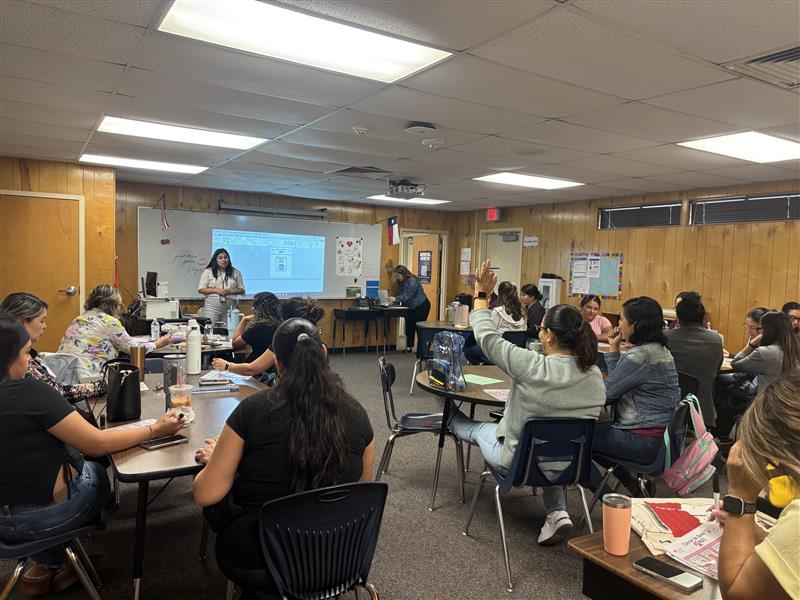
Clinical trials are evidence-based studies that can help participants overcome the high cancer burden on overlooked communities.
But there’s a lot of incorrect information surrounding clinical trials with some arguing they don’t want to be a guinea pig in an experiment. Those beliefs can be detrimental to enrollment and negatively impact the variety in population of enrollees.
To combat this, Genentech’s AIR Site Alliance has partnered with programs and organizations to try and refute these claims.
Salud America! is one such organization working to improve clinical trial understanding.
Genentech partnered with Salud America! to share open clinical trials, promote clinical trial education through a series of educational webinars, and tell the stories of real clinical trial participants.
To address harmful unconscious assumptions based on background, which is a key barrier to participation, Salud America! and Dr. Ramirez launched a tool to help health care workers understand some of these perceptions and how they impact patients.
5. Alliance Creates Patient and Provider Resources
Dr. Ramirez and her Institute for Health Promotion Research at UT Health San Antonio, including colleagues Drs. Patricia Chalela and Rebecca and the Salud America! communication team, have supported some of Genentech’s major patient resources.
In collaboration with other cancer centers and initiatives, the Institute for Health Promotion Research helped create online educational tools, brochures, and videos to support the need for variety in clinical trials.
These resources cover topics such as the phases of clinical trials and making informed decisions on clinical trial participation.
More recently, they helped develop Genentech’s bilingual video showcasing why Latino clinical trial participation is important for the future of clinical research.
Watch the award-winning video.
Explore these videos and other Genentech resources.
6. Alliance Supports Community Outreach and Engagement
As part of the AIR Site Alliance, the Institute for Health Promotion Research and Mays Cancer Center at UT Health San Antonio took a multi-level approach to engaging Latinos and other overlooked communities in clinical research.
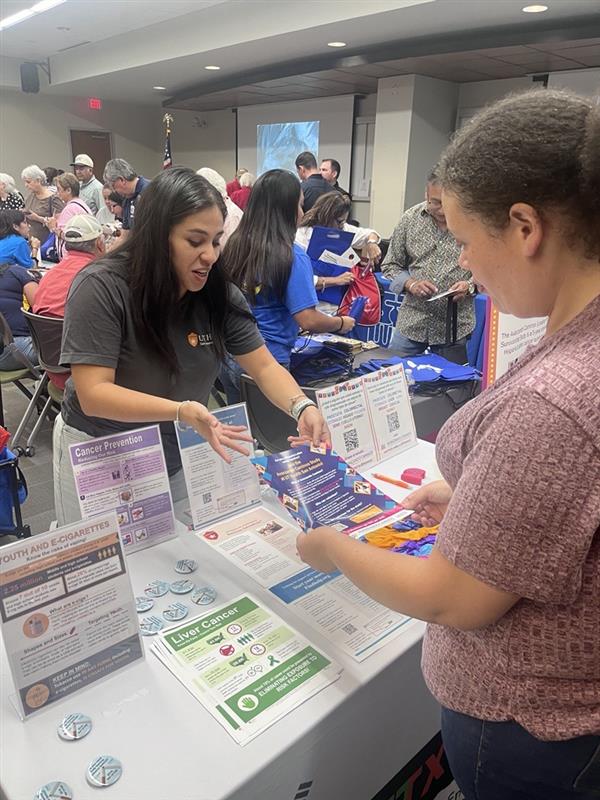
In addition to the creation of bilingual digital outreach and communications, the team developed linguistically relevant printed materials.
These materials are disseminated in the Latino community by patient navigators that look and sound like the community they are trying to reach.
This helps build trust, form relationships, and provide education support better communication between patient and provider.
The patient navigation approach also aided in participant retention, which included follow-ups, texts, and home visits.
Community outreach also increased involvement in trying to understand what these communities are facing, their needs, and how best to serve them through holding listening sessions and design studios, where they asked members of the community for feedback.
Seeking input from members of the community makes them feel more involved in the clinical research process.
5 Years of Genentech’s AIR Site Alliance
Research that represents the U.S. population won’t happen overnight.
But Genentech’s AIR Site Alliance demonstrates that broader participation can accelerate enrollment, strengthen evidence, and build trust with the communities that clinical research is meant to serve.
“By converting [insights] into actionable development decisions, we can ensure every site is equipped with the best tools to build trust and eliminate barriers,” Genentech reports.
There is still more work ahead. And the Alliance is up to the task.
“The Site Alliance provides the industry with a scalable blueprint for a future where inclusive research is the standard, and life-changing medicine belongs to and is available for everyone,” Genentech reports.
View the full Genentech AIR Site Alliance report.
Explore More:
Healthy Families & SchoolsBy The Numbers
142
Percent
Expected rise in Latino cancer cases in coming years