About the Author

Author Picture

Amanda Merck

Merck completed her MPH with a concentration in Physical Activity and Health. She curates content for Salud America! (@SaludAmerica), a Latino childhood obesity prevention project based at the Institute for Health Promotion Research at UT Health San Antonio. She focuses on the latest research, resources, and stories related to policy, systems, and environmental changes to enhance equitable access to safe places for kids and families to walk, bike, and play.


Connect with Amanda:
Twitter Link

Articles by Amanda Merck

How Community and Faith Groups Are Igniting Action on Climate Change


diverse group volunteering for environmental clean up cohesive culture intergroup contact

Climate leadership comes in all shapes, sizes, and places. The Let’s Lead on Climate guide features stories from faith-based and community groups that engage their constituents to elevate climate action and solutions across the nation. “Whether you are a locally elected leader, pastor, nurse, or other community leader, this guide will help you take the first steps toward local climate leadership,” the guide states. The Guide Can Help Latinos and Many More Latinos are worried about global warming, but fewer Latinos view themselves as activists, according to the Yale Program on Climate Change Communication. Latinos thus may not feel comfortable reaching decision makers or taking action. What can they do? The Let’s Lead on Climate shows key insights and lessons ...

Read More


We Need to Talk about Climate Change and Health


If you work in a health field, you know that climate change impacts health. You know climate change causes asthma and lung disease. You know it spurs natural disasters that endanger food and energy sources. You know Latino and other communities are particularly affected. But how can you talk about climate impact to patients? Or to leaders who can drive solutions? Thankfully, Climate for Health and ecoAmerica have a guide, Let’s Talk Health and Climate: Communication Guidance for Health Professionals. “The health and medical community is uniquely positioned to advance the message that climate solutions are a health priority,” according to the guide. “[The guide] can help make health professionals as adept at talking about climate change as they are at addressing ...

Read More

Why Don’t Latino Families Search for New Early Care and Education?


Latino parents were less likely to search for Head Start, preschool, or other early card and education (ECE) programs than their black or white peers, according to a new report. The report, from the National Research Center on Hispanic Children and Families, examined national data to find out why and how low-income Latino parents search for ECE programs. ECE programs play a big role in reducing racial/ethnic disparities in early learning and later school outcomes. Turns out, only 35% of low-income Latino parents searched for ECE in the past 24 months. That’s less than black (49%) and white (41%) parents. “This may indicate that the ECE search process is more burdensome for Hispanic households, particularly if language barriers make it more difficult for them to access ...

Read More

Policy Update: Supporting a Diverse Early Childhood Workforce for Dual Language Learners


One in three U.S. children younger than 8 lives in a non-English-speaking household, which makes them “dual language learners.” These dual language learners─often Spanish-speaking Latinos─may fall behind in a country where 81% of teachers are white, unless they benefit from a diverse early childhood workforce, according to new research from the National Association of State Boards of Education (NASBE). That’s why NASBE released a policy update urging state boards to take action to increase the quality and diversity of the teacher workforce. “It can help them more quickly develop social and emotional skills and gives them an opportunity to learn in a rich language and literacy environment,” the NASBE report states. Why Latino Kids Need a Diverse Teacher ...

Read More

Colorado Moms Can Text for Breastfeeding Advice!


mom mother and baby daughter breastfeeding

Colorado moms in the Special Supplemental Nutrition Program for Women, Infants and Children (WIC) can text peer counselors any time of day for breastfeeding advice, thanks to a new program being expanded across the state. WIC is a federal program that boosts healthcare and nutrition for vulnerable women and children. Latinos comprise nearly half of the 8.8 million WIC participants. WIC aims to improve breastfeeding rates, curb obesity, and boost early childhood development. Could texting help WIC moms get breastfeeding support they need? “We know breastfeeding is the healthiest way to feed babies, but sometimes new moms need extra support,” Heidi Hoffman, director of WIC in Colorado, said in a news release. “Using technology, we can help more moms in more places for less ...

Read More

How to “Green” Your Schoolyard


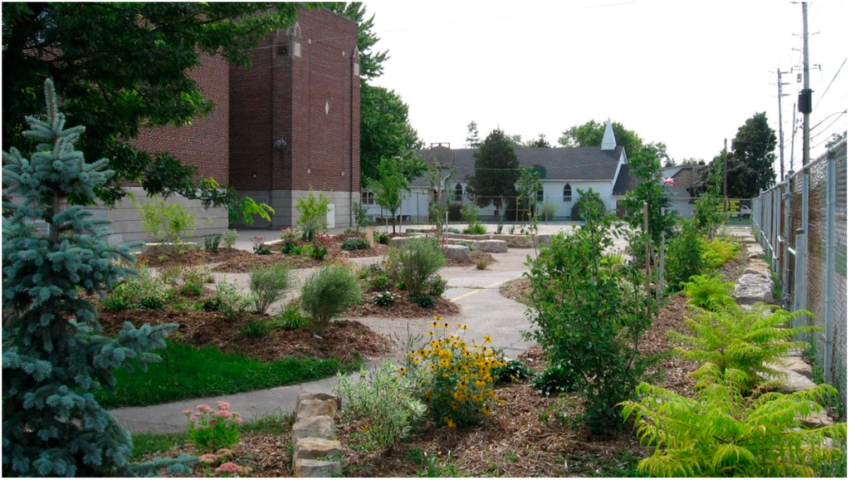
Nature-related projects have been gaining popularity on school campuses since the late 1990s. Environmental city planner, Sharon Danks, for example, has been working to transform asphalt lots into green schoolyards for 18 years. She is the Executive Director and Founder of Green Schoolyards America and in 2011, documented 150 green schoolyard projects from around the world in her book, Asphalt to Ecosystems: Design Ideas for Schoolyard Transformation. Since then: Schools in Chicago teamed up with the city's water utilities to turn drab slabs into green schoolyards for students and families. Early learning centers across Texas are launching outdoor learning environments. Austin, Texas, started planning their first "green school park.” San Antonio, Texas started ...

Read More

San Antonio Joins Effort to Connect Kids to Nature


Fewer than 40% of San Antonio residents are within a 10-minute walk of a park. Better local access to green spaces is critical, given that exposure to nature can boost children’s academic performance, physical activity and mental health. That’s why San Antonio has joined the Cities Connecting Children to Nature Initiative. The initiative, which started in 2016 as a pilot project to increase equitable access to nature in seven cities, expanded to include 11  more cities in 2018. As one of the 11, San Antonio will get 2.75 years of technical assistance and $75,000 in planning and implementation grants. But just how will San Antonio increase kids’ connection to nature? San Antonio Lacks Access to Parks Most of the U.S. population lives in urban areas, where inequitable ...

Read More

Webinar: How to Start a Trauma-Informed System in Your School


Childhood Trauma is a big reason many students miss school. Whether its neglect, abuse, or poverty, trauma hinders a child's brain, body, and future success. How can schools help students deal with trauma and reduce absenteeism? Register for our webinar on May 29, to get free tools and support to help you start a Trauma-Informed Care system in your school district! Our webinar will feature John Hernandez, director of student services at East Central ISD in San Antonio, who pushed district leadership for support, fund advocates at each campus, and eventually created a trauma-informed identification and monitoring system into his district's existing software program. What: How to Start a Trauma-Informed System in Your School District Time/Date: 12 p.m. CST, Tuesday, May 29, ...

Read More

Austin Solves ‘Nature Gaps’ with Green School Parks


Austin, Texas has many "nature gaps." In these areas, families lack parks for kids and families to play, which hinders their mental and physical health. Government and school officials in this 38% Latino city wanted to connect children with nature, which can boost students' academics and health. Their solution? "Green School Parks" that combine outdoor learning in nature during school time and act as a park for the community during out-of-school time. The Fist Step to Green School Parks More than two-dozen schools across Austin have shared use agreements that help fill the nature gap. In these agreements, schools open their schoolyards to the public after school and on weekends. But not all schools have green play areas—some are just asphalt. Fortunately, in ...

Read More