About the Author

Author Picture

Amanda Merck

Merck completed her MPH with a concentration in Physical Activity and Health. She curates content for Salud America! (@SaludAmerica), a Latino childhood obesity prevention project based at the Institute for Health Promotion Research at UT Health San Antonio. She focuses on the latest research, resources, and stories related to policy, systems, and environmental changes to enhance equitable access to safe places for kids and families to walk, bike, and play.


Connect with Amanda:
Twitter Link

Articles by Amanda Merck

Infographics, Videos, and Reports to Understand Childhood Trauma


Salud America

More than 2 in 3 kids report at least one traumatic event by age 16. It's even worse among Latino kids. In fact, 28.7% of Latino kids have experienced four or more traumatic experiences. The impact of childhood trauma can last well beyond childhood. In order to suspend judgement and help children heal, it is important to recognize the signs of traumatic stress and understand the short- and long-term impacts. The infographics can will help: Understanding Childhood Trauma from SAMHSA's National Child Traumatic Stress Initiative Entendamos el trauma infantil from SAMHSA's National Child Traumatic Stress Initiative Language Matters from The National Council How to Manage Trauma from The National Council Why Trauma Matters in Primary Care from The National ...

Read More

How San Antonio is Responding to its Shocking Pedestrian Fatality Rate


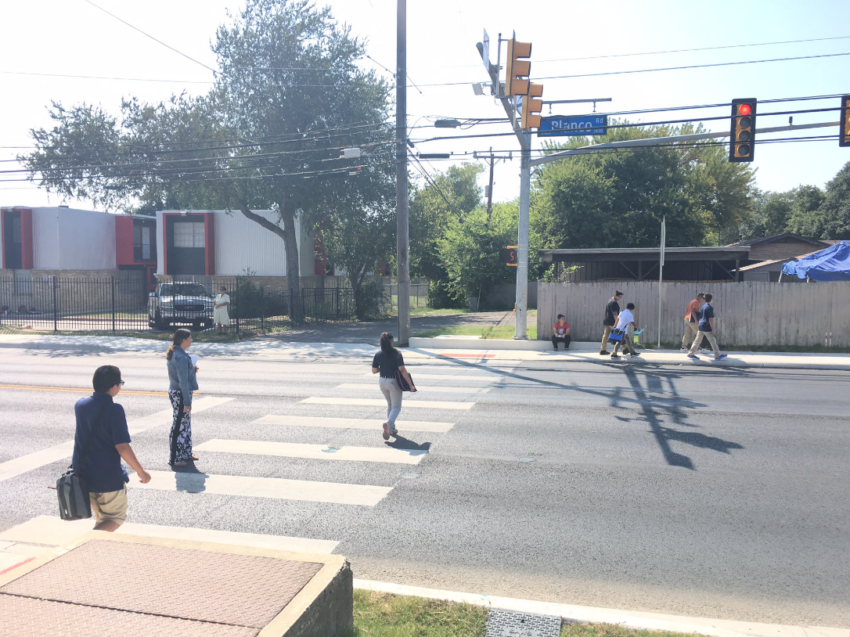
A pedestrian is killed by a motor vehicle once a week, on average, in San Antonio. In fact, 219 pedestrians died and 607 were severely injured in nearly 4,000 pedestrian-vehicle collisions from 2011-2015 on San Antonio roadways. That's a worse rate than Austin, Houston, Los Angeles, and many other cities. It's even worse in San Antonio's lower-income areas. In these areas, communities are designed for tires and steel, rather than people. When people don't feel safe to walk for health, recreation, or transportation, it harms their quality of life. They don't have an equitable chance to live healthier lives. San Antonio leaders are working to create safer streets for all. So officials launched a Vision Zero initiative and are continuing to analyze geographical data to ...

Read More

George Block: Opening the Gates for Families to Play at School Parks


George Block has fought for children for a long time. When Block saw disadvantaged kids not able to swim at local pools in the 1970s in San Antonio (63% Latino population), he fought for a new aquatic center that would provide free swim programs for them. When Block jogged through a low-income neighborhood and heard Mexican soccer games blaring from homes, but low youth soccer participation in the 1980s, he drove changes to enable more play. He even helped launch San Antonio Sports, a foundation that builds new sports facilities and spurs school facilities to open publicly. So…what did Block and his team do in 2016 when he saw many San Antonio families not using these facilities to capacity? He stepped up again and created a literal “gateway” to promote family use of ...

Read More

Building A Trauma-Informed Care Network in South Texas


In the midst of the national opioid crisis are children. These children are dealing with traumatic events and often placed in foster care or with relative caregivers. Traumatic events hinder early childhood development and negatively impact school performance, lifelong physical and mental health, and professional success. Sadly, many Latino children do not get the services they need to heal and overcome the harmful effects of trauma. High rates of opioid and illegal substance abuse in Texas in 2015 sparked a small trauma-informed committee in San Antonio (67% Latino) to plan a trauma-informed conference to build a network of trauma-informed care in South Texas. They believe it is critical for counselors, teachers, caregivers, mental health professionals, and medical personal, ...

Read More

City Leader Rey Saldaña Helps At-Risk Latinos Learn to Swim


When he was a kid, Rey Saldaña couldn’t swim. His family couldn’t afford lessons. So Saldaña was a little scared as he and his second-grade classmates walked into a chlorine-smelling aquatic center to learn how to swim as part of a federally funded program in San Antonio, Texas (63.34% Latino). He overcame his fear and learned to swim, thanks to that “Learn to Swim” program. Sadly, the program folded before his younger brother could participate. When Saldaña became a member of the San Antonio City Council many years later, he helped recreate the Learn to Swim program to reduce drowning and build kids’ confidence. He didn’t stop there. Saldaña worked with others to on two big projects—renovating an aquatic center and building a new one—that could ...

Read More

San Antonio Becomes 1st Texas City to Raise Tobacco Sale Age to 21


Smoking close up cigarette

The San Antonio City Council voted 9-2 today to approve a measure to raise the tobacco sale age from 18 to 21 within the city limits, according to FOX29-TV. San Antonio (68% Latino) now is the first city in Texas to have raised to the minimum age. The city also joins five states and over 280 communities in 13 states. Health experts lauded the measure. Tobacco use claims 480,000 lives each year, including 28,000 in Texas, and causes $8.8 billion in direct health care expenses. Lung cancer is the leading cause of cancer death among Latino men and the second-leading cause among Latinas. “UT Health San Antonio seeks to make lives better through improved health for all,” said Dr. Amelie G. Ramirez, director of the Institute for Health Promotion Research at UT Health San ...

Read More

20 State Profiles on Drinking Water Access and Quality in Schools & Child Care Centers


Access to free drinking water is not a given in schools and child care centers, although it is a key strategy to build lifelong healthy habits in children. Safe and appealing drinking water is particularly important to increase water consumption among Latino kids, who face more obstacles to being healthy, thus face higher rates of obesity and chronic disease. At the state policy level, drinking water availability in child care centers is governed by child care center licensing regulations, and drinking water availability in public schools is primarily governed by school nutrition policies, state plumbing codes, and school facilities standards. A recent study looked at state-wide policies in 20 states for drinking water quality and access in public schools and licensed child-care ...

Read More

Math Teachers Use Local Stories About Transportation in New K-5 Booklet


Math often gets a bad rap in schools. But what if students could count bikes and buses, and solve word problems about local bike lanes and bus routes? That is what's happening in Santa Monica, Calif. (18.1% Latino)—elementary students get "Math in My World" booklets with problems involving how people stay active and move around their community, like walking, biking, skating, scootering, and public transit. The booklets launched December 2017 by the city's Safe Routes to School program. "So instead of showing a six-year-old the somewhat-abstract idea that 2+1=3, they learn that Grace has 2 scooters and Sam has 1 scooter and together they have 3," wrote Jack Moreau, a transit official for the City of Santa Monica. All kids benefit of course, but this could help students ...

Read More

Wisconsin Leading the Nation in Trauma-Informed Care


An initiative by the First Lady of Wisconsin to prevent and reduce childhood trauma has grown to become a dynamic collaboration, putting Wisconsin in the lead to be the first trauma-informed state. Trauma during childhood negatively affects development and physical and mental health into adolescence and adulthood. Traumatic events include: physical and emotional neglect; physical, emotional and sexual abuse; parental divorce, separation, incarceration, and substance abuse; and poverty. These are also called adverse childhood experiences (ACEs) and were first studied in the 1990s. The more ACEs a child experiences, the higher their risk of chronic disease, mental illness, substance abuse, violence, teen pregnancy, incarceration, and dropping out of high school. Since the ...

Read More