About the Author

Author Picture

Amanda Merck

Merck completed her MPH with a concentration in Physical Activity and Health. She curates content for Salud America! (@SaludAmerica), a Latino childhood obesity prevention project based at the Institute for Health Promotion Research at UT Health San Antonio. She focuses on the latest research, resources, and stories related to policy, systems, and environmental changes to enhance equitable access to safe places for kids and families to walk, bike, and play.


Connect with Amanda:
Twitter Link

Articles by Amanda Merck

Apply For 6-Month Walking College

BonnieArbittier_crummy_crappy_streets_construction_needs_help_east_side_dawson_palmetto_8-09-2017-4-1170x780

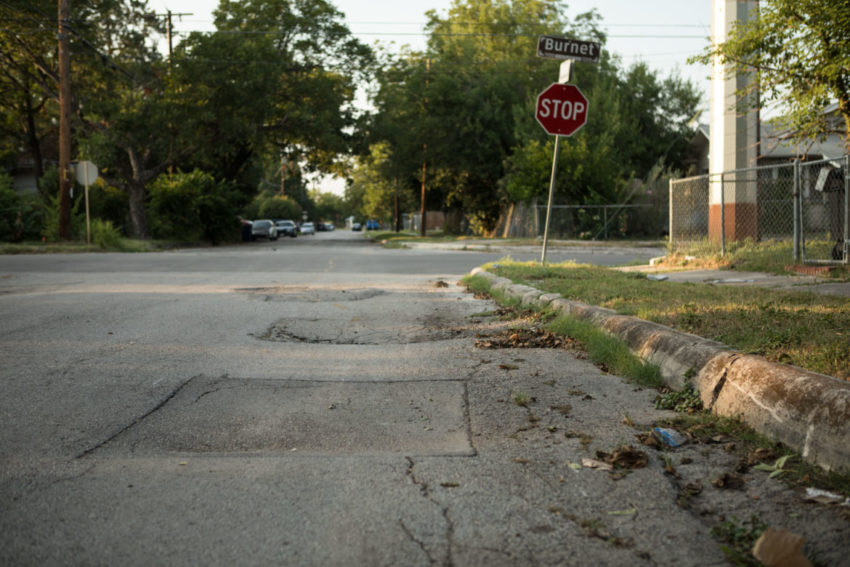
How do you feel when you walk? Most of us would walk more if we had safe places. Are you willing to commit 5-10 hours/per week for 6 months to learn how to make your community more walkable? America Walks invites you to apply for a 2018 Walking College Fellowship to gain the skills and knowledge you will need to build the walking movement in your community. UPDATE: Deadline has been extended to March 2nd at 8pm Eastern.  Why Walkability Matters Walking is a valid way to improve your health. It is also a valid form of transportation. However, many Latino families don't have safe places to walk, thus they face disparities in health and traffic fatalities and are isolated from the places they need to go. Latinos make up 16.9% of the population, yet account for 21.5% of ...

Read More


Grad Student Gifts San Antonio with “Geography of Poverty” Map


Some areas of San Antonio (68% Latino) are much harder to live in than others. Latinos in these areas face more hardship, health problems, and die sooner. In fact, everyone living in these areas faces more hardship, health problems, and dies sooner. Lily Casura and other grad students in Social Work at the College of Public Policy at UT San Antonio (UTSA) mapped ZIP-code level data and launched a project to explore life lived in four difficult-to-live ZIP Codes in San Antonio. Their goal is to deepen conversations about equity and investment to improve quality of life. January 2019 UPDATE: Casura continues to gift San Antonio with interactive maps, to include results of the 2018 Community Needs Assessment.  Why ZIP Codes? Everyone can visualize the physical environment of ...

Read More

Latinos: Government Should Help People Live Healthy, Even if it Costs More


Latino Health Physical Activity Sidewalks Bike Lanes Walking Solar

Latinos are significantly more likely than whites to say that the government should do more to make sure that Americans are healthier, even if it costs the taxpayers more (63% v. 53%), according to the 2017 Healthy Americas Survey. It makes sense. Here's why: Latinos suffer worse rates of obesity and other health issues because of lack of investment in safe streets, sidewalks, and parks, as well as lack of access to healthy food, early care and education, and family support. So what exactly do Latinos want? 2017 Healthy Americas Survey You've heard that your ZIP code is a better predictor of your health than your genetic code, right? Past policies dictated the location and quality of affordable housing, public transportation, schools, sidewalks, parks, healthy food options, ...

Read More

#SaludTues Tweetchat 1/2: Framing the Problem of Junk Food Marketing to Latinos


Junk food marketing is a problem and hurts Latino kids’ health. To improve Latino kids’ health, we must remove obstacles to eating healthy, particularly targeted marketing of junk food. But how do you communicate this issue to others? Let's use #SaludTues on Tuesday, Jan. 2, 2018, to Tweet about shifting people’s thinking about targeted marketing of junk food to Latino kids. We will discuss messaging and communication tips to frame the problem as a health equity issue. WHAT: #SaludTues Tweetchat: “Framing the Problem of Junk Food Marketing to Latinos” TIME/DATE: 1-2 p.m. EST Tuesday, Jan. 2, 2018 WHERE: On Twitter with hashtag #SaludTues HOST: @SaludAmerica CO-HOSTS: Berkeley Media Studies Group (@BMSG) and UConn Rudd Center for Food Policy and Obesity ...

Read More

Ex-Football-Coach Creates Trauma-Sensitive Schools to Reduce Absenteeism in San Antonio


John Hernandez coached football in three disadvantaged school districts in Texas. When a player missed practice, Hernandez took it on himself to visit their home. He knew many players faced poverty and other home problems. He would check in on them and offer rides, so the players wouldn’t miss practices and games. Today, Hernandez directs student services at East Central Independent School District in San Antonio. He continues to see students facing poverty and trauma, resulting in missed school, which has disciplinary and even criminal consequences. However, his district didn’t have a program to identify, support, or counsel these students. Hernandez took it on himself to start one. The Problem of Chronic Absenteeism As director of student services, Hernandez is in ...

Read More

Best of Complete Streets about to Get Better


In light of traffic deaths, traffic jams, and pollution, many U.S. cities are working to make their streets safer. However, street improvements often occur in white, wealthy neighborhoods. This does little to help the people most impacted by disparities in mobility and air quality—low-income people, Latinos and other minorities, and people older than 65. How can we tell if street projects are benefiting everyone equitably? Fortunately, the National Complete Streets Coalition of Smart Growth America grades "Complete Streets" projects—where streets are designed for drivers, transit users, people walking, and people biking, regardless of age or ability—and publishes a Best Complete Streets Policies Report. But they haven't updated their 100-point grading system since ...

Read More

Nation’s Largest ‘Zoo School’ to Open in San Antonio


Imagine you're 4 years old. How would you feel going to preschool with crocodiles, elephants, and butterflies? What about learning letters while on nature walks? That childhood fantasy is reality for kids at the Will Smith Zoo School in San Antonio (68% Latino). The Zoo School, which opened in 2004 and became licensed in 2014 at the San Antonio Zoo, will expand its capacity from about 50 to more than 200 students in 2018 and become the largest nature-based preschool in the nation, SA Current reports. Zoo officials believe that learning can be as much of a serious hands-on experience as it is messy fun. "Children will spend time in nature exploring and discovering the wonders of nature," according to the Zoo School Parent Handbook. "Basic preschool concepts will be ...

Read More

Texas Border City Turns Bus Stop into Fun Play Place


Sit and wait. That's what most people do at bus stops. Robert de León, a business management analyst with the city of McAllen, thought people could be more active while waiting for buses in McAllen, Texas (85% Latino). In fact, he and other McAllen city employees wanted to turn a bus stop into a play area with swings, hopscotch, and fun for the whole family. Could they turn a sit-place into a play-place, and boost health in McAllen? Sorry State of Health in Hidalgo De León knows health is a problem in McAllen, the largest city in Hildalgo County (91% Latino) in South Texas, which sits next to the Mexican border. Many county residents are living in poverty (26.4%) and report poor or fair health (26.7%), with an obese population of 34.4%. In McAllen, 7.6% don't own ...

Read More

How to Frame Junk Food Marketing as a Health Equity Issue


You know junk food marketing to Latino kids is a problem and degrades Latino kids' health. But how do you communicate this issue to others? A new framing brief by the Berkeley Media Studies Group (BMSG) can help you communicate more effectively and frame the targeted marketing of junk food to children of color as a health equity issue. Understanding and communicating effectively about how junk food companies specifically target Latino children is a critical step toward action and achieving health equity. Targeted Marketing is a Health Equity Issue Targeted marketing of junk food to Latino children is a major obstacle because food and beverage companies aggressively target Latinos in their communities and schools. California passed historic legislation this year to ban ...

Read More