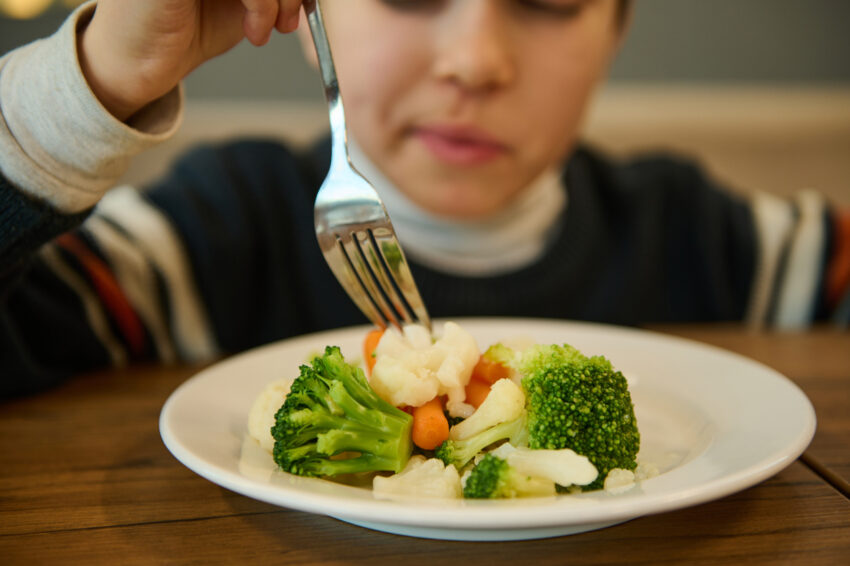
Nutritious food is an essential part of a healthy lifestyle for children. However, a February 2023 CDC report shows that many children ages 1-5 are not eating fruits and vegetables daily and are regularly drinking sugary beverages. “In 20 states, more than one half of children did not eat a vegetable daily during the preceding week. In 40 states and the District of Columbia, more than one half of children drank a sugar-sweetened beverage at least once during the preceding week,” according to the CDC. Let’s dive deeper and find out the state of diets among Latinos and all children, the role of healthy food access, and how we can create healthier food environments for children.
The State of Children’s Fruit and Vegetable Consumption
The new CDC report paints a grim ...
Researchers from UT Health San Antonio have tied obesity to with 21 Alzheimer’s disease-related genes. In analyzing 74 Alzheimer’s-related genes from the Framingham Heart Study, researchers found that 21 of them were either under-expressed or over-expressed in obesity. “Several of the genes were more strongly related to obesity in midlife versus in late life, and also to obesity in women versus men,” said Dr. Claudia Satizabal, study lead author and assistant professor of population health sciences at UT Health San Antonio.
Alzheimer’s Genes Linked to Obesity
The UT Health San Antonio study also found 13 Alzheimer’s-related genes were associated with body mass index (BMI) and eight genes associated with a second metric of obesity called waist-to-hip ratio. “Those ...
The USDA is proposing to make online food shopping an option for families in the Special Supplemental Nutrition Program for Women, Infants, and Children (WIC). Up to now, WIC participants had to use vouchers or electronic benefits cards (EBT) at the store. With the proposed changes, participants could shop online for groceries – a move that aims to improve the WIC shopping experience while increasing equity and access to nutritious foods for WIC participants, thus positively impacting nutrition security. May 2023 Update: 329 Salud America! members submitted a model comment and were among over 1,600 people overall to USDA’s proposed changes to enable WIC participants to shop online for food. The model comment was created by Salud America! at UT Health San Antonio in ...
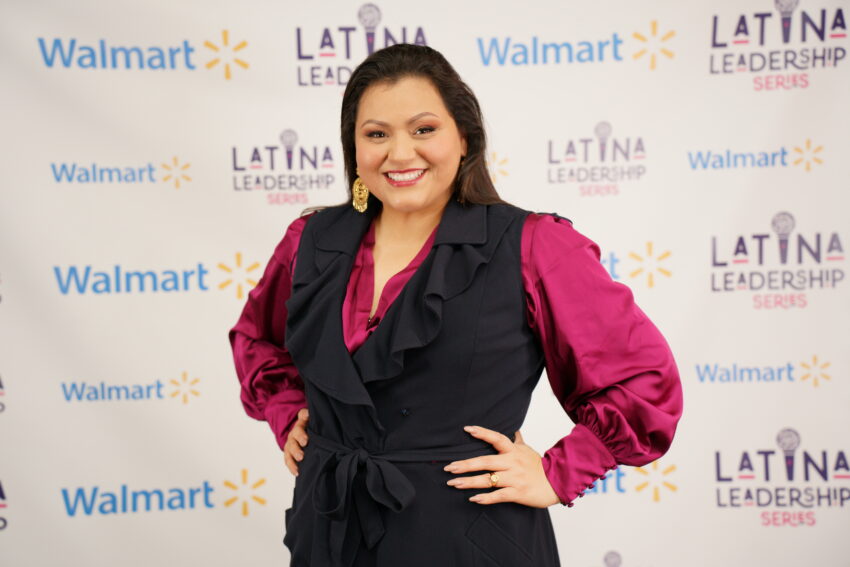
Although Anjelica Cazares spends a lot of time talking into a microphone, she doesn’t need it to be heard and make an impact advocating for Latina equal pay. Anjelica – the co-founder, owner, and principal creative director at Big Oak Tree Media and Market Street Consultants, and host of the award-winning podcast, “If Not You, Then Who?” – uplifts the stories of national Latina leaders and actively advocates for Latina equality and prosperity. Her most recent accomplishment was organizing and hosting the Latina Equal Pay Dinner, held in Houston, Texas, in December 2022. The dinner brought together a diverse group of Latina leaders to make connections, discuss personal and professional journeys, and strategize ways to close the Latina pay gap. But before she found her ...
The total economic output, or gross domestic product (GDP), for Latinos in the United States totaled to $2.8 trillion in 2020, up from $1.7 trillion in 2010. If the population of Latinos in the United States were its own country, it would be the fifth-largest GDP in the world. That is larger than the GDPs of France, India, and the United Kingdom, according to the Latino Donor Collaborative’s 2022 Latino GDP report. The Latino GDP report serves as a “factual view of the large and rapidly growing economic contribution of Latinos living in the United States.” Let’s dive deeper into the factors that contribute to the U.S. Latino GDP!
Growth of the Latino GDP
Today, Latinos account for 18.9% of the total U.S. population. As the Latino population has continued to grow ...
Isabella Jimenez is a Latina on a mission for health. At age 12, she had an idea for an app that serves as a digital cookbook where young people can learn to cook easy, healthy recipes and find tips in trivia games. She worked hard preparing recipes, creating and testing an app, and securing funding. At age 16, she launched the My Fun Food app. Now age 18, Isabella is an entrepreneur studying business at UT Austin and taking the My Fun Food app – which has a 5.0 rating in the Apple Store – to new levels. “The main purpose of the app is to provide a resource to the community,” Isabella said. “All the recipes are cost efficient, fast and quick, and easy to make.” Let’s explore what’s new since the last time Salud America! caught up with Isabella!
Isabella: ...
The nation’s largest food and drink companies are “not making adequate progress” on their promises to make, market, and sell healthy food and drinks, according to the the U.S. Access to Nutrition Index 2022. The index, published by the Access to Nutrition Initiative (ATNI), evaluates the companies’ on the healthiness of their products and their nutrition-related commitments, policies, and disclosures. None of the 11 largest companies had more than 49% of sales from healthier products. “While all companies have placed a greater focus on nutrition in their corporate strategies since the first index was released in 2018, their actual products have not become healthier, and they are not making sufficient efforts to safeguard children from the marketing of unhealthy ...
Alzheimer’s patients and their loved ones have new reason for hope after positive results from clinical trial of a new treatment called lecanemab. Lecanemab – a drug designed to slow the progression of Alzheimer’s disease by targeting amyloid plaque buildup in the brain – reduced the progression of cognitive decline among trial participants by 27% over 18 months, compared to placebo, according to UsAgainstAlzheimers. “This is very important and quite positive news that gives our nation’s 6 million Alzheimer’s patients and their loved ones reason to hope again. In fact, the data is a reminder that each drug in this class of therapies is quite different,” said George Vradenburg, chair and co-founder of UsAgainstAlzheimers. What do the results show, and how will ...
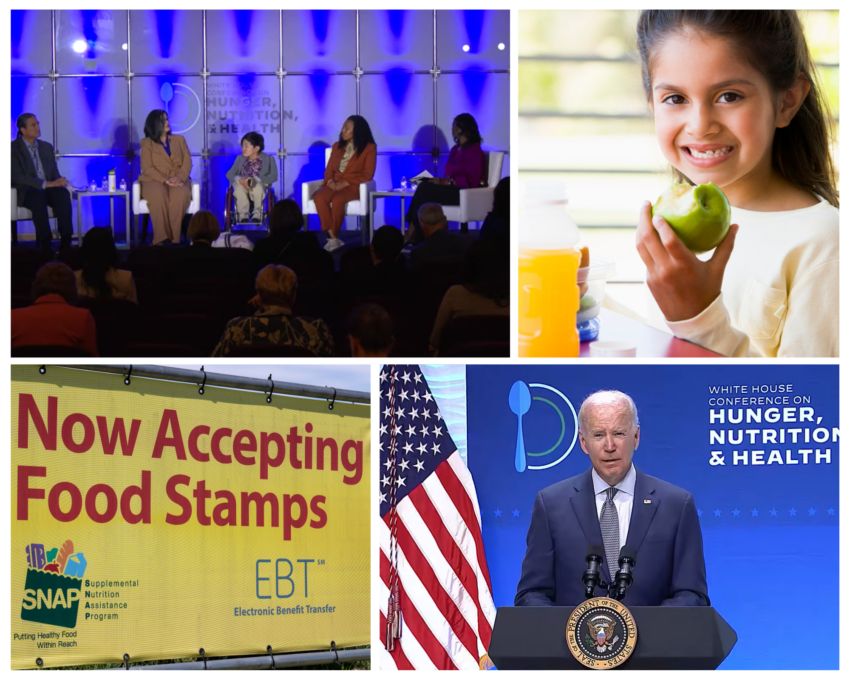
The Biden-Harris Administration announced its goal to eliminate hunger in America, improve diet and physical activity, and reduce diet-related disease by 2030 during the White House Conference on Hunger, Nutrition, and Health on Sept. 28, 2022 – the first such conference in over 50 years. The goal is based on five pillars of strategic action: Improve food access and affordability.
Integrate nutrition and health.
Empower all consumers to make and have access to healthy choices.
Support physical activity for all.
Enhance nutrition and food security research. President Joe Biden also shared three foundational principles for the goal. “Help more Americans access the food that will keep their families nourished and healthy, lot of food deserts out there. Second, ...