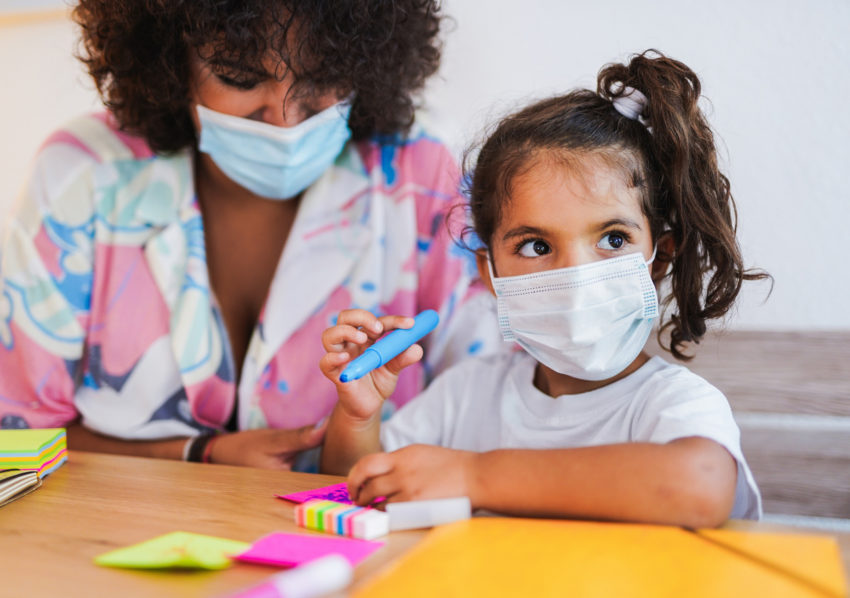
This Healthy Vision Month in May, the National Eye Institute (NEI) is looking through a futuristic lens to bring awareness to eye health and share English and Spanish-language resources to protect the sight of your familia.
Eye health and mental health go hand in hand, especially for some Latinos who lack access to eye care.
“Reframe Your Future, aims to reach people with a visual impairment about steps they can take to thrive in their daily life, like seeking vision rehabilitation and mental health services,” according to an NEI news release.
Here is what you should know about taking care of eye health for you and your family. What is Low Vision?
Low vision impairs your ability to see.
It makes it difficult to do day-to-day activities such as reading, driving, or see a screen ...
Did you know about 90,000 people are diagnosed with a primary brain tumor every year? Similarly, over 1.3 million people in the United States are living with a primary or secondary/metastatic brain tumor. For ourselves, our familia, and our comunidad, we should know a few important things about brain tumors so we can help all those impacted by a tumor diagnosis. Thankfully, the American Brain Tumor Association (ABTA) has amazing resources to help. Let’s explore and learn! Access this resource in Spanish!
1. Know the Types of Brain Tumors
A brain tumor is a growth of abnormal cells that have formed in the brain. But not all brain tumors are the same. “Some brain tumors are malignant (cancerous), while others are not (non-malignant, non-cancerous or benign). A ...
Nearly one of every two people are Latino in Harris County, Texas, which is home to Houston, the nation’s fourth-largest city. As the Latino community rises, equitable health, education, and opportunity is critical. That is why two Houston organizations, Children at Risk and Child Health Policy at the Baker Institute, published the 2024 Latino Child Health Initiative Report to examine the state of Latino child health in Precinct 2, one of four precincts in Harris County. The report identified high rates of type 2 diabetes and obesity among Latino children in Houston, as well as challenges to mental health services and kindergarten readiness. Let’s dive into the report and how it reflects the overall US Latino population.
Latino Children and Risk for Diabetes, Obesity
In ...
Researchers at Texas Tech University are interested in learning more about you and your family caregiver's experience with cancer. The research team is seeking participation from people who are 18 or older, speak English, identify as Latino or non-Hispanic White, and have been diagnosed with any form of cancer at any stage. Caregivers who want to participate must be 18 years or older, speak English, and identify as Latino or non-Hispanic White. If you or your loved one meets these qualifications, you may be eligible to take part in this study, which consists of three different surveys. These surveys will be spaced out and take 30 to 45 minutes to complete, and can be done online, by mail, or over the phone with the help of a research assistant. The first will be given ...
Nearly half of healthcare workers say they often feel burned out. That is why CDC’s National Institute for Occupational Safety and Health (NIOSH) recently launched the Impact Wellbeing Guide: Taking Action to Improve Healthcare Worker Wellbeing. “The role of healthcare workers in taking care of all of us is absolutely vital to our society, to our economy, and to our culture. But our healthcare workforce needs to feel supported, too,” said Dr. John Howard, NIOSH director, in press release. Let’s explore the guide, its six action steps, and how it can benefit Latino healthcare workers!
What is the Impact Wellbeing Guide?
NIOSH and the Dr. Lorna Breen Heroes’ Foundation designed the Impact Wellbeing Guide to help hospital leaders and executives accelerate or supplement ...
CDC’s Project Firstline has developed Infection Control Micro-Learns – a series of guided infection control discussions that can be easily incorporated into team meetings or huddles facilitated by an experienced team member with infection control expertise. Each micro-learn focuses on a single infection control topic and connects these concepts to immediate, practical value. With the help of these micro-learns, healthcare workers can easily apply key points to their daily work and perform the recommended actions to keep germs from spreading. Let’s explore Infection Control Micro-Learn on diarrhea!
What to Do When You See a Patient with Diarrhea
Diarrhea is loose, liquid stool. Some people have chronic diarrhea, it is their normal bowel function. When diarrhea ...
An estimated 17.5 million Latino voters will cast ballots in the 2024 Election in November, a record high, according to a report from the NALEO Educational Fund. This is a 6.5% increase in Latino voter turnout from Election 2020. “With more than one of every 10 voters in 2024 expected to be Latino, our community is poised to play a decisive role in the presidential election and others throughout the nation,” said NALEO Educational Fund CEO Arturo Vargas in a press release. Let’s dive into the numbers and explore how this impacts Latino voters!
Latino Voter Projections
Overall, 11.1% of all voters are projected to be Latino in Election 2024. While the national Latino vote is projected to increase 6.5% from 2020 turnout numbers, the national ...
Check out USDA’s new data tool called the Child Nutrition Dashboard! The dashboard, which is comprised of public data published in the child nutrition tables, can help federal, state, and local organizations assess trends in child nutrition program activity. “The goal of the dashboard is to provide national and state level visualization of meals served, participation, and funding data for the National School Lunch Program, School Breakfast Program, Child and Adult Care Food Program, and Summer Food Service Program,” according to the USDA’s Food and Nutrition Service (FNS). Let’s dive into how this tool can be used and why it benefits Latinos!
Nutrition Dashboard Insights
The Child Nutrition Dashboard provides information on participation, meals served, ...
The coronavirus, COVID-19, can affect anyone. But reports show Latinos and other overlooked populations are more affected, amid worsening health differences. What are the data really showing? UPDATE 3/5/24: CDC releases new COVID-19 death rates by background. COVID-19 Case Rates for Latinos
The U.S. population recently rose to 19.1% Latino. At the outset of the pandemic, COVID-19 sickened many Latinos. Variants like Delta and Omicron sparked case surges, too. Latinos comprised 24.3% of COVID-19 cases in the United States, second only to Whites (53.8%), according to CDC data on health improvement and cases on April 19, 2023. As of March 5, 2024, CDC is no longer maintaining incidence rates by background on this web page. Several states experienced Latino coronavirus ...