by
by 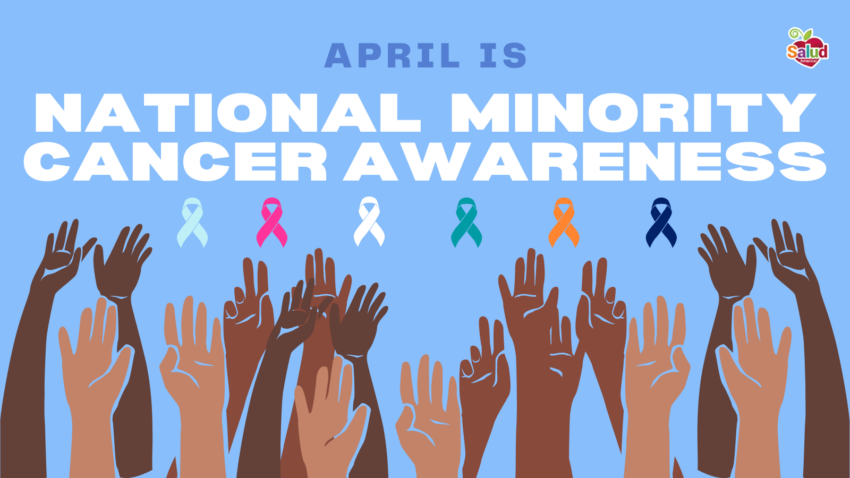
Share On Social!
Cancer persists in the US, especially in overlooked communities.
Many of these groups suffer disproportionate cancer rates and worse outcomes, due to long-standing issues that formed differences in education, economic status, access to screening and care, and more.
That’s why April is dedicated to bringing awareness and solutions to the challenges these communities face in areas such as cancer prevention, diagnosis, and treatment.
Here are seven ways to celebrate National Minority Cancer Awareness Month.
1. Learn About Differences in Cancer Outcomes
Did you know that where you live can dictate your health and what kind of health care you receive?
Where you live can increase your risk of adverse health effects, such as hypertension and diabetes, that make you more susceptible to cancer.
If you live in a rural area, access to health care, including cancer treatment, can be scarce.
All of these things lead to prolonged cancer treatment and delayed screenings, increasing risk of mortality.
Stay in the know and learn how where you live can influence your health.
Download a Salud America! Health Report Card for your town today!
Enter your county name and get auto-generated local data with interactive maps and comparative gauges on several health indicators. This can help you visualize and explore local issues in education, housing, transportation, food, health, and more.
See how your county stacks up compared to the rest of your state and nation.
Then email the Report Card to local leaders to raise awareness, include the data in a presentation or grant proposal, or share it on social media to drive healthy changes in your community!
2. Share Resources
Depending on your type of cancer, many organizations are ready to help families in need.
Whether it’s helping to pay for gas to make it to appointments, help pay for housing while undergoing treatment, or finding cancer support groups, resources are available:
- Find Cancer Resources in Spanish!
- Liver Cancer Resources Latinos Should Know About
- 9 Bilingual Resources for Colorectal Cancer Patients and Survivors
- 4 Resources to Share for Kidney Cancer Awareness Month
- Explore Resources for National Cancer Prevention and Early Detection Month
- Protect Your Familia Against Cancer with Generaciones Resources
- Explore Resources for Bladder Cancer Survivors and Caregivers!
- Mental Health Resources for Latino Family Caregivers
- 3 Essential Resources for Sarcoma Awareness Month
3. Read Stories of Survivorship
Every journey is different and paved with unique challenges and circumstances that influence health for years to come.
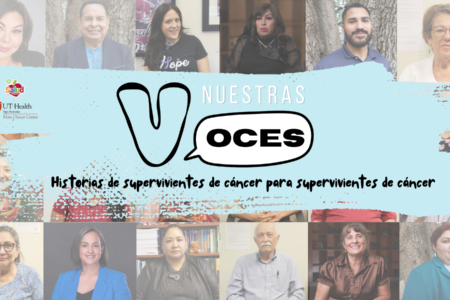
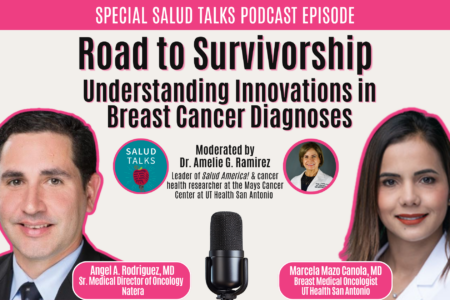
From making important decisions about care to challenges faced, stories of survivorship can help us not feel alone and empower us to make important health changes.
Here are a few survivors that are using their cancer diagnosis to speak up for others.
4. Stay Up to Date on Cancer Screenings
One of the biggest things you can do for your family is to make sure you are staying up to date on life-saving cancer screenings, such as getting your colonoscopy and mammogram.
Cancer screenings can catch cancer early, improving health outcomes, decreasing your risk of death, and lead to less aggressive and expensive treatments.
When you prioritize your personal health, you are prioritizing the health of your familia.
Find a cancer screening location nearest you.
5. Speak Up to Push for NMDoH Screening!
The non-medical drivers of health (NMDoH), like income, housing, and food, can influence health for better or worse.
That’s why we need to screen for the non-medical drivers of health.
NMDoH Screening means that a questionnaire is given to patients in a healthcare setting to help providers identify patient needs outside the healthcare setting. Patients can then be referred to helpful community resources.
Use the Salud America! Action Pack, “How to Screen for NMDoH in Healthcare,” to develop a screening program in your clinic, hospital, or healthcare system.
The action pack, developed by Dr. Amelie G. Ramirez at UT Health San Antonio, has a conversation-starting model email, fact sheet, checklist on how to develop screening, and a guide on existing screening tools for NMDoH.
6. Volunteer for a Clinical Trial
Clinical trials are research studies that may help slow, manage, and treat diseases such as Alzheimer’s and cancer.
“Volunteers in clinical trials are not only helping themselves, but they’re also building a future with better treatments that can help their families in the future,” said Dr. Amelie Ramirez, director of Salud America! and the Institute for Health Promotion Research at UT Health San Antonio.
However, when the pool of participants doesn’t reflect the entire population, these groups may miss out on the benefits that come from these studies.
The reality is that too few overlooked populations, such as Latinos, volunteer for clinical trials or research studies.
Visit our clinical trials page to find a clinical trial, read about hero volunteers, and more!
Those looking for opportunities based in San Antonio can search the Mays Cancer Center at UT Health San Antonio’s Find a Clinical Trial database to learn more about available clinical trials and eligibility requirements.
On a national level, visit clinicaltrials.gov to find a clinical trial near you.
LEARN MORE ABOUT CLINICAL TRIALS!
7. Share Your Story Cancer Survivorship Story with Avanzando Caminos
The stories of cancer survivors are more powerful and important than you might realize.
Someone’s experience could very well hold the key to ending differences in cancer care and help make a difference for future survivors.

That’s exactly what the Avanzando Caminos Hispanic/Latino Cancer Survivorship Cohort study is attempting to do by capturing the stories of survivors in South Texas.
The study team at UT Health San Antonio is is now enrolling participants who have completed their primary cancer treatments for prostate, colorectal, lung, stomach, liver, endometrial, breast, cervical, kidney, bladder, melanoma, ovarian, thyroid, and lymphoma cancers.
Through the study experience, program manager Dr. Derek Rodriguez hopes it gives cancer survivors an opportunity to process what they’ve been through.
“We want to be able to promote healing because for the first time in a long time, this may be someone’s first opportunity to give their cancer story,” Dr. Rodriguez told Salud America! “We want to be able to empower others to share their story as well. And we want to be able to better understand, detect, treat, and prevent cancer in the long run for other future survivors.”
To volunteer for Avanzando Caminos or ask questions, contact Dr. Ramirez’s team at the Institute for Health Promotion Research at UT Health San Antonio at 210-562-6514 or caminos@uthscsa.edu.
Alternatively, visit the Avanzando Caminos website in English or Spanish to fill out a quick eligibility survey and a member of the study team will be in touch!
SHARE YOUR STORY WITH AVANZANDO CAMINOS!
Explore More:
Latino CancerBy The Numbers
142
Percent
Expected rise in Latino cancer cases in coming years