About the Author

Author Picture

Amanda Merck

Merck completed her MPH with a concentration in Physical Activity and Health. She curates content for Salud America! (@SaludAmerica), a Latino childhood obesity prevention project based at the Institute for Health Promotion Research at UT Health San Antonio. She focuses on the latest research, resources, and stories related to policy, systems, and environmental changes to enhance equitable access to safe places for kids and families to walk, bike, and play.


Connect with Amanda:
Twitter Link

Articles by Amanda Merck

Bike Lanes are a Sound Public Health Investment


Latino health cycle bike bicycle

Researchers evaluated the cost-effectiveness of investments in bike lanes in New York and found that the return on investment is far better than many preventive approaches in medicine, like dialysis or HIV/AIDS screening and treatment. According to the new study out of the Mailman School of Public Health, Columbia University, every $1,297 invested in bike lanes provided benefits equivalent to one additional year of life at full health. Compare this to $50,000 spent on HIV/AIDS screening and treatment and $129,000 spent on dialysis to provide benefits equivalent to one additional year of life at full health. Read about a pilot bike lane project that received permanent upgrades. “For bike lanes, the cost per QALY [quality-adjust life years] is $1,300, a little bit higher ...

Read More

Walmart and YMCA Help Shoppers Count Steps from Parking Lot


When it comes to good health, every step counts-literally. New Jersey Healthy Communities Network in 2016 awarded $860,000 to the Sussex County YMCA and 43 other organizations to support environmental and policy change initiatives promoting healthy eating and active living, according to one source. As part of this grant, in Franklin, New Jersey (7.5% Latino), the Sussex County YMCA, Franklin Mayor Nicholas Giordano, and Walmart in Franklin partnered for the Healthy Parking Spots Initiative. They installed eight highly visible signs in the Walmart parking lot to tell shoppers how many steps to the store entrance. The Sussex County YMCA plans to expand the Healthy Parking Spots program to other retailers in the future. The purpose of Health Parking Spots program is to ...

Read More

Tips from 7 Experts on School-Community Collaboration


Swimming Latino Health Equity

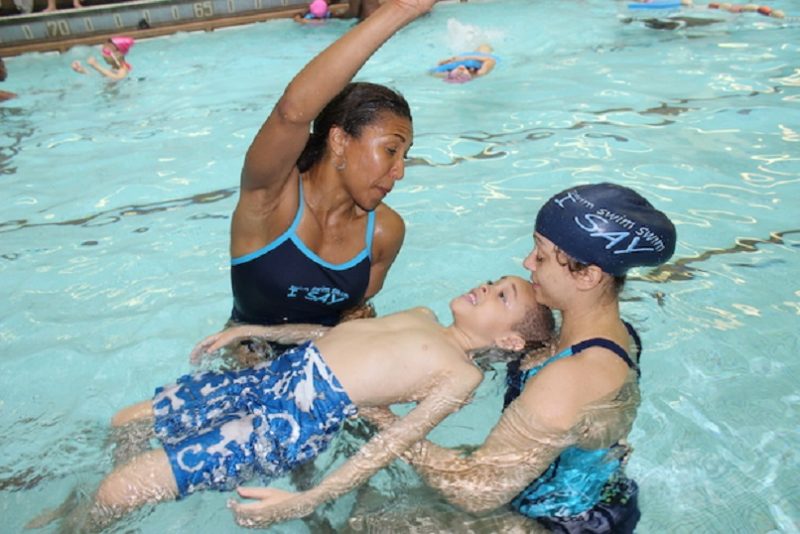
Seventy-three percent of parents report that their child's afterschool program is located in a public school building, according to the Afterschool Alliance. However, Latino kids in underserved communities have limited options for healthy afterschool programs, which is part of the reason they are more likely to be overweight or obese than their peers. Schools and communities must work together to create a support network to provide healthy food and active play for Latino and all children to succeed. The Alliance for a Healthier Generation consulted with seven experts to talk about why school-community collaborations are essential and how to craft successful partnerships. One of the takeaways is to utilize existing resources/facilities/networks. For example, one of the ...

Read More

2016 Participation Report: The Physical Activity Council’s Annual Study


Swimming Latino Health

Kids who receive physical education (PE) in school are more active outside of school, according to the Physical Activity Council (PAC) 2016 Participation Report. The PAC annually tracks US participation in 120 sports, fitness, and recreation activities and also found that all age groups rate swimming for fitness in their top three favorite interests among 10 different activities. According to the 2016 Participation Report, children ages 6-17 rate swimming as their second favorite interest behind camping. Individuals ages 25-35 rate swimming as their number one interest among camping, bicycling, hiking, running, canoeing, backpacking, working with machines, working with weights or kayaking. Read more about why swimming in school may be the most promising physical ...

Read More

Swimming May be Most Promising Activity to Get Latino Kids Active


Swimming Latino health

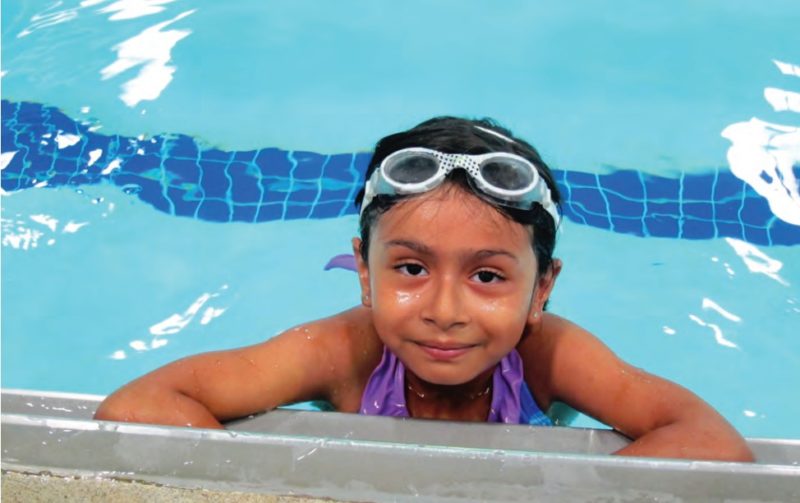
Swimming in school may be the most promising physical activity to get and keep Latino and all kids active in and out of school. Kids who receive physical education (PE) in school are more active outside of school, according to the Physical Activity Council (PAC) 2016 Participation Report. This is particularly relevant for Latino kids who are at increased risk for heart disease, diabetes, and other chronic diseases related to inactivity. The PAC annually tracks US participation in 120 sports, fitness, and recreation activities and found that all age groups rate swimming for fitness in their top three favorite interests among 10 different activities. For example, children ages 6-17 rate swimming as their second favorite interest behind camping. Individuals ages 25-35 rate ...

Read More

Parks Workers Create ‘Health’ Scavenger Hunt in San Antonio


City parks worker Michael Baldwin saw rampant physical inactivity and disease in San Antonio, Texas (68% Latino). To help, he wanted to attract people to existing health programs and services in city parks. Baldwin and his team, through local collaborations, developed Fit Pass, a city-wide scavenger hunt for wellness and physical activities. People can download a phone app or a bilingual Fit Pass passport that can be stamped for attending some of 2,300 activities across San Antonio parks, incentivizing Latino families to get physically active and play in parks. Physical Inactivity in San Antonio Michael Baldwin, special projects manager with the City of San Antonio Parks and Recreation Department (Parks Department) in San Antonio, Texas, has helped develop and implement ...

Read More

Every Body Walk! Collaborative Social Justice Toolkit


Latinos make up 15.1% of the population, yet account for 18.6% of pedestrian fatalities. Latinos face an age-adjusted pedestrian fatality rate 43% higher than whites, according to Dangerous by Design 2104. When working to promote walkability and create policies that promote walking, it is important to engage, empower and inform community members, organizations, and elected officials about equity, fairness, and justice. The Every Body Walk! Collaborative (EBWC) and partners developed the Social Justice Toolkit  to identify key areas where walking and walkability can help to ease tensions, bridge divides, and address disparities within communities. “The best thing we can do for the safety of our children is to get them out of the car by building mixed-use, walkable ...

Read More

2016 RWJF Culture of Health Prize Winner: Santa Monica


Data-driven policy is winning in Santa Monica, Calif. (13.1 %Latino). Santa Monica is committed to improving resident's health by looking at housing, transportation, parks, and youths, thus was one of seven communities to receive the 2016 RWJF Culture of Health Prize. In 2012, Santa Monica developed a Wellbeing Index to measure what was hampering or helping the well-being of residents. “The options we give people really affect their ability to access things that can improve the quality of their lives," Francie Stefan, Santa Monica mobility manager, said to the RWJF. Housing. Santa Monica started improving resident's ability to access to affordable housing decades ago. Santa Monica requires developers to set aside a percentage of newly constructed units for affordable ...

Read More

2017 National Walking Summit Call for Proposals


Family walking sidewalk neighborhood in

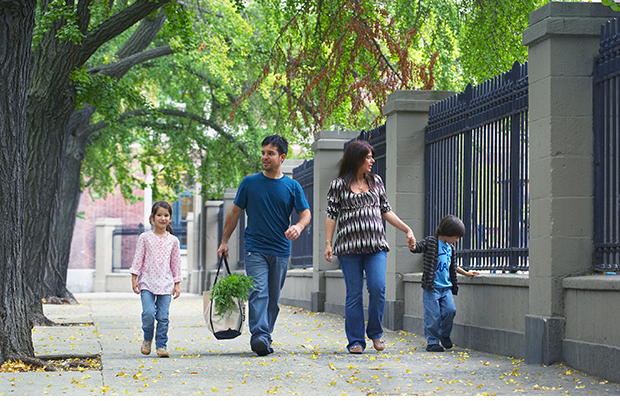
Latinos and Latino communities could benefit from the co-benefits walking and walkability can provide to an individual and community. Walking and walkability are cornerstones of vital and vibrant communities, communities which make safety a priority, provide access to basic needs and services, value health equity and historical places, cultivate sustainable economic growth, and promote civic engagement. The 2017 National Walking Summit will define, describe, and illustrate the influence and power of walkability in creating vital and vibrant places in order to bridge community divides and overcome existing disparities. Every neighborhood can be vital and vibrant. There is an important distinction between physical activity for health, like walking or swimming, and exercise ...

Read More