Cancer is a top killer of Americans. While in some instances cancers are genetically inherited in the majority of cases, they’re preventable with a good diet and plenty of exercise. Here are top cancer-fighting superfoods, according to Health:
1. Berries
Berries are packed with phytonutrients, especially black berries which contain a high concentration of phytochemicals called anthocyanins. These "slow down growth of premalignant cells and keep new blood vessels from forming (and potentially feeding a cancerous tumor).”
2. Walnuts
Phytosrerois—cholesterol like molecules “have been shown to block estrogen receptors in breast cancer cells, possibly slowing the cells' growth.”
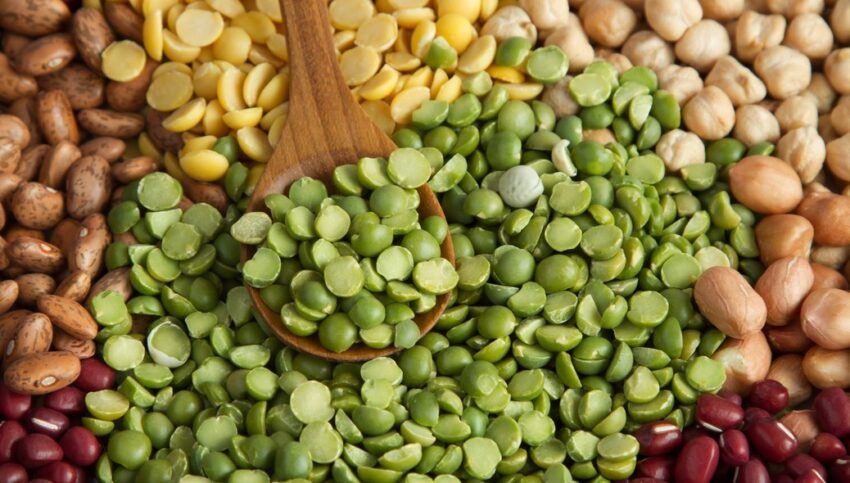
3. Beans
Researchers and numerous studies have found that black and navy beans can ...
Teenagers who eat fruits and vegetables high in fiber may significantly lower their risk of developing breast cancer (a leading cause of death among Latinas and other populations), later on in life, according to a new study, CBS News reports. Researchers at Harvard’s T.H Chen School of Public Health analyzed data from 44,000 women. They concluded that those who consumed about 28 grams of fiber a day “had a significantly lower risk of breast cancer before menopause compared with those who said they ate less than 15 grams a day.” "The results of this study emphasize the role of an early life high-fiber diet on prevention of breast cancer in later life. High consumption of foods rich in fiber such as fruits, vegetables and whole grains in early life may help to reduce breast ...
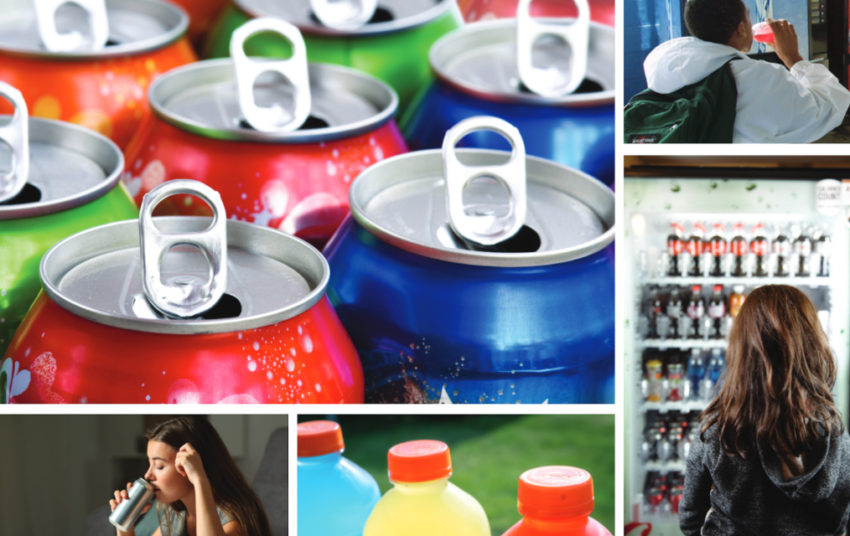
Across America, public health leaders in different states across the nation are pushing for various ways to address a rising childhood obesity epidemic. One big issue is sugary drinks. Sugary beverage consumption on a daily basis has been proven in research to be linked to higher risks of health related diseases. Follow #SaludTues to tweet with us on Feb. 2, 2016, as we unveil the results of a new study focusing on kids and sugary drinks. Participants will discuss problems, solutions, and new studies on sugary beverages and kids. We will share research packages that include helpful infographics. WHAT: #SaludTues Tweetchat: “Sugary Beverages & Kids”
DATE: Tuesday, February 2nd, 2016
TIME: 1-2 p.m. ET (Noon-1 p.m. CT)
WHERE: On Twitter with hashtag ...
Two architecture and planning graduate students from the University of Texas San Antonio (UTSA) recognized good fruit from fruit trees were being left to rot in urban areas of San Antonio, Texas, where many families live in need of fresh foods. Working together for a class project, the friends created a blossoming non-profit to make sure families in need can access a variety of fresh fruit.
A Local Healthy Food Problem
Awareness/Learn: In summer 2013, UTSA grad student Melissa Federspill started a class focused on health planning, called “Health in the Built Environment.” Students in the class were advised to visualize solutions to inner-city health problems. The class analyzed a neighborhood close to campus, the Avenue to Guadalupe neighborhood in the West Side of San ...
Children who lived closer to supermarkets increased fruit and vegetable consumption and reduced their body mass index (BMI), according to a study published in the American Journal of Public Health. Researchers examined about 500 children ages 6-12 with a BMI of or above the 95th percentile. There are other factors still needing further research. The researchers of the study suggest focusing on household income, other non-medical drivers of health, the drive to lose weight, and other factors, which could determine weight loss or gain, too. Having close access to fruits and vegetables has also been shown to assist families and help reduce the BMI of kids, studies show. To learn more about this study, click ...
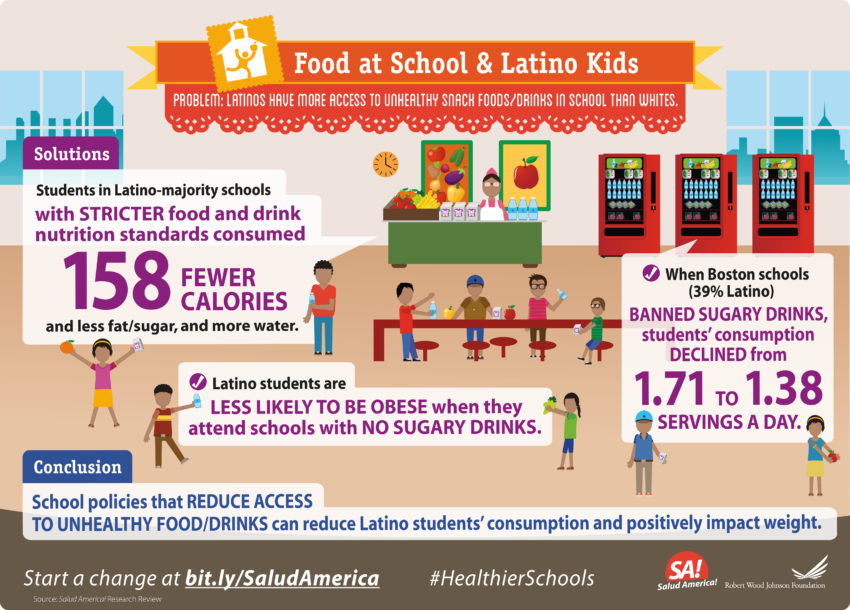
Many kids have access to unhealthy snacks in schools. But when schools take action and set stricter nutrition standards, students consume 158 fewer calories and less fat/sugar, and more water, according to our new infographic on food at school and kids. The infographic is part of Salud America!’s Healthier Schools and Kids research review, which tackles the latest issues on the school health environment and offers recommendations. Share this infographic today! Salud America! is a Robert Wood Johnson Foundation-funded national childhood obesity prevention and communication ...
A new study suggests offering water to students may help reduce childhood obesity, CBS News reports. In the U.S., children struggle with overweight or obesity, but researchers at NYU Langone found “that thousands of New York City School children lost weight and lowered their body mass index after self-serve water dispensers were placed in schools.” “We looked at over a million kids in just over 1,200 schools in grades K-8,” Brian Elbel, study co-author and associate professor at the NYU Langone Medical Center, told CBS. “They ended up being about four or five pounds lighter after the introduction of this intervention as compared to a kid in a school that didn’t get a water jet.” According to the authors of the study when students have access to water jets sales of ...
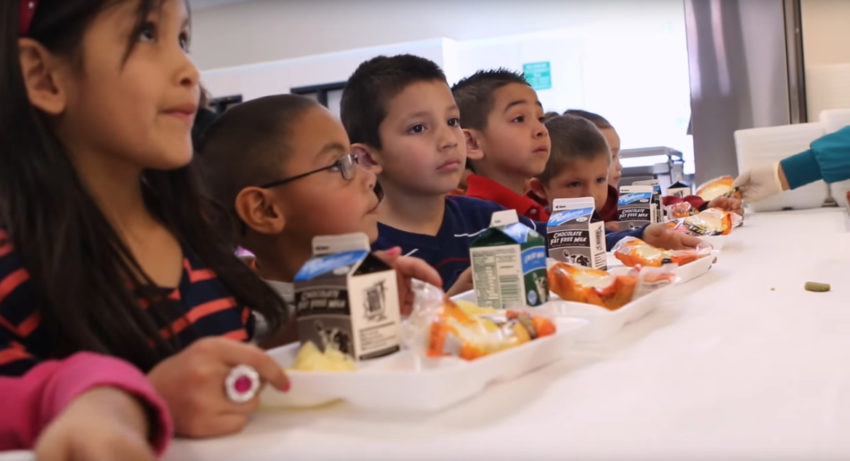
Schools are where kids consume half of their daily calories. But many kids are widely exposed to unhealthy foods at school, and are less likely to engage in physical activity in school, according to a new research review from Salud America!, a national network for childhood obesity prevention and communication funded by the Robert Wood Johnson Foundation. Salud America!’s Healthier Schools and Kids research review shows that Latino-majority schools tend to: have weaker policies on school snacks and drinks than other schools; may be less likely to implement nutritional guidelines; and offer few programs or access to facilities for physical activity. Solutions are emerging to create healthier schools: School policies that reduce access to unhealthy snacks and drinks are likely ...
All kids, including Latinos, need a healthy school environment. How can we healthy schools become then norm? Some students are more exposed to unhealthy food in and out of school. Stronger nutrition standards for snack foods and drinks will help all students access to healthier snacks at school, which can positively influence body mass index (BMI) trends for all populations. In addition, some students also engage in less physical activity in school, and before and after school. Implementing relevant programs that reduce challenges can increase activity opportunities for Latino and all kids. See the Full Research Review with references (PDF)
Read the Issue Brief in English (PDF)
Read the Issue Brief in Spanish (PDF)
Contents
Introduction & Methods. This Salud America! ...