Many severe side effects of prescription drugs are not reported, according to new findings from JAMA Internal Medicine. Moreover, the researchers who completed the study comment that current FDA regulatory practices need reform, especially the process used to report harm caused by medical devices. “Over the last 4 decades, the approval and regulation processes for pharmaceutical agents have evolved and increased in complexity as special programs have been added and as the use of surrogate measures has been encouraged,” the researchers write. “The FDA funding needed to implement and manage these programs has been addressed by expanding industry-paid user fees. The FDA has increasingly accepted less data and more surrogate measures and has shortened its review times.”
What ...
Many of our transportation woes are due to lack of realistic options. American cities have largely designed streets for speeding vehicles rather than for people walking, biking or taking the bus, resulting in high rates of traffic fatalities and injuries; air, water, and land pollution; and limited access to destinations needed to stay healthy and climb the economic ladder. Although people-first design has numerous social, environmental, health, and economic benefits; current car-centric policies and practices undermine these efforts. It’s time to better measure and prioritize people-first policies, practices, and projects. Let’s use #SaludTues on February 18, 2020, to tweet about how to shift from car-centric thinking to people-first thinking. WHAT: #SaludTues ...
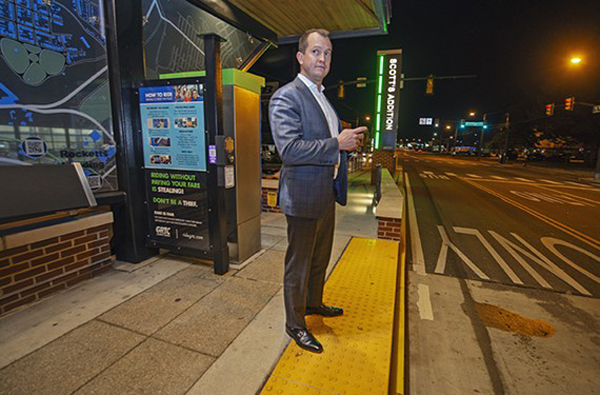
“I feel like my life is threatened at each intersection.” That is what Andreas Addison said about walking the streets and relying on mass transit during his #NoCarNovember experiences in Richmond, Va., where he is a city council member. He wanted safer streets and more frequent transit for his constituents. So Addison found two models he liked─a D.C. city leader’s omnibus bill (one that combines several measures into one package) for better transit, more walkability, and less car reliance, and Virginia Commonwealth University’s work to make campus safer for pedestrians. Addison then began working on an omnibus bill of his own to create a safer environment for people walking, biking, and taking the bus in Richmond.
Unfair Social and Health Outcomes in Richmond
Life ...
Toxic exposures in the air can trigger severe health problems — worse, certain pollutants are so small that they can enter and harm any part of the body. These microscopic "nanoparticles," emitted from a wide range of products, from candles to cars, can cause numerous illnesses, according to published research. Illnesses include the well-established condition Toxicant-Induced Loss of Tolerance (TILT). Nanoparticles even have resulted in death. "The biggest killer of all never makes the headlines, isn't regulated, and is barely talked about beyond niche scientific circles: it's nanoparticles," according to Tim Smedley, author of "Clearing The Air," in BBC Future. "Nanoparticles can reach, and wreak havoc in, any organ in the body."
What are Nanoparticles?
Certain ...
When was the last time you drank soda, juice, or other forms of sugary drinks? For most Americans, it is a normal part of everyday life. The problem? These drinks are incredibly unhealthy, more so than some companies would lead consumers to believe, according to Xavier Morales, executive director of The Praxis Project, and Jim Krieger, executive director of Healthy Food America. Check out this discussion on the Salud Talks Podcast, Episode 19, "Peddling Poison"! WHAT: A #SaludTalks discussion about sugary drinks and their harmful impacts on consumers
GUESTS: Xavier Morales, executive director of The Praxis Project, and Jim Krieger, executive director of Healthy Food America
WHERE: Available wherever fine podcasts are downloaded, including Apple Podcasts, ...
Decades of decisions fueled by structural racism have built a society with no health equity, where many groups lack a fair, just opportunity to be their healthiest. This is especially true in our transportation system. Past and present planning, policy, and funding decisions have failed to provide equitable, affordable, safe, convenient, and reliable transportation options for all, from the local to federal levels. Dismantling these inequities requires intentional effort. That’s why Smart Growth America conducted a field scan to explore promising opportunities to achieve equitable public infrastructure, with support from the Robert Wood Johnson Foundation. The report spells out the six biggest challenges to health equity facing our transportation system (and the 40 ...
Throughout the modern era, single-family zoning and redlining practices institutionalized economic as well as racial segregation in America. Although redlining is now illegal, single-family zoning—which still occurs to this day—reinforces both racial and economic segregation. Moreover, it contributes to the racial wealth gap seen across the country. "The practice of zoning most residential land exclusively for single-family detached homes is a major cause of affordable housing shortages and long commute times," Eric Kober, an adjunct fellow at the Manhattan Institute and former director of housing, economic, and infrastructure planning at the New York City Department of City Planning, writes in a recent CNN Business editorial. "In expensive cities, this policy makes it ...
School food nutrition is at risk again. The USDA, which relaxed school nutrition standards in 2018, is proposing two rule changes it says will give schools and summer programs more flexibility to meet student meal preferences and reduce food waste. But health experts warn this will roll back progress on school food nutrition. Schools could, for instance, cut breakfast fruit by a half-cup. Fries and burgers could be served a la carte. Pasta could count as a vegetable. This is a longer-term health threat than the coronavirus pandemic, according to Healthy Eating Research. "This would create a huge loophole in school nutrition guidelines, paving the way for children to choose pizza, burgers, French fries, and other foods high in calories, saturated fat or sodium in place of ...
The future of humanity depends on building healthier food systems. Why? Because our current food and farming systems make us sick in these ways: Unhealthy working conditions
Contaminants in the water, soil, or air
Specific foods are unsafe for consumption
Unhealthy diets
Lack of access to adequate, acceptable food That is why the International Panel of Experts on Sustainable Food Systems (IPES Food) published a report to identify five leverage points for building healthier food systems.
1. Promote Food Systems Thinking
It’s time to overcome political and scientific silos. It’s time to reconnect people with the realities of the food on their plates. The way food impacts health isn’t an isolated event. We need to promote “food system thinking” ...