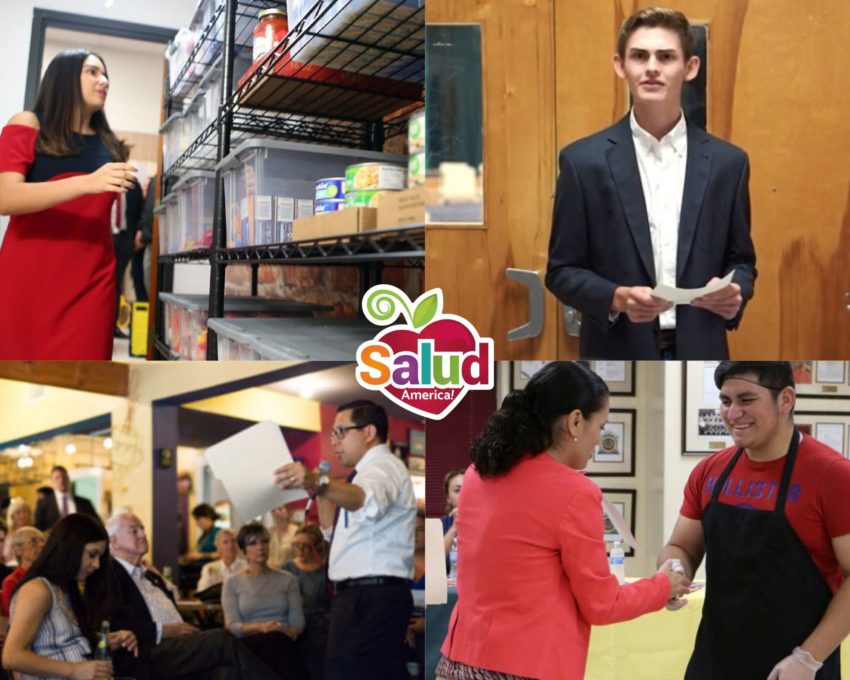
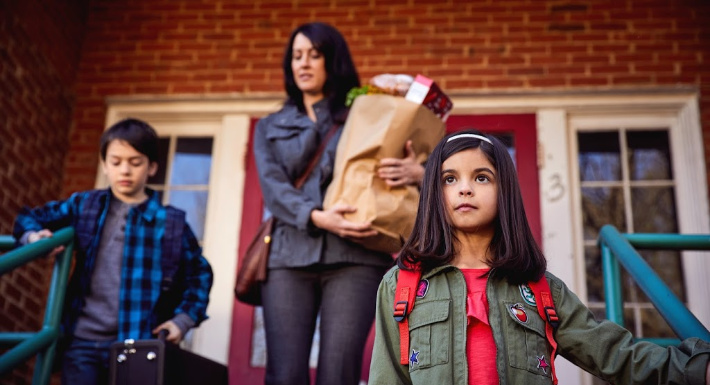
U.S. Latinos face high levels of poverty, food swamps, and food insecurity—living without reliable access to enough affordable, nutritious food. In Texas, the food insecurity rate is 14.3%. That’s why Texas State Representative Diego Bernal championed legislation that would allow schools to set up school food pantries. Because of this law, schools are helping those who are hungry and food insecure as well as reducing food waste. The law has also inspired others to create change and do good for the community, like Jenny Arredondo, Samantha Almaraz, and Pablo Ramirez.
Diego Bernal & School Food Pantries
Bernal was heartbroken after touring Texas schools and seeing students go hungry, even as "perfectly edible food" was being thrown away in cafeterias. He wanted to ...
In 2006, Dr. Susan E. Pacheco experienced a stark paradigm-shift due to an inconvenient truth. She learned that the Earth—and those who inhabit it—could experience destruction and devastation at the hands of climate change. Once Pacheco gained that understanding, she says the only thing left to do was to act. “It’s just the knowledge,” Pacheco said. “Just knowing that this is happening and that medical students, residents, and doctors don’t have the benefit of that knowledge. I have to do something. I just can’t sit and keep this knowledge to myself. “That’s why I’ve been so engaged in educational activities that have to do with climate education because it cannot be ignored.”
Introduction to Helping others Through Healthcare
Pacheco is one of the few ...
When was the last time you didn't use your car to get around? A lack of transportation options and safe streets make it too difficult for too many Americans to not use personal vehicles, according to Ian Thomas, the State and Local Program Director of America Walks. Check out this discussion on the #SaludTalks Podcast, Episode 10, "Streets Found Wanting"! WHAT: A #SaludTalks discussion on auto-dependence and how that reliance impacts everyone GUESTS: Ian Thomas, the State and Local Program Director of America Walks
WHERE: Available wherever fine podcasts are downloaded, including Apple Podcasts, Spotify, SoundCloud, Tune In, and others
WHEN: The episode went live at 8:30 a.m., Nov. 13, 2019 In this episode, we explored questions such as: Why is it that ...
The foster care system aims to support children whose parents can't support them. But what happens when those children grow up and leave the system at age 18, and are not prepared for life on their own? Within a year, 40% of foster youth are homeless. Others are pregnant or in jail. Elaine Andries Hartle hates to see it. That's why Hartle, leader of the THRU Project, works to bridge the gap between foster care and a life of health and independence for youth as they age out of the foster care system in San Antonio (63% Latino). "It's really hard to improve your life if you don't know where you're staying tonight and, unfortunately, there are just very few transitional living programs in San Antonio that can teach these kids to live independently," Hartle told KSAT News. ...
Is your town quickly becoming unlivable? That's the case for Jose Luis Ortiz, a farmer and an environmental activist with the Los Jardines Institute. He describes how, despite what some might think, climate change is already destroying his home. Check out this discussion on the #SaludTalks Podcast, Episode Nine, "An Endangered Community"! WHAT: A #SaludTalks discussion on the current, real-time impacts of climate change
GUESTS: Jose Luis Ortiz, an environmental activist with the Los Jardines Institute
WHERE: Available wherever fine podcasts are downloaded, including Apple Podcasts, Spotify, SoundCloud, Tune In, and others
WHEN: The episode went live at 11 a.m., Nov. 6, 2019 In this episode, we explored questions such as: How is the climate crisis impacting ...
Having a quality, affordable home can unlock good health for people. The problem is that quality housing is far from the reach of many populations, including Latinos and those living in poverty or homelessness. In fact, low-quality housing can lead to asthma, lead poisoning, mental health issues, and hospitalizations. Let’s use #SaludTues on Tuesday, Nov. 12, 2019, to tweet how to promote health as a top priority in the development and preservation of affordable homes and to elevate homes as a tool for improving resident and community health! WHAT: #SaludTues Tweetchat: Health Begins With Home
TIME/DATE: 1-2 p.m. ET (Noon-1 p.m. CT), Tuesday, Nov. 12, 2019
WHERE: On Twitter with hashtag #SaludTues
HOST: @SaludAmerica
CO-HOST: Enterprise Community Partners ...
Do you know how roadways are graded? Most transportation indicators grade based on the level of motor vehicle traffic on a road, with little consideration for people walking, bike or taking transit, and vehicle travel. This leads planners to design car-focused roads that neglect transit and non-motorized travel, which is counterproductive to social, environmental, and health goals. Using level of service (LOS), for example, to assess road performance tends to expand roadways and increase vehicular speeds to benefit cars and trucks only. This ends up enabling more vehicle travel and reducing feasibility of walking, biking, and busing. That’s why five early-adopter cities in California transitioned away from a narrow focus on moving as many cars as fast as possible, to a more ...
Facebook has announced a $1 billion pledge for grants, loans, and land to address the California housing crisis that it and other tech giants helped create. The $1 billion commitment will be distributed for five projects: $250 million for mixed-income housing on excess state-owned land where housing is scarce.
$225 million in land that Facebook recently purchased in Menlo Park, home of Facebook’s headquarters, where real estate prices have skyrocketed. The plan is for over 1,500 units of mixed-income housing. $150 million to build affordable housing in the San Francisco Bay Area, including housing for the homeless. $25 million to build housing for teachers and essential workers in San Mateo and Santa Clara, enabling them to live near the schools where they work. ...
High-schoolers Samantha Almaraz and Pablo Ramirez see many classmates who struggle with hunger and poverty in the 85% Latino border town of McAllen, Texas. They wanted to help. So Samantha and Pablo, 10th-graders at Lamar Academy, started a school food pantry by working with their parents, school leaders, and using the Salud America! “School Food Pantry Action Pack” as a guide for their efforts. With their pantry, called the Energy Bar, they store leftover food from the cafeteria and distribute it to hungry students. "We're surrounded by people who are hungry and that don't get food,” said Samantha, who with Pablo is in the International Baccalaureate program at Lamar in McAllen ISD. "They tell us, ‘I don't have food waiting for me at home.’” The Energy Bar ...