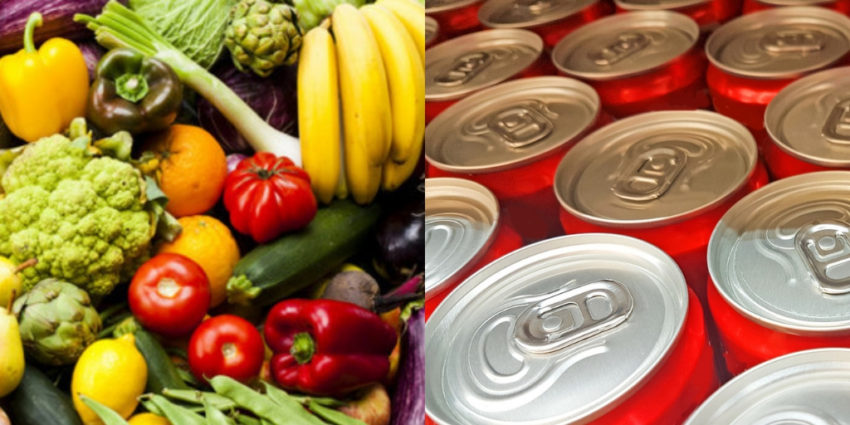
Sugary drink taxes are bubbling up across the nation. From Philadelphia to Berkeley, Calif., these sugary drink taxes are having an intended benefit—reducing consumption of bad-for-health sugary drinks and driving up water sales. But where is the tax money going? Let's look at Washington, D.C. (11.3% Latino), which recently added a sugary drink tax and is already considering a stronger one, and whether the revenue is benefiting health.
New Sugary Drink Sales Tax in D.C.
D.C. leaders recently bumped up the local sales tax from 6% to 8% on drinks with natural or artificial sweeteners that contain less than 100% juice or at least 50% milk bought in stores. City council member Mary Cheh pushed for the tax. She moved to insert this tax in the city’s $15.5 billion 2020 ...
Check out these new Spanish-language research materials on the alarming state of Latino housing, transportation, and green space from our team at Salud America! UT Health San Antonio. The new Spanish materials are based on an English research review earlier in 2019. The research found that, sadly, U.S. Latino communities face unaffordable housing, unreliable public transportation, and a lack of green space and parks. This limits Latinos’ access to health-promoting assets─medical care, good schools, healthy food, and physical activity. This also contributes to health inequities. Fortunately, community leaders can adopt dynamic land-use methods, public-private partnerships, and community involvement to build and revitalize Latino neighborhoods. This can create affordable ...
Amid an obesity crisis and a coronavirus pandemic, Latinos and all people need more water, and less sugar. Do you agree? Speak up! Submit a model comment below to urge the 2020-2025 Dietary Guidelines for Americans to add water to the MyPlate/MiPlato graphic, reduce the amount of added sugars, and make healthier diets equitable for all people! Update 6/11/20: Over 55,000 people submitted comments!
Submit a Comment for Dietary Equity!
Nearly two of every three people in the United States live with at least one chronic disease like obesity and heart disease, according to the CDC. These are caused in part by poor diets. Unhealthy eating is now the top cause of premature death in the nation (https://salud.to/unhealthy-eating-death). Communities of color and low-income families ...
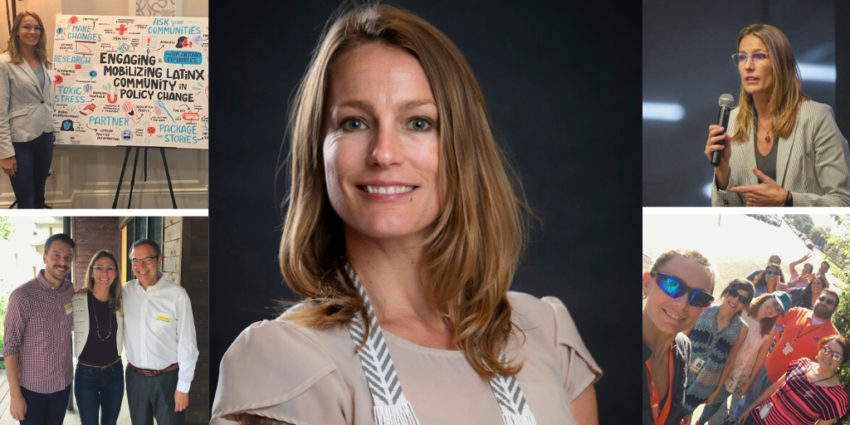
Amanda Merck isn’t only a content curator for Salud America! at UT Health San Antonio, a member of many health committees, and an urban planning student at the University of Illinois at Urbana-Champaign. She is also a fighter for equitable transportation, equitable access to parks, and an advocate for children who experience trauma. Merck is a poster child for civic engagement for health equity─and she is dedicating her time and career to help countless others become civically engaged, too.
Merck: ‘Never Any Talk about Civic Engagement’
Merck grew up in many different places including California, Texas, and Montana. As the daughter of a low-income, high-school dropout, working was meant to pay the bills. “There was never any talk about civic engagement nor ...
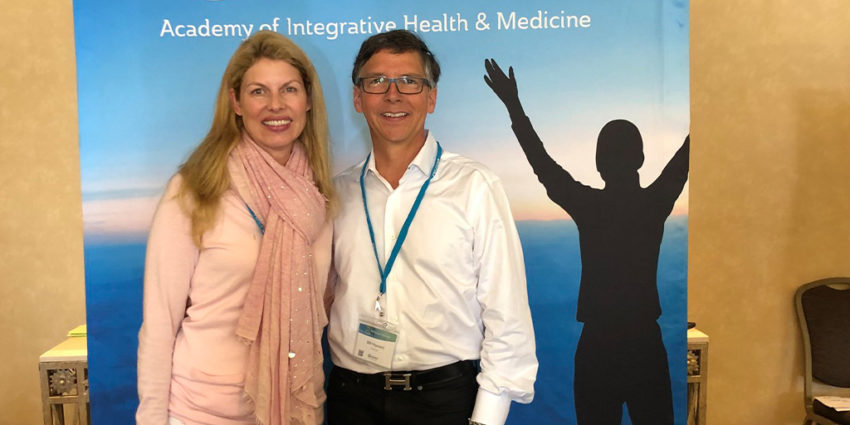
Bill Hayward learned a disturbing truth when he ventured into the crawlspace underneath his home. For a year, he, his wife Adriana, and other members of their family experienced consistent migraines, mood swings, extreme fatigue, flu-like symptoms, and a host of other health problems — with no root-cause explanation. They sought help from experts and professionals alike to no avail. Using a last-ditch, do-it-yourself test, Bill discovered their home itself was full of mold and that it was responsible for their symptoms. "It's terrifying and heartbreaking," Adriana said. "I felt really hopeless; the medical profession not really knowing what to do with it and dismissing it. It was just a very dark and sad time for our family." Mold and other environmental factors can lead ...
Much of the disparity we see in traffic deaths and chronic disease is related to how we build roads and communities. Improving safety on our streets, sidewalks, and public spaces can help address decades of disparities. Let’s use #SaludTues on Dec. 17, 2019, to tweet about how you can take time at the end of 2019 to plan for a safer and more active 2020. WHAT: #SaludTues Tweetchat: “How to Plan for a Safer and More Active 2020”
TIME/DATE: 1-2 p.m. ET Tuesday, Dec. 17, 2019
WHERE: On Twitter with hashtag #SaludTues
HOST: @SaludAmerica
CO-HOSTS: America Walks (@americawalks); National Aging and Disability Transportation Center (@NADTCmobility); Safe Routes National Partnership (@SafeRoutesNow); National Complete Streets Coalition (@completestreets)
OPTIONAL ...
Fred Dock knows that, as cities grow, managing transportation gets tougher. Dock, who headed up transportation for Pasadena, Calif. (34.4% Latino), also knows many cities overly focus on reducing automobile congestion and boosting speed, thus neglect walking, biking, and transit. Two things happen in these cities. Roads become dangerous for people walking and biking, and people are forced to depend on automobiles—the dirtiest, least efficient, and most expensive mode of travel. Dock wanted to help Pasadena out of this trap. Pasadena city leaders hoped to create an integrated, multimodal transportation system with choices and accessibility for everyone. But they wouldn’t achieve this vision using current auto-centric road metrics—that’s when Dock stepped up to ...
Do you know how many harmful chemicals are in the products found in your home, school, office, or car? The reality is most people face exposure to hundreds—if not thousands—every day. We explore this issue in-depth with Mike Schade, "Mind the Store" Campaign Director with Safer Chemicals. Check out this discussion on the #SaludTalks Podcast, Episode 12, "Hazardous Goods"! WHAT: A #SaludTalks discussion on the widespread use of harmful substances in our products, food packaging, furniture, and more GUEST: Mike Schade, "Mind the Store" Campaign Director with Safer Chemicals.
WHERE: Available wherever fine podcasts are downloaded, including Apple Podcasts, Spotify, SoundCloud, Tune In, and others
WHEN: The episode went live at 3:45 p.m., Dec. 4, 2019 In ...
Latino and all kids could have a higher risk for obesity based on the mere air they breathe. A past study placed pregnant lab rats into two different chambers: one with polluted air from Beijing and one with filtered air. Parent and offspring rats in the first chamber gained more weight than the other rats. They were also more likely to have cardiorespiratory and metabolic dysfunctions. Junfeng “Jim” Zhang, professor of global and environmental health at Duke University, wants to find out if this same risk applies to humans. The National Institute of Environmental Health Sciences (NIEHS) has awarded Zhang a $2 million grant to study the effects of prenatal and early-life exposure to air pollution. He will examine how birthweight and early childhood growth—two ...