During the 2018 midterm election cycle, U.S. voters passed 17 of 20 public transportation ballot measures—two remain undecided. Over the past two decades, Americans have voted in favor of public transportation more than 70% of the time, according to Josh Cohen, campaign director at the Center for Transportation Excellence. Earlier in 2018 during the primary elections, voters passed 13 of 16 measures supporting public transit; during the 2017 general election, voters passed seven of eight measures; and during the 2016 general election, voters passed 33 of the 49 measures. Elected leaders at the local and state level are getting the hint and increasingly addressing public transit issues while campaigning. “These candidates know that public transportation is an issue that ...
UPDATE 11/12/18: Penalosa challenges San Antonio to stop sprawling and focusing on cars and start building connected networks of sidewalks and protected bike lanes, particularly if they want to become a world class city. You can watch his presentation on the Rivard Report Facebook page. San Antonio has an epic lineup of speakers and panelists for “CityFest,” the city’s first-ever urban ideas and equity festival from Nov. 8-10, 2018. CityFest will serve as a gathering place and platform for city leaders and engaged citizens to connect and discuss issues, challenges, and opportunities to build a more vibrant, equitable, prosperous San Antonio (63.6% Latino). The event, modeled by the Rivard Report and Southwest School of Art from the Texas Tribune’s annual TribFest, aims to ...
Walking and other physical activities are vital for health, regardless of weight. However, physical activity levels among Latinos are low, particularly among women. Since 2008, the Physical Activity Guidelines for Americans have served as the primary voice of the federal government for evidence-based guidance and recommendations for health professionals, schools, and policymakers on how everyone can improve their health through regular physical activity. In 2016, the process to develop the second edition of the guidelines began. Salud America! followers also spoke up and shared their comments. On Nov. 12, 2018, the 2nd Edition of the Physical Activity Guidelines for Americans, will be released. UPDATE: Check out the recap on Wakelet. Join #SaludTues on November 13, ...
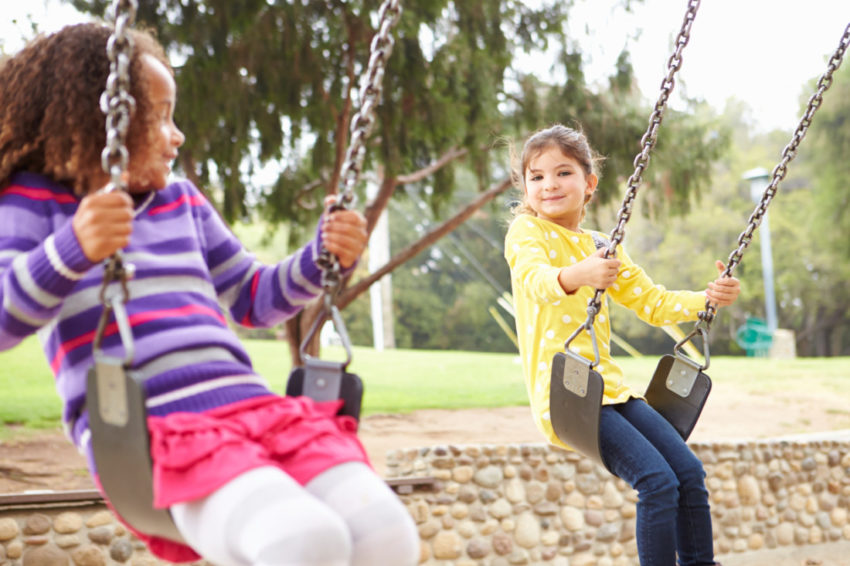
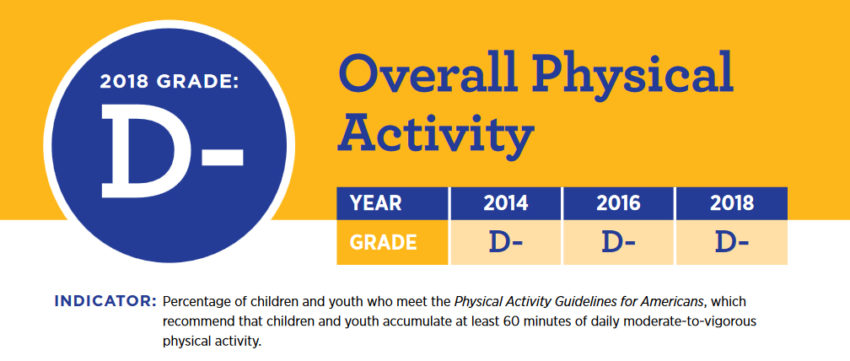
The United States earned a D- in overall physical activity, with only about 24% of kids ages 6-17 getting the recommended 60 minutes of physical activity every day and racial/ethnic disparities persisting, according to the new 2018 U.S. Report Card on Physical Activity for Children and Youth. The 2018 Report Card is from the National Physical Activity Plan. It grades how well U.S. is doing these categories: overall physical activity, sedentary behaviors, active transportation, organized sport participation, active play, health-related fitness, family and peers, schools, and community and the built environment. The grades for each category, while poor, have improved some since 2016. Grades improved for sedentary behavior, active transportation, organized sports, and physical ...
Does your city want to embrace the winter, rather than merely endure it? Apply for Wintermission! Wintermission will coach three U.S. cities to plan, pilot, and implement creative solutions to increase social interaction and physical activity among children, newcomer families, and other vulnerable communities in public spaces during the coldest, darkest months of the year. Applications, offered by nonprofit 8 80 Cities, are due Nov. 29, 2018. “Building a culture of public life outside in winter also helps build a culture of public life in all seasons,” according to the 8 80 Cities website.
Improving Social and Physical Activity in Winter
Fewer people spend time outdoors in the winter, which contributes to lower rates of physical activity and social ...
Most Americans underestimate just how concerned Latinos and other minority groups are about environmental threats, including members of those groups, according to a new study by Cornell University. Researchers surveyed 1,200 Americans about their levels of concern for the environment. They found widespread underestimation of the environmental concerns of a broad range of racial/ethnic and sociodemographic groups. This underestimation was largest for judgments of minorities’ and low-income Americans’ concerns—groups that indicate high levels of environmental concern in public opinion surveys. Also, most people associate the term "environmentalist" with whites and the well-educated. "We found a very consistent pattern that if the American public thought a group was very ...
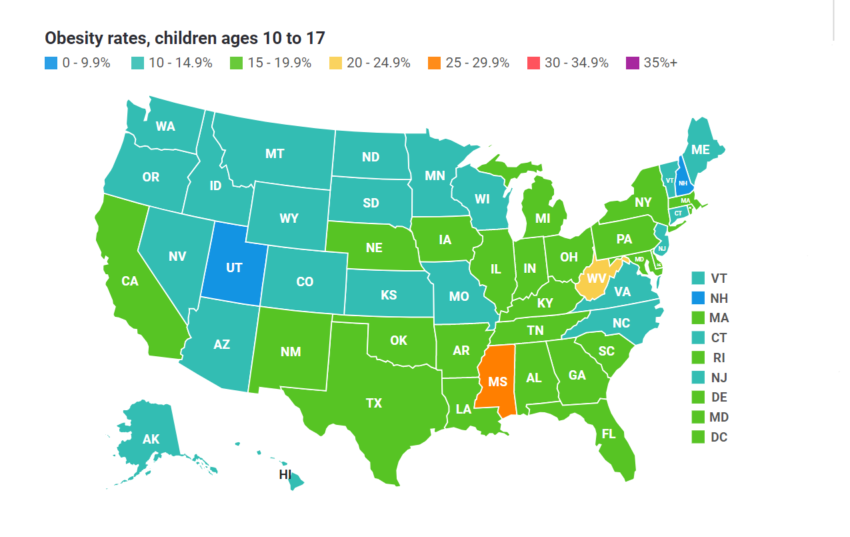
Nationwide, 20.6% of Latino youth and 22.5% of Black youth have obesity compared to 12.5% of white youth, according to a new data report from the Robert Wood Johnson Foundation (RWJF). The new data feature obesity rates among youth ages 10-17 nationally and from each state from the 2016 and 2017 National Survey of Children’s Health (NSCH), along with analysis conducted by the Health Resources and Services Administration’s Maternal and Child Health Bureau. Five states have Latino youth obesity rates over 30%. No states have White youth obesity rates over that mark. “Far too many young people in this country are facing increased chances of diabetes, heart disease, and high blood pressure, all due to a preventable condition … black and Latino youth are still more likely ...
Did you know approximately 40% of Latino kids are overweight or obese? Additionally, unhealthy food contributes to disease, especially in Latino families who lack access to healthy foods and nutrition education. Join us on Twitter for #SaludTues on Tuesday, Oct. 30, 2018, to find out how to take action and tweet about the importance of culinary health and food as medicine. WHAT: #SaludTues Tweetchat: Why Culinary Health Education Matters
TIME/DATE: 1 P.M. ET, Tuesday, Oct. 30, 2018
WHERE: On Twitter using hashtag #SaludTues
HOST: @SaludAmerica
CO-HOSTS: CHEF - Culinary Health Education for Families (@CHEFSanAntonio), Farm to School (@FarmtoSchool), Michael & Susan Dell Center for Healthy Living (@msdcenter). We’ll open the floor to your comments, ...
What are your plans for this coming halloween? If you have children, chances are many of them will be trick-or-treating for candy and other sugar-loaded treats. While its OK to enjoy a sweet treat from time to time, as a community it's also important to recognize the consequences that arise with easy access to products high in added sugars, and having less access to healthier options. Recently, the American Heart Association (AHA) recommended that children over 2 years of age should consume no more than 6 teaspoons/day of added sugars. Yet most children have up to 19 teaspoons/day. Among Latino kids, this number may be even higher. Join us this #SaludTues on Tuesday, October 23, 2018, to find out how to take action and tweet about the Impact of Sugar and Healthier ...