by
by 
Share On Social!
Summer has officially kicked into high gear.
With many cities across the U.S. experiencing unprecedented heat, it’s important to know how your age impacts your body’s response to extreme heat conditions.
Aging adults are some of the most vulnerable populations to the harmful effects of heat.
Seniors, especially those with chronic health conditions, have a harder time cooling their bodies, sweat less, and have dulled sense of thirst. Medications can interfere with their body temperature regulation system.
Exposure to extreme heat can also cause long-term adverse health effects like increased risk for cognitive decline for aging adults.
Whether attending outdoor family gatherings or splashing in the pool with the grandkids, here is your guide to staying safe in sizzing temperatures.
Understand Heat Symptoms: Heat Stroke
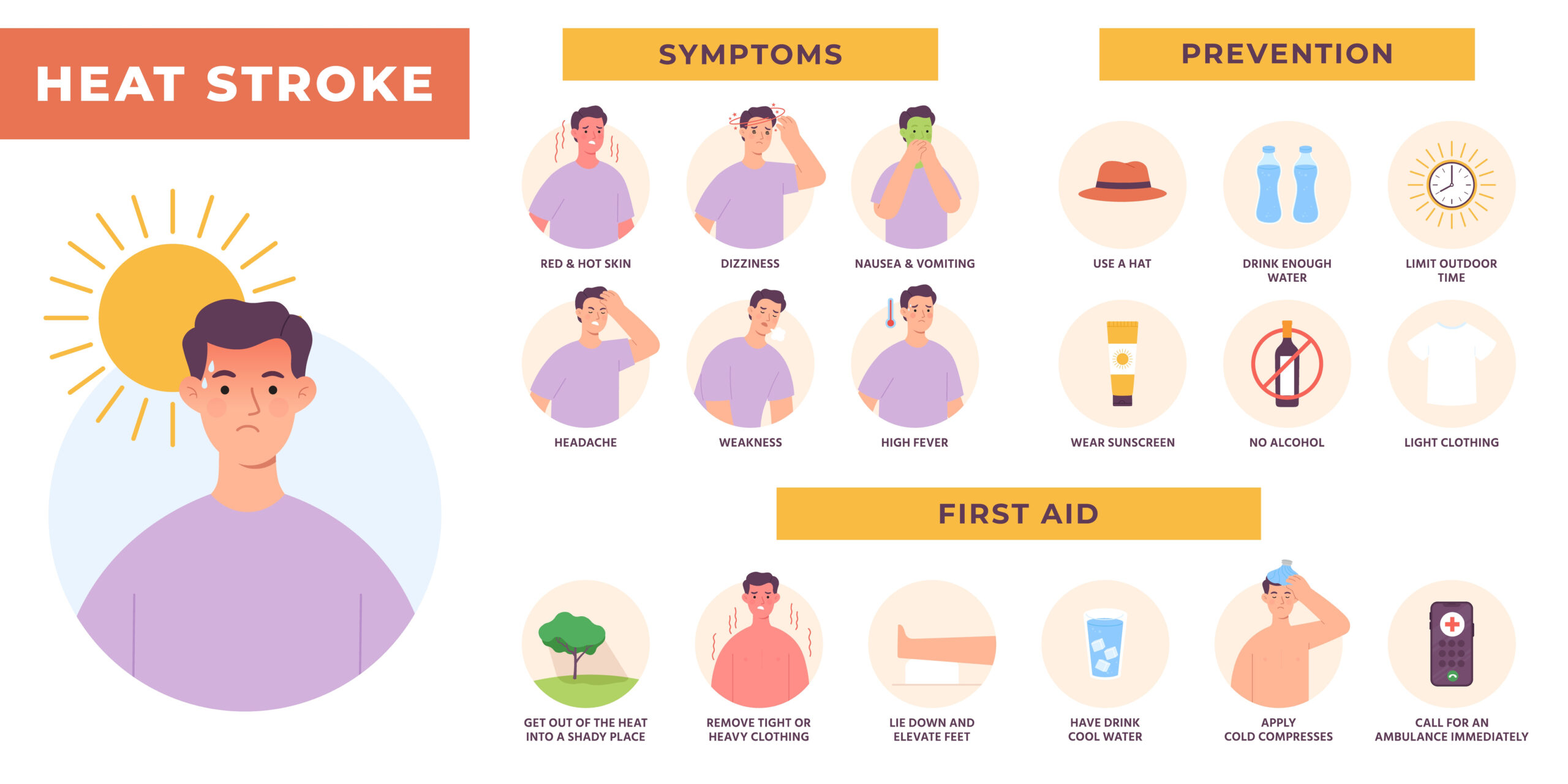
Heat stroke is a serious threat to the health of seniors and all people.
Heat stroke occurs when the body can’t regulate its temperature. When heat stroke sets in, the body’s temperatures rise rapidly. The body is no longer producing sweat and it can’t cool itself any longer, according to the CDC.
Heat stroke can cause permanent disability or death if they don’t seek immediate treatment.
If you are experiencing symptoms such as confusion, loss of consciousness, dry and hot skin, seizures, or high body temperature, you should seek emergency medical attention right away.
Understand Heat Symptoms: Heat Exhaustion
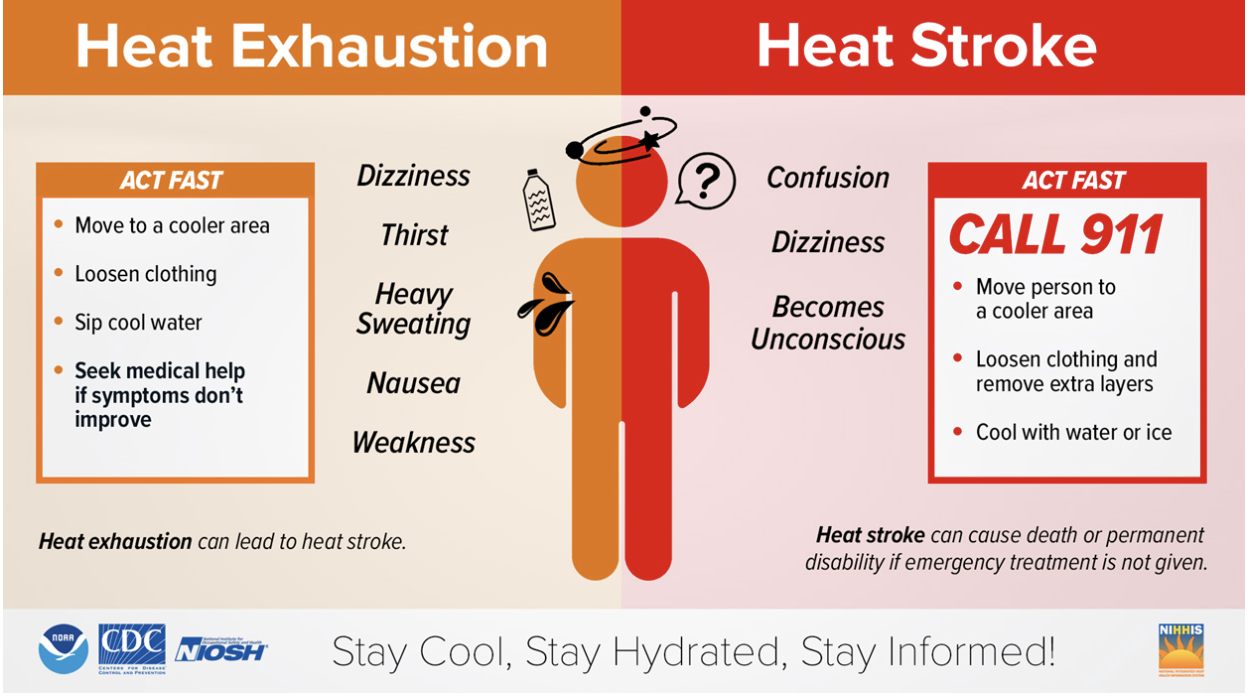
Another threat to the health of aging adults is heat exhaustion.
While less severe than heat stroke, heat exhaustion can cause headaches, nausea, weakness, dizziness, heavy sweating, increased thirst, and more.
If you or a loved one experiences these symptoms, they should seek medical help.
For more on heat-related illnesses and heat health and safety, visit heat.gov.
Outdoor Safety in the Summer Heat
Stay cool by limiting time spent outdoors during peak heat times when the sun’s rays are at their most dangerous.
Avoid long periods of time spent outside between 10 a.m. and 4 p.m.
If you do go outside, make sure you are wearing light-colored and loose-fitting clothing, so heat doesn’t get trapped.
Wear sunglasses to protect yourself from the sun’s harmful rays. Sun exposure, especially for seniors, can increase risk for cataracts, muscle degeneration, and certain cancers.
Also make sure you are well-hydrated.
Pack plenty of water and drink throughout the day to minimize harmful heat effects.
When outdoors, make sure you apply sun protection to exposed areas and reapply using the directions on the bottle to avoid sunburn.
Seek shade while outdoors, especially if you are going to be outdoors for a while.
Eat Well amid the Summer Heat
Did you know your diet can influence your body’s ability to regulate and maintain a healthy temperature?
While eating healthier foods is key to a healthy lifestyle, it can also make a huge difference in extreme heat conditions.
Trading hot meals that make you feel heavy after eating for smaller meals spaced throughout the day can help make a difference in the heat.
These meals should be filled with fresh fruits, veggies, watermelon, oranges, and cucumbers.
Consuming water-based food can help keep you cool and hydrated.
Stay Cool Indoors amid the Summer Heat
When in doubt, stay indoors.
Staying indoors and finding alternative ways to stay cool can help reduce the risk of harmful health effects caused by extreme heat exposure.
Move the summer fun indoors, visit public indoor locations, take a trip to a community center or local library, or see a movie.
In anticipation of extreme weather, you should also make sure you have your AC unit maintained and set at a reasonable temperature.
Alternative Ways to Stay Cool
Older individuals may benefit from alternative cooling methods.
Taking a cold shower or bath can help regulate the body to a safe and healthy temperature.
Wrapping a towel around the neck can apply some much-needed relief and promote temperature regulation.
What’s more, avoid strenuous activities, especially when outdoors, to decrease your risk of heat effects.
Check Out Local Resources
The unprecedented heat wave impacted many states that haven’t seen conditions many southern states are accustomed to.
That leaves many cities scrambling to help vulnerable seniors through the heat.
Visit your local health department’s website to see if there are resources available for aging adults.
For instance, San Antonio experiences extreme heat throughout summer putting abuelos and abuelas at risk.
San Antonio’s Project Cool Program is helping seniors beat the heat by providing fans to people 60 years or older. If you are in San Antonio, you can request a fan through the United Way Hotline by dialing 2-1-1.
Other cities, such as New York City, run cooling centers for seniors or other vulnerable populations to turn to when AC isn’t reliable — an often-overlooked non-medical driver of health that impacts overlooked populations, lower income individuals, and those who live in rural areas.
What’s the State of Heat Where You Live?
Exposure to heat and the harmful effects of exposure can increase depending on where you live along with other factors.
What does it look like where you live?
Find out by downloading a Salud America! Health Report Card for your town!
Enter your county name and get auto-generated local data with interactive maps and comparative gauges on several health indicators. This can help you visualize and explore local issues in education, housing, transportation, food, health, and more.
See how your county stacks up compared to the rest of your state and nation.
Then email the Report Card to local leaders to raise awareness, include the data in a presentation or grant proposal, or share it on social media to drive healthy changes in your community!
This post was curated and published by Salud America! with partnership and support from the San Antonio Center for Alzheimer’s Disease and Related Dementias Population Aging and Social Studies (CAPAS) at UT Health San Antonio, funded by the National Institute on Aging. CAPAS is striving to address issues related to the aging Latino population in South Texas.
By The Numbers
142
Percent
Expected rise in Latino cancer cases in coming years