Helping families recover from the economic impact of COVID-19 requires far more than a paycheck, particularly when already underfunded social services and transit agencies face budget cuts. To build resilience after COVID-19, cities need to invest in people and in places. More specifically, cities need to build a community-based workforce to ramp up social services, and cities need to invest in affordable transportation options.
Cities Face More Than COVID-19 Economic Devastation
The economic fallout from COVID-19 is real for cities and families, particularly for Latinos, who were already drastically underpaid compared to white workers. Beyond unequal pay, Latino and low-income families face a legacy of discriminatory policies and practices that have resulted in unaffordable ...
We already know that smoking cigarettes, cigars, and other tobacco products result in worse coronavirus outcomes. What could be worse? Teenagers and young adults who vape face a much higher risk of COVID-19 than their peers who do not, according to new research from Stanford University. In fact, that data—collected from a May 2020 national survey of 13 to 24-year-olds—showed that vapers are five times more likely to get COVID-19. The risk is seven times higher for dual—smoking and vaping—users. "Young people may believe their age protects them from contracting the virus or that they will not experience symptoms of COVID-19, but the data show this isn't true among those who vape," Dr. Shivani Mathur Gaiha, the study's lead author and a postdoctoral scholar, said in a ...
The coronavirus pandemic is worsening minority health and the nation’s sizable affordable housing shortage. When we think of health assets, many of us think about healthcare, education, and safe transportation to access healthy food and physical activity. But affordable housing is an essential component of public health infrastructure, and important factor in an equitable pandemic response. Let’s use #SaludTues on Tuesday, Aug. 18, 2020, to tweet about the latest research about the critical role of affordable housing in the COVID-19 response! WHAT: #SaludTues: The Critical Role of Affordable Housing in the COVID-19 Response
TIME/DATE: 1-2 p.m. EST (Noon-1 p.m. CST), Tuesday, Aug. 18, 2020
WHERE: On Twitter with hashtag #SaludTues
HOST: @SaludAmerica
CO-HOSTS: ...
Amid the surging COVID-19 pandemic and one of the hottest summers in world history, public parks are a refuge. But not all parks are created equitably. Parks that serve primarily Latinos and others of color are half the size of parks that serve majority White populations. They are also five times more crowded, with hotter temperatures, according to a new study from The Trust for Public Land. "As cities struggle with extreme heat this summer, parks are one of the best ways for residents to find relief," said Diane Regas, leader of The Trust for Public Land. "We all need and deserve parks—and all of the benefits they provide—all of the time. But during this period of compounded public health emergencies, unequal access to quality parks can be downright dangerous."
What Did the ...
The coronavirus pandemic has had an overwhelming impact on many, and now the COVID-19 crisis also stands to exacerbate the nation’s sizable affordable housing shortage. With more people losing jobs and suffering other hardships—especially those in communities of color—the question of housing will play a larger role in the overall impacts of the coronavirus pandemic. This is more of a fundamental issue than some might think, according to Roger K. Lewis, a professor emeritus of architecture at the University of Maryland, “Most of us think about roads, bridges, transit systems, and public utilities, along with education and health care," Lewis, writes in a recent Op-Ed in the Washington Post. “But affordable housing is an essential component of infrastructure; an investment ...
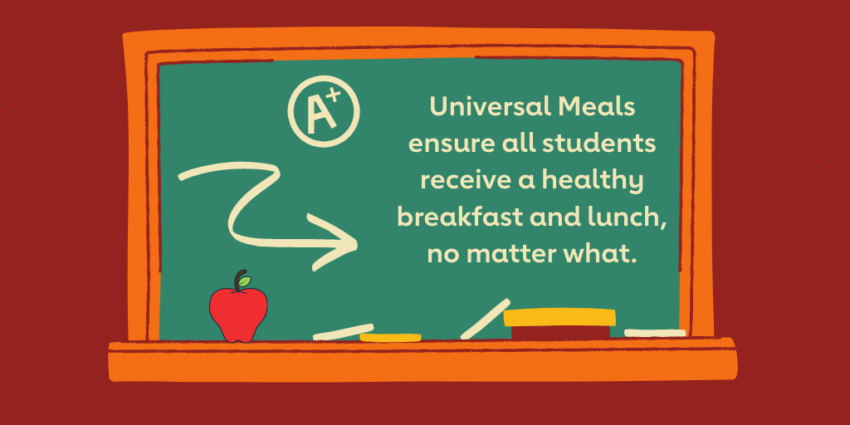
While the COVID-19 pandemic is making it harder for Latino and other families to get enough food to feed their families— called food insecurity—the new Pandemic Child Hunger Prevention Act could be a big help. The legislation, introduced in the U.S. House of Representatives on July 30, would make all students eligible for free school lunch and breakfast during the 2020-2021 school year. Free school meals will be available to students during remote learning through "grab and go" or meal delivery. "The Academy of Nutrition and Dietetics believes that school meals are as important to learning as textbooks and pencils," said Academy President Linda T. Farr, in a statement. "In the midst of uncertain school reopening plans as a result of the COVID-19 national emergency, the ...
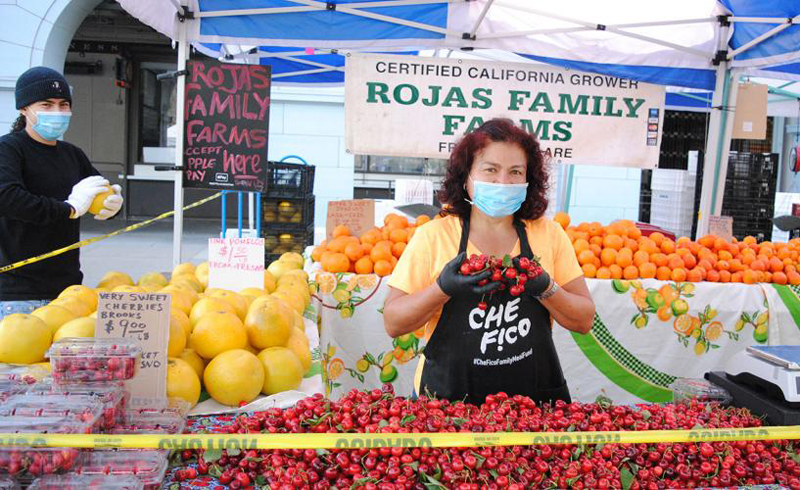
Does your town have a farmers market? How is it operating amid COVID-19? Farmers markets are a path to healthy food access. They are especially important now as the coronavirus pandemic worsens food insecurity. Fortunately, the Farmers Market Coalition is stepping up to support farmers markets. They're pushing for federal aid for markets, creating resources, and sharing how markets increase access to healthy, fresh produce and social connections, and engage farmers in the local economy. “There are benefits to visiting a farmers’ market in light of coronavirus … you’re outside, there’s fresh air moving, and the supply chain is shorter,” Yvonne Michael, an epidemiologist at Drexel University, told WHYY. For National Farmers Market Week on Aug. 2-8, 2020, we at Salud ...
A culture of health is where everyone has a fair, just opportunity to be as healthy as possible. This also achieves health equity. Is your community creating a culture of health? If so, apply for the Robert Wood Johnson Foundation (RWJF) Culture of Health Prize! The contest provides $25,000 to communities that unite neighborhood, school, and business partners to improve health for all residents. Apply by Oct.15, 2020.
Read about 2019 Winners
Three largely Latino cities won three of five 2019 Robert Wood Johnson Foundation (RWJF) Culture of Health Prizes! Gonzales, Calif. (94% Latino), was chosen from nearly 200 applicants. Two other cities with large Latino populations—Lake County, Colo. (36% Latino) and Broward County, Fla. (30% Latino)—also won the health prize. ...
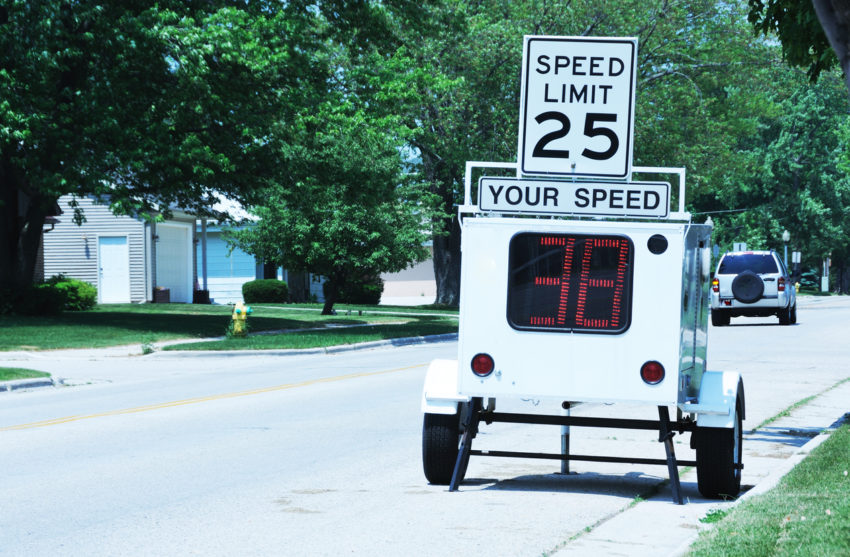
American cities are failing at traffic safety—largely due to unsafe speeds. Urban arterials—roads that link major activity centers and highways—accounted for 29% of all U.S. fatal crashes between 2014 and 2018, despite making up only 6% of roadways. That’s why the National Association of City Transportation Officials (NACTO) developed City Limits, a framework for setting safe speed limits for city streets and providing strategies to manage speed. “Most speeds limits are set using an oversimplified and outdated method: measure 100 drivers traveling without any traffic and set the speed limit based on the 15th-fastest driver,” said Jenny O’Connell, NACTO Program Manager, according to a NACTO press release. “If this sounds like a system that would create ...