More than three of four Latinos worry about global warming and climate change, a higher worry rate than their non-Latinos peers, according to a recent English and Spanish survey by the Yale Program on Climate Change Communication. Why are Latinos so worried? What policies can help? How willing are Latinos to take action, and how will that impact health equity and safer streets? Salud America! is excited to launch a three-part series exploring the issue of climate change for Latinos. Today we will tackle what climate change is, why Latinos are worried, and whether they should be. Part 2 will address what kinds of policies Latinos would support to address climate change. Part 3 will focus on a potential solution for both climate change and health equity.
What is Climate ...
Ricardo Rocha believes anyone can be a hero and improve local healthy food access. Even someone like him. Someone who grew up in a poor family that toiled to put food on the table in Mexico. Someone who immigrated to the deserts of New Mexico, and eventually Denver (31% Latino). Someone who was a struggling, undocumented high-school student. “I was not doing very well in high school. Someone there told me about the College Assistance Migrant Program," Rocha said. "That helped get me into [Metropolitan State University of Denver],” Rocha said. “I learned a lot about what it really meant to belong somewhere." Rocha wanted to do more than "belong somewhere." He wanted to make that somewhere better. So, when he noticed many people trying and failing to find healthy food ...
U.S. children's sugary drink consumption has declined over the past 15 years, but rates remain higher than federal dietary guidelines and among Latinos and other minorities, according to a new report by Healthy Eating Research. The new report cites "clear evidence" that sugary drink consumption increases a child's risk for overweight, obesity, and dental cavities. It also has insulin resistance and caffeine-related affects. These health consequences are especially worrisome for Latino kids, who consume more sugary drinks—soda, sports and energy drinks, sugary fruit juices, and flavored milk—than the average child at all ages, according to a Salud America! research review. "Reducing [sugary drink] consumption would help improve children’s health by decreasing the risk for ...
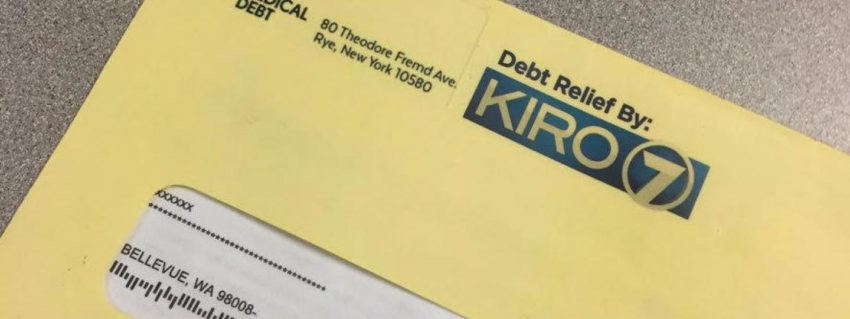
If you're in the hospital, your health and your pocketbook are taking a hit. A TV station in Seattle (6.5% Latino) tried a unique way—buying debt from people's medical expenses, then forgiving it(!)—to improve the lives of locals dealing with cancer, The Hill reports. Buy why?
'Big Issues with the Bills' TV station KIRO reporter Jesse Jones – a cancer survivor himself – reported a story about a cancer patient that was struggling to pay her bills and couldn’t afford further treatments. Many Latinos face this situation. 27% of Latinos have no usual health care provider and 15% have no health insurance, according to a Salud America! research review. These Latinos often end up seeking routine healthcare in the emergency room, which can be very costly. After his ...
Open jobs sit unfilled for months at a time in McKinney, Texas (19.24% Latino). Retail, restaurants, and construction businesses can't find workers. The cause? The people who can fill those jobs can't afford to live in McKinney—the average home price is $340,000. "Just think about the salary it takes to afford a house like that, and then to maintain it. You just can't do it," McKinney Mayor George Fuller told Channel 5 NBC. "You can get a job, but you can't afford housing." Affordable housing is a rising need in many large and growing cities across the nation. San Antonio, for example, recently started an affordable housing task force to address its own shortage. San Antonio City Council member Shirley Gonzales is leading a push in her district, too. Heck, even Eva ...
Amazon, one of the biggest American companies, made it clear that public transit is an essential component for choosing a site for their second headquarters. No matter what side of the "Amazon headquarters" debate you land, public transit is a pretty reasonable public good to request from a city because it plays a major role in health, equity, economic development, and sustainability. The thing is, public transit success depends not only on local investment to expand and improve service, but also commitment from federal partners. Yet, the federal government is proposing to eliminate the Capital Investment Grant program, which matches local funds to build new transit systems and upgrade existing systems. Transportation for America created a guidebook, Fight for Your Ride: An ...
Amherst, Mass., is a 73% white city. But with an emerging Latino population that includes about 1 in 5 Spanish-speaking families with kids in public schools, city leaders are ramping up to meet Latino needs, MassLive.com reports. They're even setting aside $54,000 to create a Latino community food program. "When we look at food access (it) is a real issue," Julie Federman, the city's health director, told MassLive.com. "Getting to a grocery store, getting to an affordable grocery store can be really challenging." U.S. Latinos face a big lack of access to support for economic stability, wellness, and education. Latino children often fall behind in school, and social and physical development, according to a Salud America! research review. Latinos especially lack access to ...
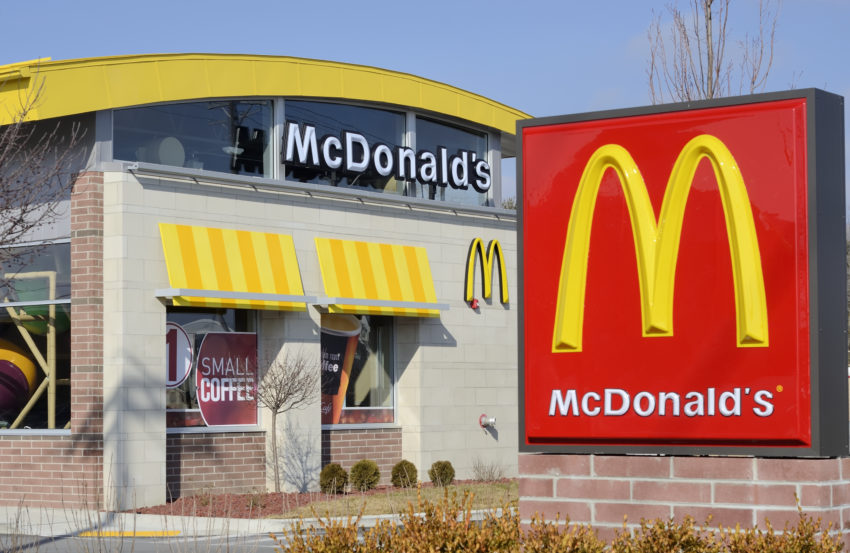
McDonald’s is removing cheeseburgers, shrinking French fry portions, and making chocolate milk less sugary in U.S. Happy Meals, in an effort to make its children's food more healthy, Reuters reports. The food company, first the first time, will set global limits for calories, sodium, saturated fat and added sugar in Happy Meals. The new standards will be implemented by June 2018. This is certainly a positive step. But it also begs the question: Can a Happy Meal really ever be healthy? This is an especially important question for Latino families. They tend to live in neighborhoods where fast food restaurants far outrank options for health food, according to a Salud America! research review. "Taken together, the changes do not transform burgers or chicken nuggets into ...
Your community can apply for a Safe Routes to Parks grant to increase equitable access and safe walking connections to parks. The JPB Foundation has provided a grant to the Safe Routes to School National Partnership to fund the Safe Routes to Parks Activating Communities program, which follows the Safe Routes to Park Framework, a collaborative effort between the National Partnership and the National Recreation and Parks Association. The framework provides a structured process by which communities can increase safe and equitable access to their parks and green spaces. The framework includes four main areas of activity: 1) Assessment, 2) Planning, 3) Implementation, and 4) Sustainability, with each area heavily infused with proactive community engagement. Grantee communities will ...