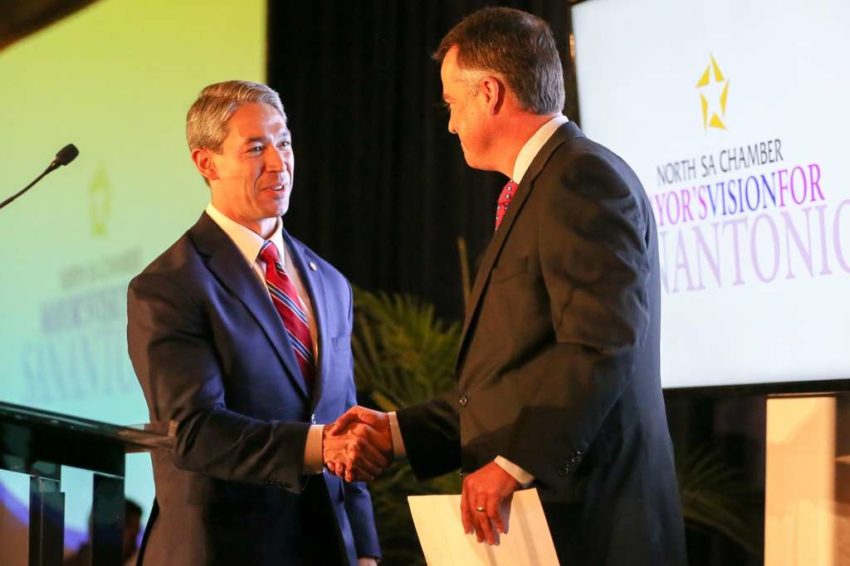
The need for affordable housing is rising in many big cities across the United States. That includes San Antonio (68% Latino). The city is facing an affordable housing shortage of 142,000 units, while median sale prices for homes rose above $200,000 for the first time in 2016, The Rivard Report indicates. That's why first-term Mayor Ron Nirenberg created a Housing Policy Task Force to help address the current and future affordable housing need. “We have to face up to the fact that the housing paradigm in San Antonio must change,” said Nirenberg told The Rivard Report. “We need to protect and connect neighborhoods and make incredible growth, and expand housing choices for our residents, no matter what their income.” The Task Force, which held its first public ...
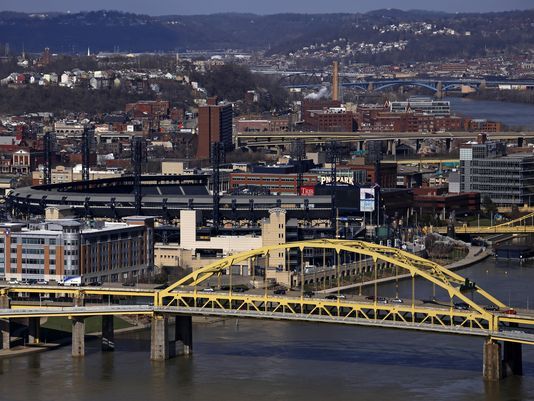
Year by year, Latinos have become an increasingly important part of the U.S. workforce. Latinos currently account for 16% of the country’s labor pool and these numbers are growing rapidly, according to the Society of Human Resource Management (SHRM). By 2025, one out of every two new workers will be Latino as 66,000 Latino teens are turning 18 each month. As Latinos grow in numbers, their importance to the economy will only continue to increase. However, a new report shows that Latinos generally are not living in the best cities for jobs. The employment website Glassdoor recently unveiled a ranking of the top 25 cities in the country for jobs. The site based its rankings on the ability to find a job, satisfaction with the job and, quality of life. “If you weigh (those ...
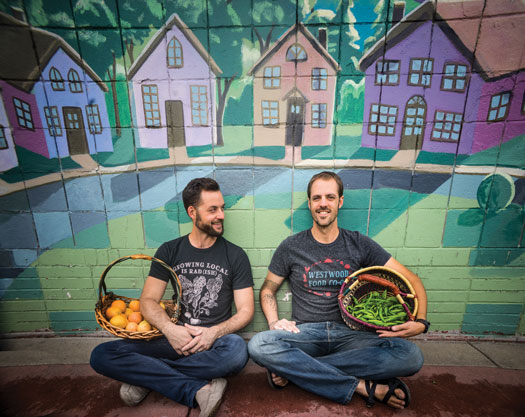
Healthy food activists Erick Kornacki and Joseph Teipel have a phrase to call the 81% Latino neighborhood of Westwood in Denver. A "food desert." For decades, Westwood residents have struggled to access healthy food. There are no nearby grocery stores or farmers markets. People lack transportation to find healthy options elsewhere to bring back. Kornacki, Teipel, and Westwood neighbors decided to take matters into their own hands. They began to build backyard vegetable gardens. They talked about how to create a food cooperative. They wanted to build the first community-owned and -run grocer as an oasis in this food desert.
Food Deserts Isolate Latinos from Healthy Food
In 2007, Kornacki and Teipel co-founded Re:Vision, a nonprofit that works on social justice and food ...
In light of traffic deaths, traffic jams, and pollution, many U.S. cities are working to make their streets safer. However, street improvements often occur in white, wealthy neighborhoods. This does little to help the people most impacted by disparities in mobility and air quality—low-income people, Latinos and other minorities, and people older than 65. How can we tell if street projects are benefiting everyone equitably? Fortunately, the National Complete Streets Coalition of Smart Growth America grades "Complete Streets" projects—where streets are designed for drivers, transit users, people walking, and people biking, regardless of age or ability—and publishes a Best Complete Streets Policies Report. But they haven't updated their 100-point grading system since ...
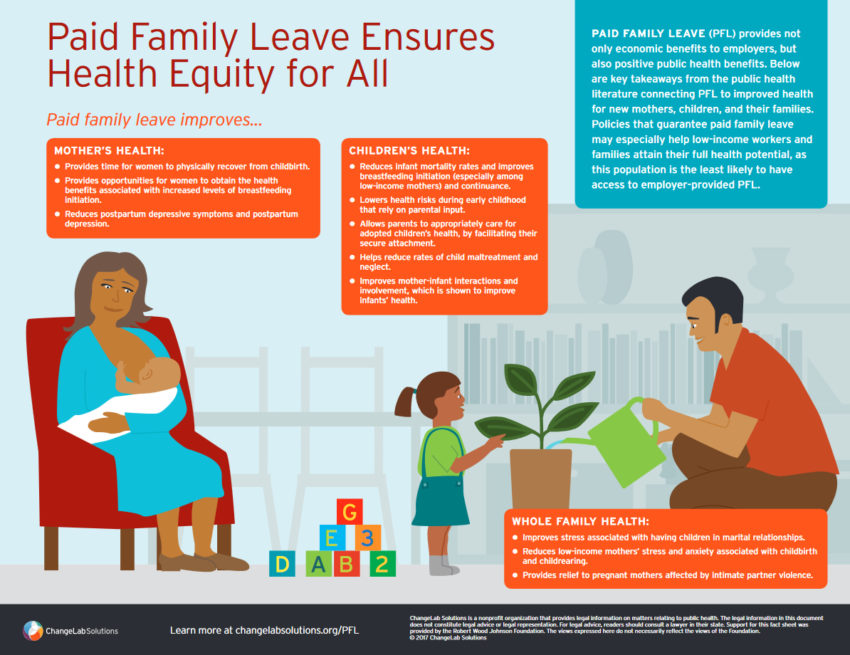
Latinas and all women have increased their ranks in the workforce by 21.4% in the past 25 years, which is good for the economy. But there's a big downside. The United States still lags well behind other “advanced economies” in guaranteeing workers paid family leave, according to the Center for American Progress. “[In 63.9% of American families,] a mother was the breadwinner—bringing home as much or more than her husband or a single working mother—or a co-breadwinner, bringing home at least a quarter of the family’s earnings,” the Center reported. To address inequties that rise from a lack of paid family leave, ChangeLab Solutions has developed materials to cover its importance for Latino and all families.
What is 'Paid Family Leave'?
The new ChangeLab materials ...
Sit and wait. That's what most people do at bus stops. Robert de León, a business management analyst with the city of McAllen, thought people could be more active while waiting for buses in McAllen, Texas (85% Latino). In fact, he and other McAllen city employees wanted to turn a bus stop into a play area with swings, hopscotch, and fun for the whole family. Could they turn a sit-place into a play-place, and boost health in McAllen?
Sorry State of Health in Hidalgo
De León knows health is a problem in McAllen, the largest city in Hildalgo County (91% Latino) in South Texas, which sits next to the Mexican border. Many county residents are living in poverty (26.4%) and report poor or fair health (26.7%), with an obese population of 34.4%. In McAllen, 7.6% don't own ...
Latinos are less likely to seek health screenings or preventive care than their black and white peers, according to a new survey, American Heart Association News reports in English and Spanish. The Healthy Americas Survey indicates that: Only 55% of Latinos say they are vigilant about getting health screenings and checkups, compared with 68% of blacks and 60% of whites.
Latinos were more likely than blacks and whites to say they don’t have significant control over their health.
Only about 25% of Latinos say they earned more than $50,000 a year, compared with 47% of whites and 30% of blacks. “This is dangerous for the long-term health of U.S. Latinos,” Amelie G. Ramirez, Dr.P.H., a health disparities researcher at UT Health San Antonio and director of the Salud ...
Imagine a world where every person has the opportunity to attain full health potential—with no disadvantages due to race, money, etc. That is health equity. Unfortunately, Latinos and other people of color often struggle with health inequity as a result of poverty, structural racism, and discrimination. This causes gaps in how long Latinos live and how they struggle with disease and health, compared to their peers, according to the new Communities in Action: Pathways to Health report from thew National Academies of Sciences, Engineering, and Medicine. The new report does have some good news: Communities have agency to promote health equity. However, community-based solutions are necessary but not sufficient.
Supportive public and private policies at all levels and ...
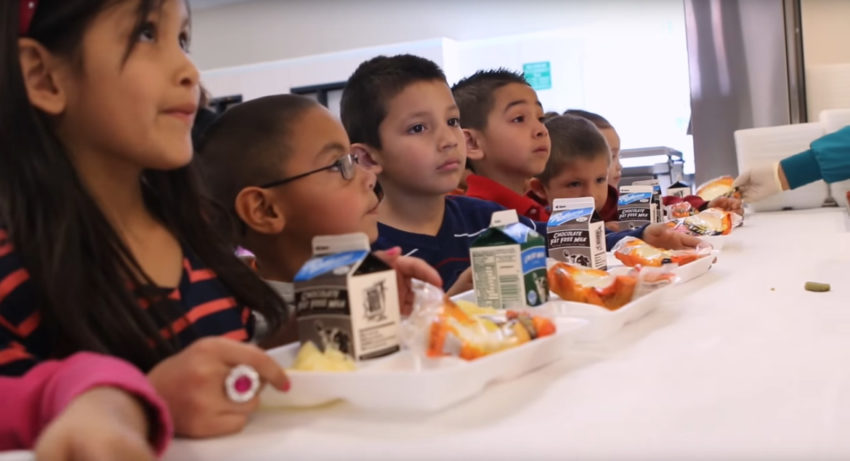
The USDA announced an interim final rule that would weaken school food nutrition standards. The rule, effective 2018-2019, would allow schools to serve 1% and nonfat flavored and non-flavored milk, apply for an exemption to serve refined grains over whole grains, and allow schools to not reduce salt levels in meals. Health experts say this rolls back progress to improve school nutrition and children's health. What do you think? Fortunately, you have a limited time—until Jan. 29 2018—to tell USDA you want better school food for Latino and all families!
Submit a Model Comment
Copy one of three model public comments developed by our Salud America! research team, then hit the submit button to paste it to USDA's website... MODEL COMMENT: GENERAL
For the health of Latino and ...