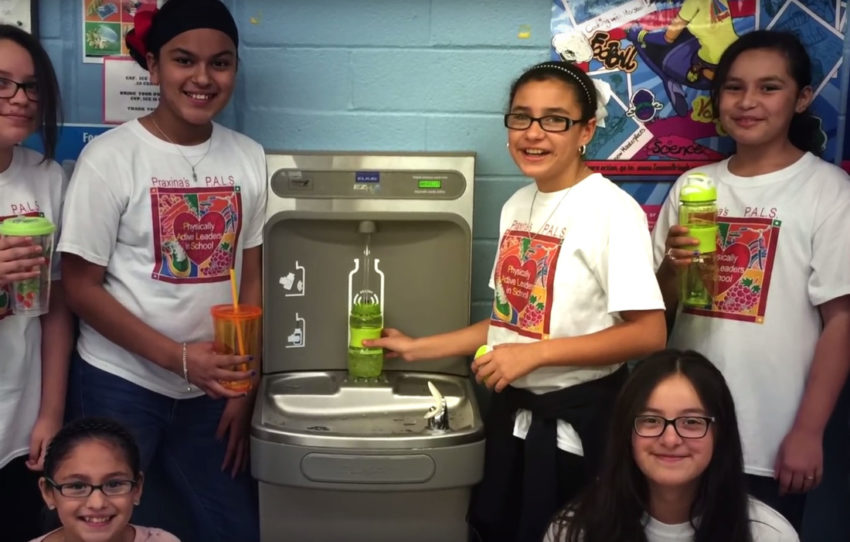
Classic water fountains aren't always accessible or safe for kids. Water Bottle Fountains are filtered water dispensers for easily filling and refilling water bottles. This gives kids much-needed access to safe drinking water throughout the school day. They help keep kids hydrated while saving families money from buying bottled water. They also help the environment by reducing waste. Salud America! wants to help you get Water Bottle Fountains at your school with our custom-for-you Water Bottle Fountain Action Pack with Coaching! Request an Action Pack to get (at no charge to you): Customized, click-to-send emails, graphics and resources
One-on-one support from an Action Pack Coach
Ads on Facebook
Promotion of your efforts to 100,000+ change-makers
25 Salud ...
Hey, city leader... Are your policies and programs equitable for Latinos, Blacks, and other minorities? Fortunately, a new tool helps local governments add an "equity lens" to involve the community and create policies and programs that account for racial/ethnic minorities. The tool, Racial Equity: Getting to Results from the Government Alliance on Race and Equality, enhances the Results-Based Accountability (RBA) methodology to empower policymakers to make “good decisions and advance racial equity.” “Currently across the country, regardless of region, racial inequities exist across every indicator for success—including health, criminal justice, education, jobs, housing, and beyond,” according to the new tool. “We know these inequities are incongruent with our ...
Everyone in America deserves to live within a 10-mile walk of a park. Sadly, many do not. Latino kids, in particular, tend to lack safe, accessible places to play, which prevents them from getting the physical activity they need for healthy minds and bodies. That's why the Trust for Public Land created the ParkScore.
What is a ParkScore?
ParkScore assesses a city's park system. It also ranks the nation's 100 most populated cities by park access, park size, and facilities and investment. Minneapolis has the best park score. Check out the many reasons why Minneapolis has such a good score. Laredo, a 95% Latino city in South Texas, comes in 93rd. Here's the full list of ranked cities. City officials can use the ParkScore to guide investment in parks and promote ...
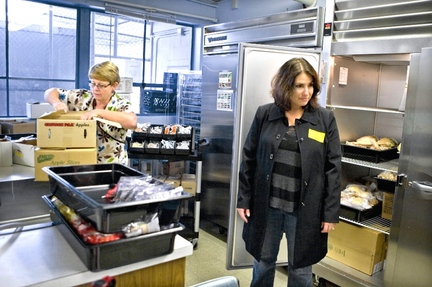
School is the primary food source for many Latino students living in poverty. So why do some students go hungry, while some schools have extra food that goes to waste? To find an answer, Texas State Rep. Diego Bernal visited schools in San Antonio (63.2% Latino). Bernal found that many kids, even in more affluent school districts, were going hungry while schools threw away, "untouched, unopened, ripe, perfectily edible food," according to the San Antonio Express-News. The reason: “Complexities of overlapping district, state, and federal policies, along with a collection of myths and cautionary tales.” Bernal wanted to help.
Helping Schools Store, Share Unused Food
He championed legislation (HB 367), with the help of State Sen. José Menénedez, to allow schools to set ...
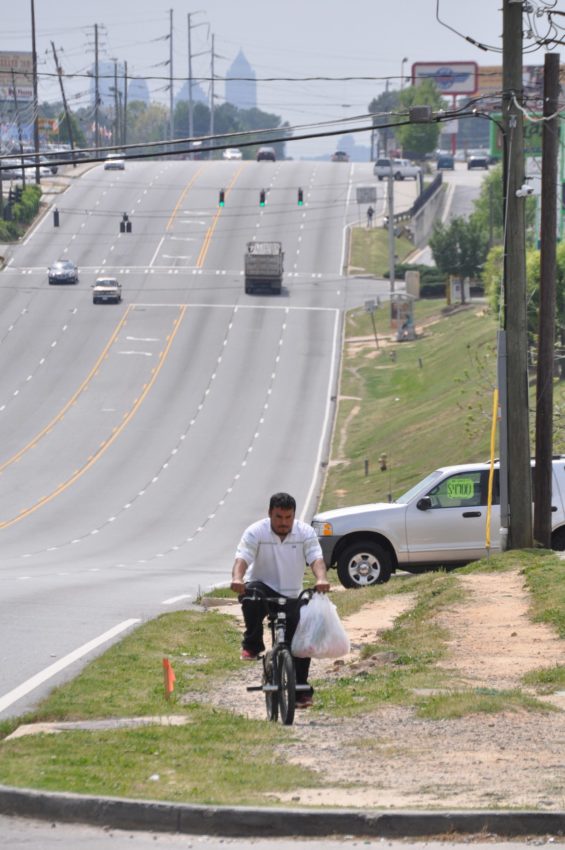
Sadly, more than 1,300 people died in motor vehicle crashes in Georgia in 2013. Beyond the terrible heartache for the families and friends of those involved, these crashes amounted to more than $1.6 billion in medical and work-loss costs. Buford Highway, an eight-mile corridor in Atlanta known for authentic international restaurants, is the most dangerous road for pedestrians in Georgia. Located on the northeast side of Atlanta, which is largely Latino, there were 22 pedestrian fatalities from 2003 to 2012 on Buford Highway. What can reverse this grave trend and save the lives of Latinos and the livelihood of those restaurants?
Cars vs. Pedestrians
Many cities are plagued by wide roadways, like Buford Highway. Even though this road offers many restaurants, it doesn't ...
Sacramento has mild weather, light rail, and many bike paths. But people still heavily depend on cars in this 23% Latino city, according to its relatively low walk score. Sacramento also is like many other California cities, where urban planners face a big challenge to create more ways for a rising population to walk and bike. Fortunately, a group of diverse youth are making a difference for more walking, bicycling, and skating.
Youth Step Up for Safer Streets
The Walk & Bike Youth Leaders Program started in Sacramento in 2017, thanks to the California Bicycle Coalition, California Walks, and the California Center for Civic Participation. Program organizers chose 11 youth ages 16-23. The youth will partake in four online training sessions. They will learn how to ...
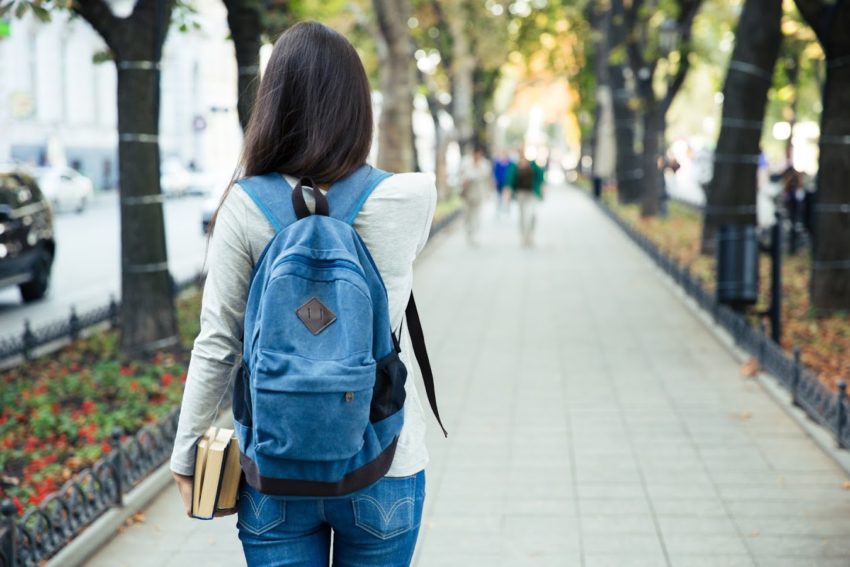
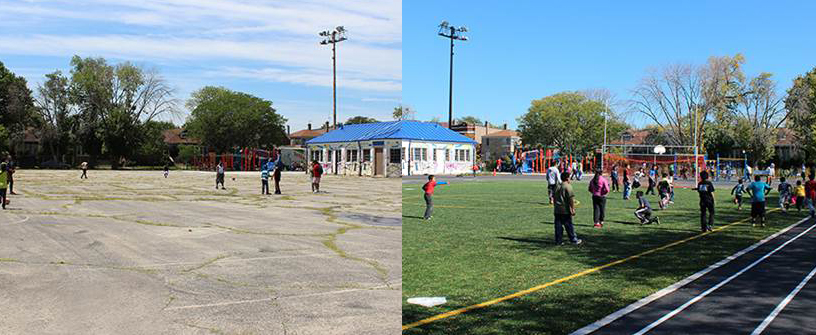
Finding safe places for kids to play hasn't been easy for Latino families in Chicago. For example, 30 years ago, the federal government sued the Chicago Parks District for favoring parks in white neighborhoods and neglecting parks in African-American and Latino ones. Schools in Chicago didn't have equitable funding to maintain their own playgrounds over the years, either. At the same time, the nation was shifting to a school day with less time for recess—creating a "recess drought." But school officials wanted to play a role in increasing access to safe green space for Latino kids and families.
Solving the 'Recess Drought' (and Preventing Floods)
Chicago Public Schools, the third largest school district in the nation, took a big first step in 2011. They passed a recess ...
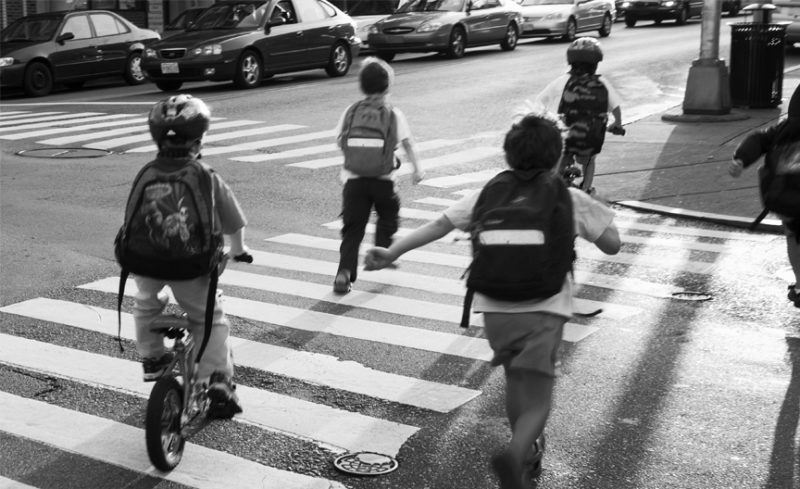
The U.S. is failing five of nine factors that reflect walking and walkable communities, according to a new report card. Children's walking behavior, pedestrian infrastructure, safety, institutional policies, and public transportation were graded an "F" by the new 2017 United State Report Card on Walking and Walkable Communities. The report is from the National Physical Activity Plan Alliance, which developed a system to evaluate U.S. walking and walkability.
Why walking is critical in Latino neighborhoods
Walking is a natural and inexpensive activity to improve health and prevent chronic disease. However, safe places to walk are often not accessible, particularly in Latino neighborhoods, according to our own research. Thus, many Latino children and adults don't walk and suffer ...
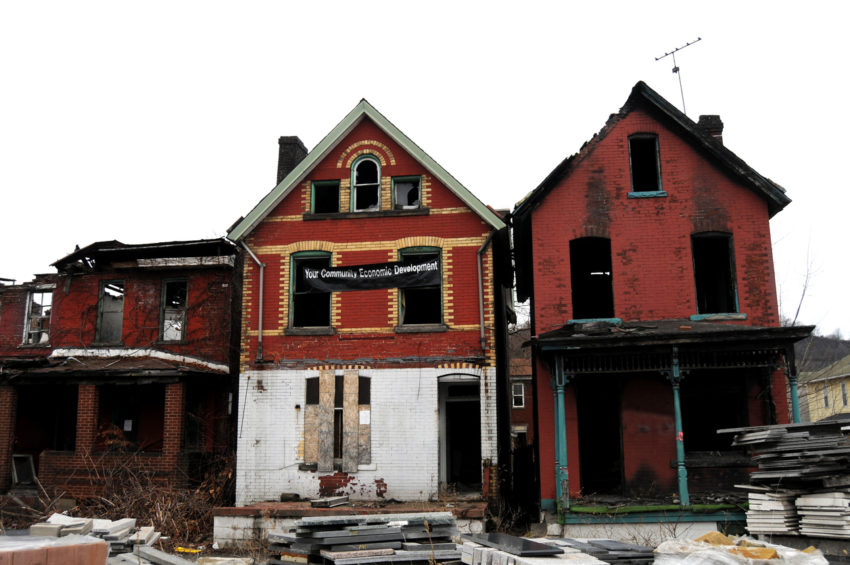
Systematic housing segregation in the 1900s is the root of many social and environmental justice issues. One big one is inequity in neighborhood walkability, which leads to disparities in mental and physical health. Without safe places to walk, Latino families are robbed of opportunities to be healthy and thrive. Use #SaludTues on Sept. 26, 2017, to Tweet about potential solutions to improve walkability for all. Fueled by Richard Rothstein’s book, The Color of Law: A Forgotten History of How Government Segregated America, and America Walks upcoming webinar series, Walking Towards Justice, we will be discussing the intersection of residential segregation and walkability. WHAT: #SaludTues Tweetchat: “Intersection of Walkability & Residential Segregation”
...