Many Latino families suffer a big lack of access to support for economic and educational success, and quality healthcare. This makes it harder for Latino kids to achieve academically, socially, and physically. However, hope appears to be on the horizon for Latino and all families, according to U.S. Census Bureau data. For the second year in a row, Americans made “solid” financial gains in 2016 as the median household income rose across the country. Also shown as positive signs were the poverty numbers fell, and the rate people without health insurance also fell, according to USA Today.
U.S. Economy on the Rebound
The median U.S. household income climbed 3.2% to $59,039, which followed growth of 5.2% in 2015; this is the largest on records dating to 1968. The combined increase ...
You know junk food marketing to Latino kids is a problem and degrades Latino kids' health. But how do you communicate this issue to others? A new framing brief by the Berkeley Media Studies Group (BMSG) can help you communicate more effectively and frame the targeted marketing of junk food to children of color as a health equity issue. Understanding and communicating effectively about how junk food companies specifically target Latino children is a critical step toward action and achieving health equity.
Targeted Marketing is a Health Equity Issue
Targeted marketing of junk food to Latino children is a major obstacle because food and beverage companies aggressively target Latinos in their communities and schools. California passed historic legislation this year to ban ...
Map, track, and evaluate. These words are music in public health nerd's ears. Especially for walking nerds, America Walks is hosting a webinar to help public health advocates turn data into action to improve walkability across the United States at 2 p.m. EST Dec. 13, 2017.
Why Connect Health and Walking Advocates?
Decades of inequity in investment in streets, sidewalks and communities has disproportionately burdened Latino and many communities with health disparities, traffic fatalities, and even criminal citations for jay-walking. Many health advocates lack adequate data or the ability to use data to make the case for environmental, systems, or policy changes. Particularly when it comes to walking and walkability because, traditionally, non-health departments and ...
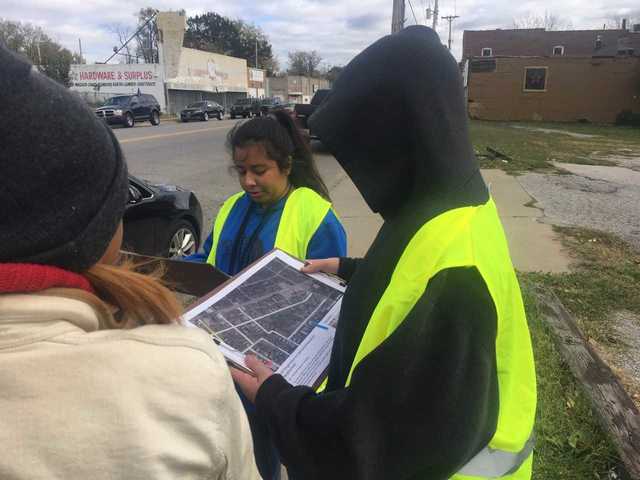
Eighth-grade students in Kansas City, Kan. (29.3% Latino), are conducting neighborhood audits around their middle school to see how friendly the area is for kids and families to walk. Latino kids often lack safe places to walk and play. They are less physically active than their peers and face higher rates of obesity and chronic disease. Safer routes would enable families to choose walking, thus improving children's their physical activity and health, research shows.
Why Walking Audits?
Walking audits are one way to assess factors that help or hinder safe routes for children to walk. Audits typically focus on a specific site, like a school or park, or a specific street or corridor. Audits account for things like sidewalk width and condition, street lighting, distance between ...
The term “income inequality” is one that has gained a great deal of attention in recent years. Referring to the “extent” in which income is distributed in an uneven manner in a population. In the U.S., according to the Institute for Policy Studies, the gap between the rich, poor, and everyone else has grown markedly in the past 30 years. The Economic Innovation Group (EIG), a a bipartisan public policy organization created to advancing solutions that empower entrepreneurs and investors to forge a more dynamic economy in the U.S., recently completed a study that determined that San Antonio, Texas (64.34% Latino population), has one of the worst income inequalities in the country. In San Antonio, the gap between the wealthiest zip code in the city and the poorest is among ...
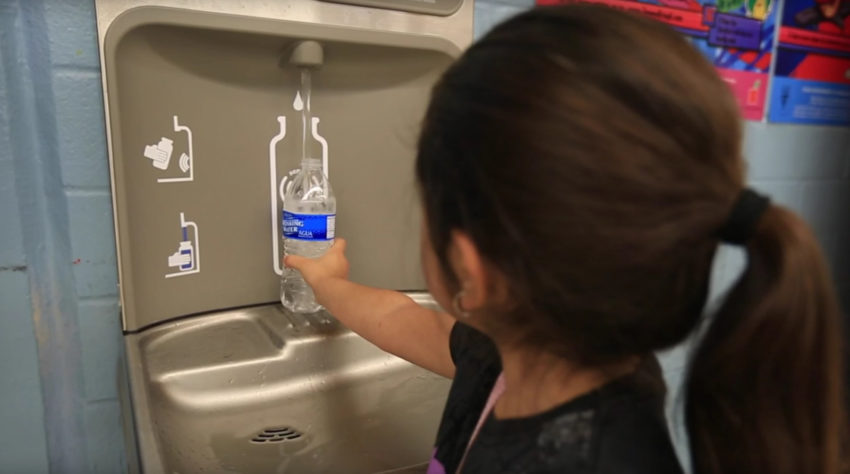
Many American kids eat two out of three meals at school. Schools must offer healthy food and drinks, especially for Latino students who are more likely than their peers to face an unhealthy weight, unhealthy neighborhood food options, and unhealthy early development. That's why schools should offer plain water with meals—not milk. So says a new study by University of Illinois researcher Ruopeng An, which encouraged children to drink plain water with their school lunches. This simple switch from milk to water at school could prevent more than a half-million kids from becoming overweight or obese, and trim the costs of obesity by more than $13 billion, An's study suggests. "The nutrition profile doesn't change much when people increase their plain-water intake, but we ...
Having easy access to healthy food can drastically change the way we eat. So it's alarming that Latinos neighborhoods lack grocery stores and other healthy food options, while abundant in fast food. Policies that aim to make healthy food access a priority can improve the quality of food we eat, stimulate economic growth and create jobs. That's why three nationally recognized policy think tanks—the Vermont Law School's Center for Agriculture and Food Systems, the Public Law Center, and the UConn Rudd Center for Food Policy and Obesity—partnered to launch the Healthy Food Policy Project (HFPP). The HFPP will focus on making healthy food access a priority for socially disadvantaged and marginalized groups, promote health equity, and support local economies through ...
This is part of the Salud America! The State of Latino Early Childhood Development: A Research Review »
Latino Kids Start Developmentally Behind their Peers
Although Latino children may be of similar weight at birth and equally able to thrive in the first 2 years of life compared with white children,96 their ability to reason and remember tasks (cognitive processing skills), verbally communicate, and identify letters, numbers, and shapes (preliteracy skills) lessens significantly by age 24 months, and these disparities appear even more prevalent in Mexican-American children than in other Latino subgroups.1 In general, a 15- to 25-percentage point gap exists for Latino children relative to their white peers.97 Children who start behind in kindergarten often stay behind. See more in ...
This is part of the Salud America! The State of Latino Early Childhood Development: A Research Review »
Latino Kids Have Limited Access to Healthy Foods
Pediatric obesity is an important public health issue. Targeted efforts to curb child obesity rates are necessary, especially among Latino children, as this sub-group is more likely to become overweight before entering elementary school than children of other ethnic groups.11 Obesity in Latino children increases health risk factors and can also impact school performance.11,54 A main contributor of overweight and obesity in Latino children may be their limited access to healthy food. See the full Salud America! research review on Latino children and healthy food access.10 Some recent study results appear mixed on this ...