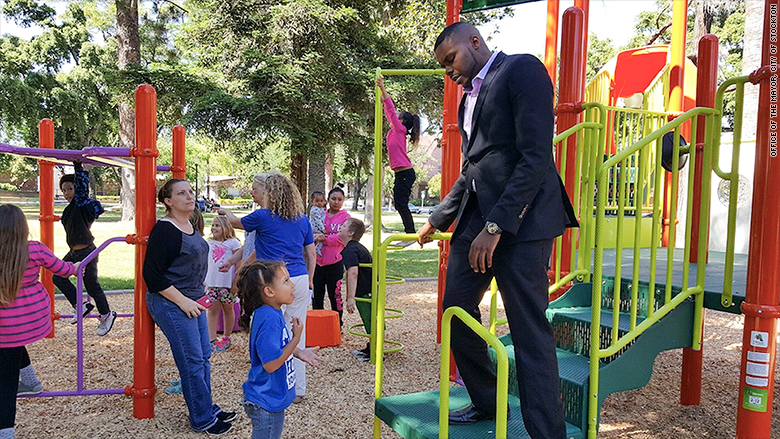
At times, almost all families need a little help with money. Providing that help is the idea behind "universal basic income," which would make everyone in a certain place eligible to receive a regular monthly stipend from a collected pool of money. The 42% Latino city of Stockton, Calif, will soon be the first major U.S. city to test it out for real. The city will start an experimental program in fall 2018 that will give dozens of families $500 a month—with the proverbial “no strings attached"—for at least several years depending on how long the funding lasts. The Stockton Economic Empowerment Demonstration (SEED) program will provide income to participants to help cover basic living expenses. The median household income in Stockton is $44,797, which is well below ...
Access to free drinking water is not a given in schools and child care centers, although it is a key strategy to build lifelong healthy habits in children. Safe and appealing drinking water is particularly important to increase water consumption among Latino kids, who face more obstacles to being healthy, thus face higher rates of obesity and chronic disease. At the state policy level, drinking water availability in child care centers is governed by child care center licensing regulations, and drinking water availability in public schools is primarily governed by school nutrition policies, state plumbing codes, and school facilities standards. A recent study looked at state-wide policies in 20 states for drinking water quality and access in public schools and licensed child-care ...
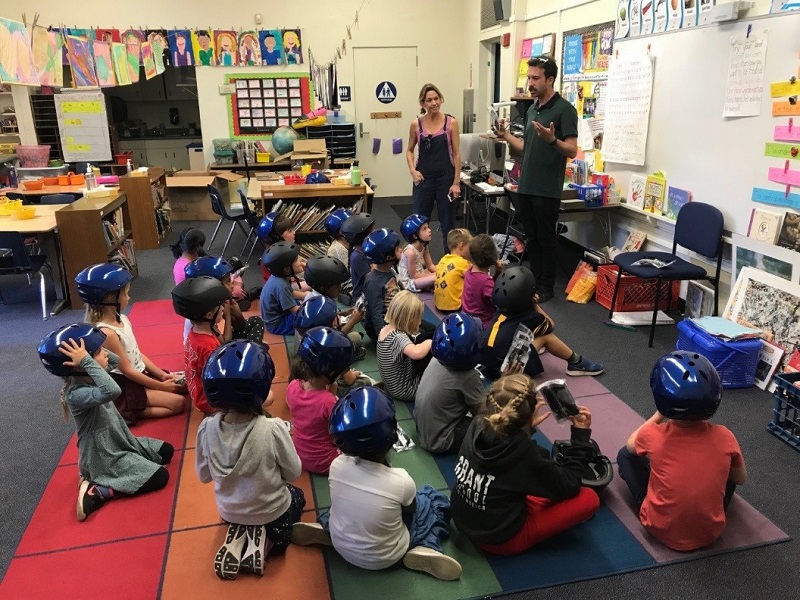
Math often gets a bad rap in schools. But what if students could count bikes and buses, and solve word problems about local bike lanes and bus routes? That is what's happening in Santa Monica, Calif. (18.1% Latino)—elementary students get "Math in My World" booklets with problems involving how people stay active and move around their community, like walking, biking, skating, scootering, and public transit. The booklets launched December 2017 by the city's Safe Routes to School program. "So instead of showing a six-year-old the somewhat-abstract idea that 2+1=3, they learn that Grace has 2 scooters and Sam has 1 scooter and together they have 3," wrote Jack Moreau, a transit official for the City of Santa Monica. All kids benefit of course, but this could help students ...
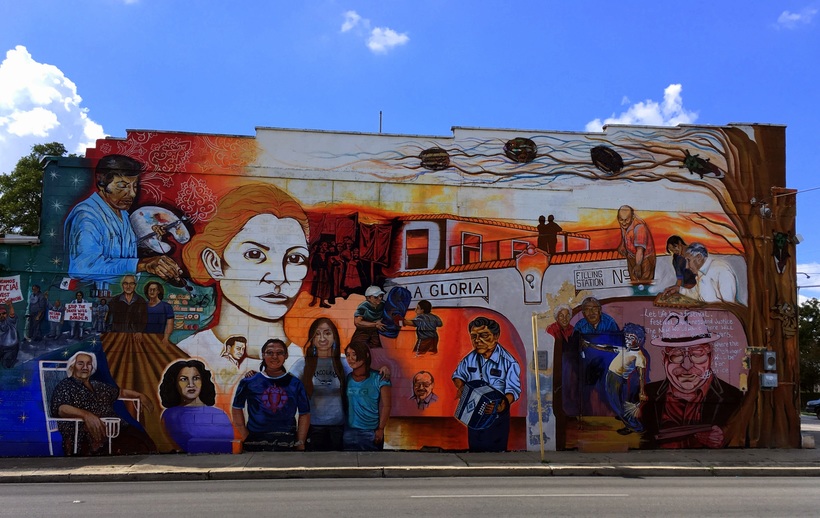
San Antonio is the nation's seventh-largest city, a dynamic modern powerhouse steeped in Latino culture and history. Yet more than 100,000 adults here haven't passed ninth grade. An in-depth article by Lily Casura of HuffPost recently took a deep dive into the state of education in the city, which noted "exceptionally low" high-school graduation rates in certain parts of the city. Casura's article notes that 300,000 San Antonio adults overall (20% of the city's population) are not high-school graduates. Four San Antonio ZIP Codes (two on its east side and two on its west side) have emerged as “the highest-hardship areas of the city,” she wrote. About 110,000 people live in these four ZIP Codes (78202, 78203, 78207, and 78237) and more than half have not completed ninth ...
How do you feel when you walk? Most of us would walk more if we had safe places. Are you willing to commit 5-10 hours/per week for 6 months to learn how to make your community more walkable? America Walks invites you to apply for a 2018 Walking College Fellowship to gain the skills and knowledge you will need to build the walking movement in your community. UPDATE: Deadline has been extended to March 2nd at 8pm Eastern.
Why Walkability Matters
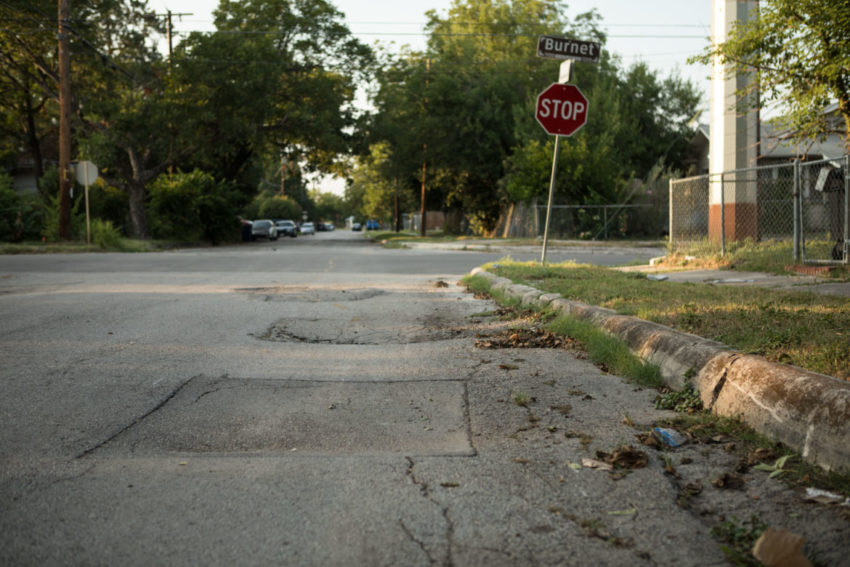
Walking is a valid way to improve your health. It is also a valid form of transportation. However, many Latino families don't have safe places to walk, thus they face disparities in health and traffic fatalities and are isolated from the places they need to go. Latinos make up 16.9% of the population, yet account for 21.5% of ...
Junk food marketing is a problem and hurts Latino kids’ health. To improve Latino kids’ health, we must remove obstacles to eating healthy, particularly targeted marketing of junk food. But how do you communicate this issue to others? Let's use #SaludTues on Tuesday, Jan. 2, 2018, to Tweet about shifting people’s thinking about targeted marketing of junk food to Latino kids. We will discuss messaging and communication tips to frame the problem as a health equity issue. WHAT: #SaludTues Tweetchat: “Framing the Problem of Junk Food Marketing to Latinos”
TIME/DATE: 1-2 p.m. EST Tuesday, Jan. 2, 2018
WHERE: On Twitter with hashtag #SaludTues
HOST: @SaludAmerica
CO-HOSTS: Berkeley Media Studies Group (@BMSG) and UConn Rudd Center for Food Policy and Obesity ...
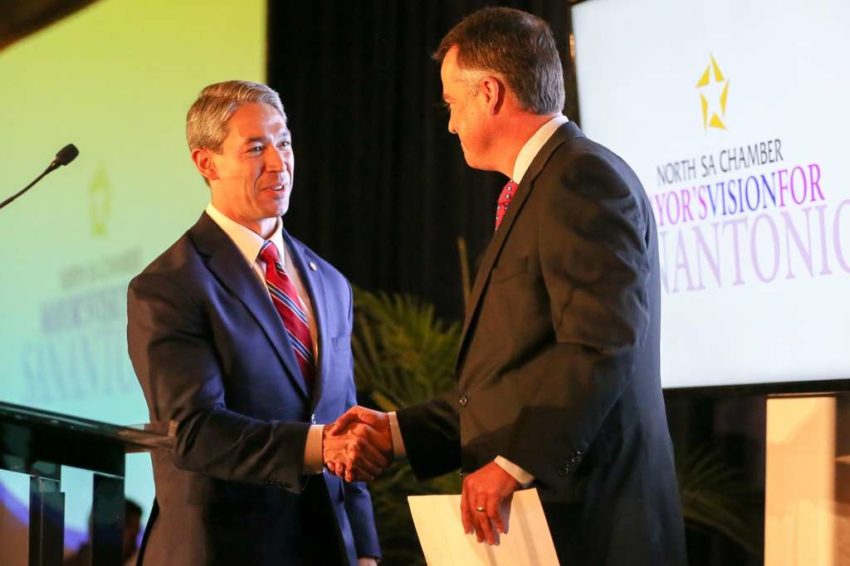
The need for affordable housing is rising in many big cities across the United States. That includes San Antonio (68% Latino). The city is facing an affordable housing shortage of 142,000 units, while median sale prices for homes rose above $200,000 for the first time in 2016, The Rivard Report indicates. That's why first-term Mayor Ron Nirenberg created a Housing Policy Task Force to help address the current and future affordable housing need. “We have to face up to the fact that the housing paradigm in San Antonio must change,” said Nirenberg told The Rivard Report. “We need to protect and connect neighborhoods and make incredible growth, and expand housing choices for our residents, no matter what their income.” The Task Force, which held its first public ...
Year by year, Latinos have become an increasingly important part of the U.S. workforce. Latinos currently account for 16% of the country’s labor pool and these numbers are growing rapidly, according to the Society of Human Resource Management (SHRM). By 2025, one out of every two new workers will be Latino as 66,000 Latino teens are turning 18 each month. As Latinos grow in numbers, their importance to the economy will only continue to increase. However, a new report shows that Latinos generally are not living in the best cities for jobs. The employment website Glassdoor recently unveiled a ranking of the top 25 cities in the country for jobs. The site based its rankings on the ability to find a job, satisfaction with the job and, quality of life. “If you weigh (those ...
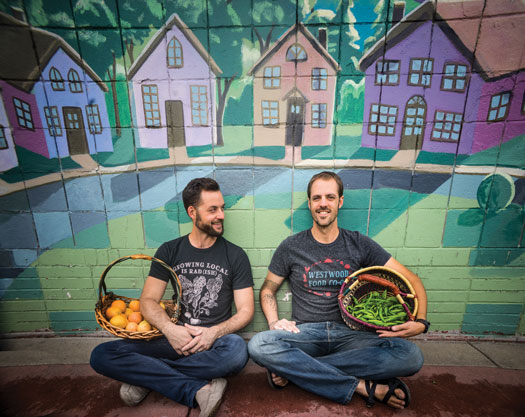
Healthy food activists Erick Kornacki and Joseph Teipel have a phrase to call the 81% Latino neighborhood of Westwood in Denver. A "food desert." For decades, Westwood residents have struggled to access healthy food. There are no nearby grocery stores or farmers markets. People lack transportation to find healthy options elsewhere to bring back. Kornacki, Teipel, and Westwood neighbors decided to take matters into their own hands. They began to build backyard vegetable gardens. They talked about how to create a food cooperative. They wanted to build the first community-owned and -run grocer as an oasis in this food desert.
Food Deserts Isolate Latinos from Healthy Food
In 2007, Kornacki and Teipel co-founded Re:Vision, a nonprofit that works on social justice and food ...