McDonald’s is removing cheeseburgers, shrinking French fry portions, and making chocolate milk less sugary in U.S. Happy Meals, in an effort to make its children's food more healthy, Reuters reports. The food company, first the first time, will set global limits for calories, sodium, saturated fat and added sugar in Happy Meals. The new standards will be implemented by June 2018. This is certainly a positive step. But it also begs the question: Can a Happy Meal really ever be healthy? This is an especially important question for Latino families. They tend to live in neighborhoods where fast food restaurants far outrank options for health food, according to a Salud America! research review. "Taken together, the changes do not transform burgers or chicken nuggets into ...
Your community can apply for a Safe Routes to Parks grant to increase equitable access and safe walking connections to parks. The JPB Foundation has provided a grant to the Safe Routes to School National Partnership to fund the Safe Routes to Parks Activating Communities program, which follows the Safe Routes to Park Framework, a collaborative effort between the National Partnership and the National Recreation and Parks Association. The framework provides a structured process by which communities can increase safe and equitable access to their parks and green spaces. The framework includes four main areas of activity: 1) Assessment, 2) Planning, 3) Implementation, and 4) Sustainability, with each area heavily infused with proactive community engagement. Grantee communities will ...
No parent should have to face the sheer agony of losing a baby. But it happened to Servando Salinas and Roxanne Alvarez. The San Antonio parents recently spent time at a relative's house. So Salinas and Alvarez had their eight-month-old daughter, Heaven, sleep in bed with them. When Salinas woke up, he noticed Heaven was not breathing. They called EMS, but the baby was pronounced dead at the scene, according to FOX-29. “I couldn't move. I couldn't stand. I was crying so much,” Salinas told Fox-29. Sadly, in two San Antonio zip codes—mostly Latino 78203 and 78220—Latina mothers have the highest infant death rates in the state, says a UT System study. That's why we are glad to see that San Antonio leaders, health advocates, parents, and groups are stepping up to ...
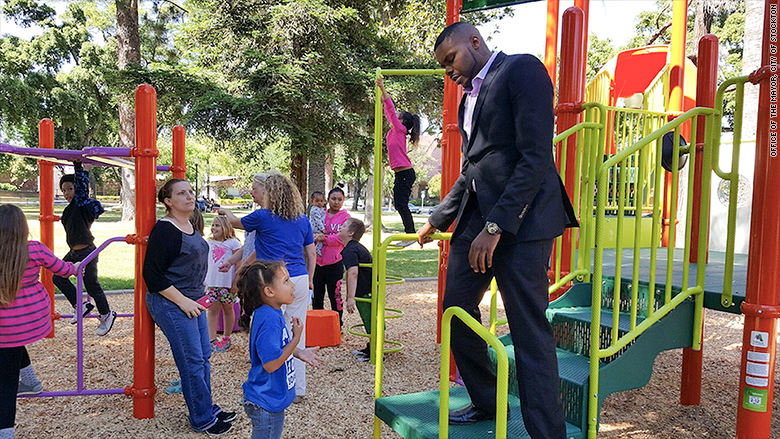
George Block has fought for children for a long time. When Block saw disadvantaged kids not able to swim at local pools in the 1970s in San Antonio (63% Latino population), he fought for a new aquatic center that would provide free swim programs for them. When Block jogged through a low-income neighborhood and heard Mexican soccer games blaring from homes, but low youth soccer participation in the 1980s, he drove changes to enable more play. He even helped launch San Antonio Sports, a foundation that builds new sports facilities and spurs school facilities to open publicly. So…what did Block and his team do in 2016 when he saw many San Antonio families not using these facilities to capacity? He stepped up again and created a literal “gateway” to promote family use of ...
At times, almost all families need a little help with money. Providing that help is the idea behind "universal basic income," which would make everyone in a certain place eligible to receive a regular monthly stipend from a collected pool of money. The 42% Latino city of Stockton, Calif, will soon be the first major U.S. city to test it out for real. The city will start an experimental program in fall 2018 that will give dozens of families $500 a month—with the proverbial “no strings attached"—for at least several years depending on how long the funding lasts. The Stockton Economic Empowerment Demonstration (SEED) program will provide income to participants to help cover basic living expenses. The median household income in Stockton is $44,797, which is well below ...
Millions of kids depend on the Children’s Health Insurance Program (CHIP) for healthcare coverage. This care helps ensure their physical, mental, and emotional health and helps to keep them on track toward a better chance at academic success. Latino kids have especially benefited from CHIP program. More than 9 in 10 Latino kids were covered by CHIP in 2015, research shows. Yet CHIP remains in jeopardy. It expired in September 2017 and is only continuing thanks to "temporary measures" in early 2018. In fact, The Hill reports that three state governments have sent warning letters to families alerting them that they could lose coverage for their children by Jan. 31, 2018, if new permanent funding from Congress is not approved. Alabama (4% Latino), for example, recently ...
John Hernandez coached football in three disadvantaged school districts in Texas. When a player missed practice, Hernandez took it on himself to visit their home. He knew many players faced poverty and other home problems. He would check in on them and offer rides, so the players wouldn’t miss practices and games. Today, Hernandez directs student services at East Central Independent School District in San Antonio. He continues to see students facing poverty and trauma, resulting in missed school, which has disciplinary and even criminal consequences. However, his district didn’t have a program to identify, support, or counsel these students. Hernandez took it on himself to start one.
The Problem of Chronic Absenteeism
As director of student services, Hernandez is in ...
Map, track, and evaluate. These words are music in public health nerd's ears. Especially for walking nerds, America Walks is hosting a webinar to help public health advocates turn data into action to improve walkability across the United States at 2 p.m. EST Dec. 13, 2017.
Why Connect Health and Walking Advocates?
Decades of inequity in investment in streets, sidewalks and communities has disproportionately burdened Latino and many communities with health disparities, traffic fatalities, and even criminal citations for jay-walking. Many health advocates lack adequate data or the ability to use data to make the case for environmental, systems, or policy changes. Particularly when it comes to walking and walkability because, traditionally, non-health departments and ...
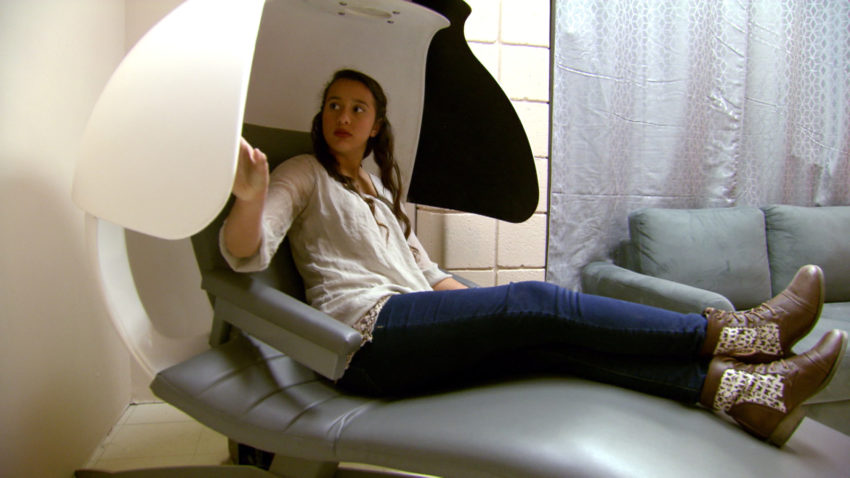
Nap clubs. Quiet rooms. Wellness centers with cozy couches and tea. Schools are trying new ways to give rest to sleepy students, including Latinos who are more sleep-deprived than their peers. That includes high-tech "nap pods" for students in two high schools in Las Cruces (59.6% Latino) and two in Sunland Park (95.2% Latino), N.M. Students sit in the pods, available in the nurse's office, under a sensory-reduction dome that plays relaxing music and soothing lights for 20 minutes before gently vibrating to wake the students.
"[It is] great for kids who weren’t getting enough sleep at night—which teenagers don’t, for a variety of reasons," Sandy Peugh, health services director for the Las Cruces school district, told Las Cruces Sun-News.
"They were coming to school ...