For the first time in decades, overall tobacco use increased among high school students. This could have a big impact on Latino health. Lung cancer is the leading cause of cancer death among Latino men and the second-leading cause among Latino women. The Tobacco 21 Coalition is trying to raise the legal minimum age for cigarette purchase to 21 in San Antonio, Texas (68% Latino). Every year in Texas, 75,000 kids try smoking for the first time and 12,300 kids become regular smokers. In San Antonio, 12.6% of male high school students and 9.9% of female high school students currently smoke. These youth are more sensitive to nicotine's addictiveness because their bodies are still growing and developing, according to health experts. Thus, these youth are more likely to smoke as ...
Did you know that someone in the United States develops Alzheimer's every 66 seconds? Multi-billionaire philanthropist Bill Gates knows. He has had family impacted by the disease. And that's why he's investing $50 million to fund research to find treatment for Alzheimer's disease, a type of dementia that destroys memory and mental processing. "It’s a terrible disease that devastates both those who have it and their loved ones," Gates wrote on his blog recently. "I know how awful it is to watch people you love struggle as the disease robs them of their mental capacity, and there is nothing you can do about it. It feels a lot like you’re experiencing a gradual death of the person that you knew." Alzheimer's is the No. 6 cause of death in the United States. It kills more ...
This is part of the Salud America! The State of Latino Early Childhood Development: A Research Review »
Social and Emotional Skill-Building Starts in Families
Children begin to develop their social and emotional skills through initial interactions with family. Through strong and consistent relationships, they learn the importance of social bonding, connecting to others with empathy, and self-regulating emotions. Young children begin to learn about complex social interactions by receiving responsive caregiving from parents, which often leads to positive outcomes later in life.
Latino Kids' Social and Emotional Health & Family Values
One study (N = 7,750; 19% Latino) found that although Latino children may demonstrate cognitive gaps compared with white children after age 1, ...
Pediatricians play a big role in a child's health. But not in the way you might think. Treating flu and other illnesses is only 10% of what makes a person healthy. The rest is genetics (20%), environment (20%), and daily behaviors (50%). That's why it's so important for pediatricians to engage parents and kids to improve daily behaviors—like reading to young children and playing outside—especially among Latinos who have limited safe places to play and early educational gaps. Two amazing reading programs are doing just that.
Reach Out and Read
Latinos often enter kindergarten developmentally behind their non-Latino peers, Salud America! research shows. For example, as early as age four, children in low-income families hear 30 million fewer words than than their middle and ...
It can be a chore to figure out how to get kids the right levels of physical activity. Current guidelines recommend different intensity and frequency for different aerobic and muscle-strengthening physical activities for kids. What's that mean? More running? Jumping? Organized sports? Active video games? A new list—the Youth Compendium of Physical Activities—sheds light on 196 youth physical activities and the estimated energy expenditure for each. This collection of everything from basketball to running to to cycling to Wii Sports offers parents, teachers, coaches, healthcare workers, and researchers better insight into which physical activities contribute to a healthier lifestyle, thanks to the National Collaborative on Childhood Obesity Research.
Compendium of Physical ...
You can share the best—or worst—places to bike in San Antonio, thanks to a new bilingual crowdsourced map. The Open Ciclismo map, launched in October 2017 in English and Spanish by the local online news source the Rivard Report and Bike San Antonio, enables people to identify biking problems, issues, and solutions across San Antonio (63.7% Latino). You can report a public dangerous intersection, suggest a bicycling improvement, or share safe places to ride. Just indicate the location, add a description, and upload or share a video. "By crowdsourcing this data and riders’ experiences, we aim to create up-to-date awareness of hotspots for cycling safety, crime, and infrastructure improvements—holding city officials accountable for safe cycling and pedestrian life in San ...
More than 17 million U.S. kids and adults, including a rising number of Latinos, have Attention Deficit Hyperactivity Disorder (ADHD). So what exactly is ADHD? Who gets ADHD? How can you tell if your child has this mental condition? How is it treated? We at Salud America! are excited to share some answers during ADHD Awareness Month in October.
What is ADHD?
ADHD is a brain disorder characterized by developmentally inappropriate levels of inattention, impulsivity, and hyperactivity, according to the Children and Adults with Attention-Deficit/Hyperactivity Disorder (CHADD). Yes, everybody can have difficulty sitting still or paying attention. We make rash, impulsive decisions on occasion. But for others, these behaviors are so pervasive and persistent that they interfere ...
This is part of our Building Support for Latino Families: A Research Review »
Kids Do Better with Parents Active in Their Education
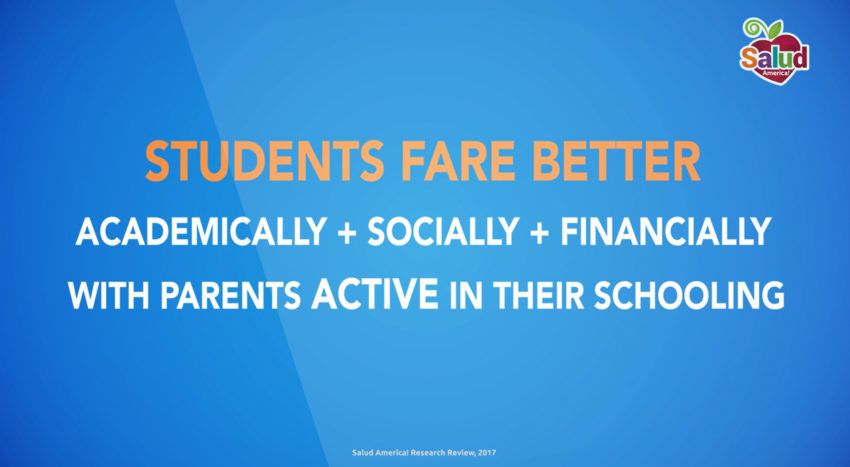
Whether we are discussing infant care, preschool, grade school, or high school in the United States, students whose parents are actively engaged in their education fare better academically, socially, and economically.62–67 Active parent participation and interest in a child’s education promotes internalization of specific social and academic goals, and makes education a priority for the student and for the family. In fact, parental engagement has been used to explain some of the heterogeneity in educational outcomes for children from low-income Latino communities, such that greater parental involvement results in better academic and behavioral ...
This is part of our Building Support for Latino Families: A Research Review »
Latino Kids Less Likely to Use ECE Programs
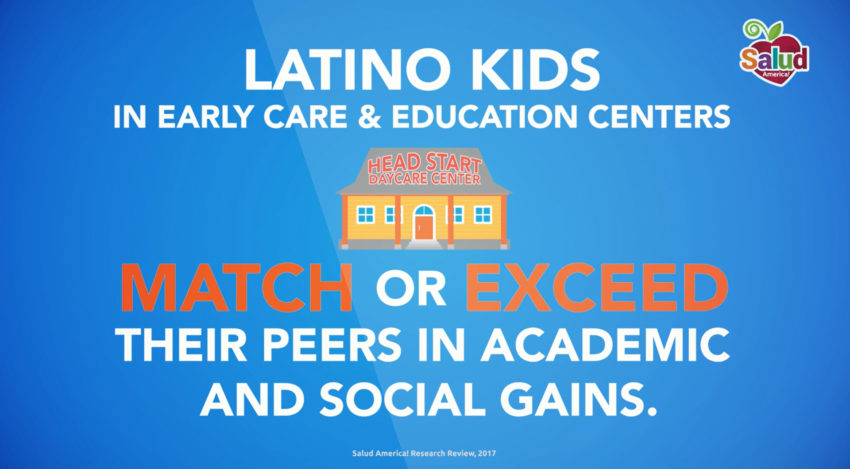
The use of ECE facilities—including child care centers, day care homes, Head Start programs, preschool and pre-kindergarten programs—has become the norm in the U.S.38 About 61% of children younger than 6 are in a non-parental care arrangement on a weekly basis.38 In 2012, children from higher-income families tended to enroll more in ECE centers (72%) than children from low-income families (45%), 2016 data show.1 In addition, far fewer Latino children (52%) were enrolled in ECE centers than their white (63%), black (68%), and Asian peers (68%).1,39
ECE Programs Stimulate Cognitive Health Benefits
However, recent research has demonstrated that early ...